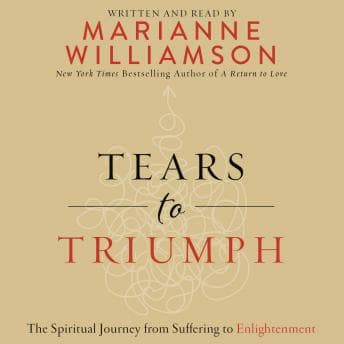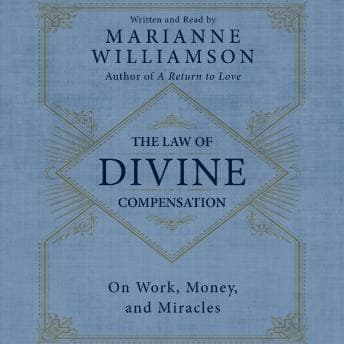

Can you actually think yourself into prosperity? I mean, really - is that how the universe works?
I'll be honest. I started this audiobook with my skeptic hat firmly on. As someone who studies why humans believe what they believe, I find prosperity gospel-adjacent content fascinating but... complicated. My therapist would have thoughts about this character - the character being me, approaching a Marianne Williamson book like it's a case study rather than spiritual guidance. (Old habits, what can I say.)
But here's the thing. At three and a half hours, listened to across a few morning jogs through Cambridge, I found myself genuinely engaging with the psychological framework underneath all the spiritual language. Not because I suddenly believe the universe is going to deposit abundance in my checking account, but because Williamson is doing something interesting with fear.
The Psychology Behind the Woo
Strip away the God-language for a second - and look, if that language works for you, great, keep it - but what Williamson is actually describing is a cognitive reframe. The research shows that scarcity mindset creates real physiological stress responses that impair decision-making. When you're panicking about money, you literally cannot think clearly about money. That's not mysticism, that's cortisol.
So when she talks about shifting from the "physical realm" of fear to a "spiritual realm" of trust, I found myself translating: she's describing the difference between operating from your amygdala versus your prefrontal cortex. The protagonist here - you, the listener - exhibits classic anxiety patterns that she's trying to interrupt.
Now, does she oversimplify? Absolutely. The idea that right mindset plus faith equals material abundance glosses over, you know, systemic economic realities. My mother didn't immigrate from India and work double shifts because she lacked spiritual alignment. But Williamson isn't really writing for people facing structural poverty. She's writing for people who have resources but are paralyzed by fear of losing them. Different audience, different utility.
Williamson in Your Ears
Here's where author-narrated gets interesting. Williamson reading her own work adds a layer of... I want to say authenticity, but that's not quite right. It's more like you're sitting in on a lecture she's giving. Her voice is genuinely soothing - almost hypnotic during those 6 AM runs when I was barely awake anyway.
But - and this is a real but - her pacing is slow. Like, noticeably slow. I bumped it to 1.25x around the halfway point and honestly wish I'd done it sooner. At normal speed, certain concepts get repeated in ways that started to feel a bit grating. She circles back to the same ideas multiple times, which might work for meditation but made me antsy when I was trying to beat my mile time.
The production quality is clean, though. No weird audio artifacts, no distracting background noise. Just Williamson's voice, steady and calm, telling you the universe has your back.
Who Should Listen (And Who Should Run)
Look, I'm not the target audience here. I'm the person annotating the margins with "citation needed" and "interesting coping mechanism." But I can see exactly who would love this.
If you're going through financial anxiety and you respond to spiritual frameworks - specifically Christian-adjacent but not doctrinally rigid - this could genuinely help. Williamson clearly believes what she's saying. There's no grift energy here. She's earnest in a way that's either refreshing or exhausting depending on your tolerance for earnestness. If you're a skeptic like me, you might still find value in the psychological reframes, but you'll be doing translation work the whole time. If prosperity gospel makes you break out in hives, skip this entirely.
The Case Study Closes
I finished this audiobook feeling like I'd attended a really nice therapy session with someone whose worldview is fundamentally different from mine. Did it change my relationship with money? No. Did it give me some useful frameworks for noticing when I'm operating from fear? Actually, kind of. Year of Yes tackles a similar fear pattern—the catastrophizing that keeps you stuck—though Shonda Rhimes comes at it from a completely different angle.
Williamson understands something about human nature - specifically, that we're terrible at separating "I don't have enough right now" from "I will never have enough ever." The catastrophizing spiral is real, and she's offering tools to interrupt it. Gambler explores the opposite end of this spectrum—what happens when someone operates entirely without fear around money, for better and worse. Whether those tools require God or just require you to stop doom-scrolling your bank account is, I suppose, a matter of interpretation.
Three and a half hours is short enough that it doesn't overstay its welcome. Worth a listen if you're curious, but maybe sample first to see if her vibe clicks with yours.