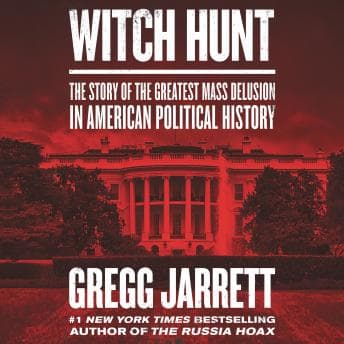

Let me cut to the chase: I finished this one during a late-night drive back from a client site in Houston, and by the time I hit the Austin city limits, I was genuinely angry. Not at the book—at the situation Jarrett documents.
I spent 25 years in uniform defending a system I believed in. Chain of command. Rule of law. The idea that institutions matter more than personalities. So when a legal analyst with fifteen years at Fox News lays out—with names, dates, and documented conversations—how senior FBI officials allegedly discussed secretly recording a sitting president? That's not political commentary. That's the kind of institutional rot that keeps security consultants like me up at night.
The Debrief: What Jarrett Actually Delivers
At nearly 15 hours, this is a substantial intelligence brief disguised as a political book. Jarrett's background as a trial attorney shows—he builds his case methodically, stacking evidence like a prosecutor preparing for court. The structure follows the investigation chronologically, from the Steele dossier's origins through the Mueller report's conclusions.
Here's what works: Jarrett doesn't just make accusations. He cites specific FISA applications, quotes from congressional testimony, and internal communications that have since been declassified. When he discusses Deputy Attorney General Rod Rosenstein's alleged conversations about invoking the 25th Amendment, he's working from documented sources. Whether you agree with his conclusions or not, the man did his homework.
The audiobook runs dual narrators—Charles Constant handles the main text while Gregg Jarrett himself reads certain sections. Interesting choice. Constant keeps things moving at a steady clip, professional and clear. Jarrett's portions feel more personal, more invested. The contrast actually works—you get the sense of a legal brief punctuated by the author stepping in to say "and here's why this matters."
Where It Lost Me—And Where It Didn't
I'll be honest about the weak spots. Jarrett's tone sometimes slides from analysis into advocacy. There's a difference between "here's what the evidence shows" and "here's why Democrats are terrible"—and he doesn't always stay on the right side of that line. If you're looking for a dispassionate academic treatment, this ain't it.
But here's the thing—I've read plenty of books from the other political perspective that do the exact same thing. At least Jarrett's transparent about where he stands. He's not pretending to be neutral while slanting everything left. You know what you're getting.
What kept me engaged through all 15 hours was the institutional critique. Strip away the partisan framing and you've got a serious examination of how intelligence agencies can be weaponized. I've seen this scenario play out in other countries—the security apparatus deciding it knows better than the elected leadership. Never thought I'd see credible allegations of it here. Sergeant York and His People examines a different kind of institutional tension—when individual conscience clashes with military duty during wartime.
Constant's Narration: Clean and Professional
Constant's delivery is workmanlike. Clean, professional, no distracting quirks. He handles the legal terminology without stumbling, which matters when you're discussing FISA warrants and prosecutorial discretion. Nothing flashy, but nothing that pulled me out of the content either.
At 1.25x speed—my standard—the pacing felt right. Jarrett packs in a lot of detail, so you need the narration to be clear rather than dramatic. Mission accomplished on that front. No sound effects, no production gimmicks. Just two guys reading a heavily researched political argument. For this type of book, that's exactly what you want.
Who Should Deploy—And Who Should Stand Down
If you think the Russia investigation was legitimate and Mueller was a hero, you're going to hate this. Jarrett's thesis is the exact opposite. Don't waste your credit.
But if you've got questions about how the investigation started, why certain procedures seemed to be bypassed, and what actually happened behind closed doors at the FBI and DOJ—this is a comprehensive breakdown. Agree or disagree, you'll understand the counter-narrative in detail.
For my fellow veterans and security professionals: there's value here in the institutional analysis, even if you tune out the political commentary. How agencies protect their turf, how investigations can develop their own momentum, how "protecting democracy" can become a justification for undermining it—these are patterns worth understanding.
Cooper Out
Ranger slept through most of this one—not enough explosions for his taste. But I found it valuable. Jarrett makes his case aggressively, sometimes too aggressively, but he backs it up with documentation.
Worth your time? If you're interested in the mechanics of political investigations and institutional accountability, yes. If you're looking for balanced both-sides analysis, look elsewhere. Jarrett picked his side and he's not apologizing for it.
The book's a #1 New York Times bestseller for a reason—it articulates what a significant portion of the country believes happened. Whether that belief is justified is above my pay grade. But as an intelligence brief on one perspective of recent political history, it's thorough, well-sourced, and professionally delivered.







![Steve Jobs [unabridged audiobook] audiobook cover](/_next/image?url=https%3A%2F%2Fcovers.audiobooks.com%2Fimages%2Fcovers%2Ffull%2F9788499923406.jpg&w=1920&q=75)