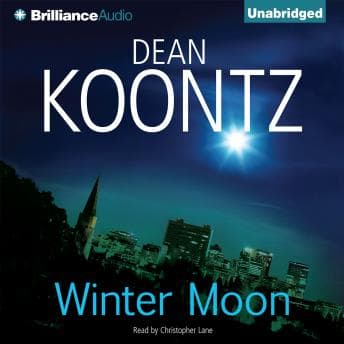

I'd heard this was lesser Koontz. The kind of thing devoted fans apologize for at book clubs while clutching their dog-eared copies of Watchers. So I went in with appropriately lowered expectations, stirring dal at 10 PM, expecting background noise.
I was wrong. And also right. Which is the most frustrating kind of reading experience.
The Psychology of Dread (When It Works)
Here's what Koontz understands about fear that lesser thriller writers don't: terror isn't about the monster. It's about the waiting. The first third of Winter Moon is a clinic in anticipatory anxiety—what psychologists call "threat vigilance." There's an eerie light in the Montana woods. A watcher. Something that defies categorization.
Christopher Lane's narration captures this perfectly. His pacing during these early sequences is deliberately restless, almost uncomfortable. You can hear the acute fear building in his vocal choices before the characters themselves fully articulate it. The research actually shows that our brains process ambiguous threats as more terrifying than known ones, and Koontz exploits this beautifully. For about four hours, I forgot I was cooking.
(I burned the dal. Worth it.)
The Los Angeles sequences—the "cataclysmic violence" that shatters a young family—hit differently when you study trauma responses for a living. Koontz doesn't just write violence; he writes the psychological aftermath. The hypervigilance. The way ordinary moments become landmines. When this family eventually relocates to Montana seeking sanctuary, I found myself asking: why do we always think geography can outrun psychological wounds?
Where the Structure Betrays the Story
And then the second half happens.
I don't want to spoil specifics, but the pacing shifts so dramatically it gave me narrative whiplash. The slow-burn dread that made the first half compelling gets abandoned for something... rushed. Characters who felt psychologically real start making decisions that don't track with their established personalities. The unknowable threat becomes knowable in ways that feel less earned than convenient.
My therapist would have thoughts about this character development. Specifically, that it stops developing.
The ending is particularly frustrating. Not because it's bad, exactly, but because it feels truncated. Like Koontz hit his word count and decided to wrap things up regardless of whether the emotional arc was complete. Several listeners have described it as "cut off," and they're not wrong. You spend eleven hours building toward something, and the resolution arrives in what feels like fifteen minutes.
Lane Saves What He Can
Christopher Lane deserves credit for holding this together. His performance is genuinely excellent—he captures the restless fear that eventually encompasses all the characters with precision. When the writing gives him material to work with, he elevates it. When the writing falters, he at least keeps you listening.
The production quality is clean, no audio issues, no jarring transitions. This is a professional audiobook experience from a technical standpoint.
But Lane can't fix structural problems. No narrator can. And Winter Moon has structural problems.
The Koontz Paradox
This is a fascinating case study in reader expectations. Koontz has written genuinely inventive supernatural thrillers—books with unexpected twists and imaginative plot development that keep you guessing. Power of the Dog shows what happens when a thriller writer commits fully to that imaginative vision—no shortcuts, no rushed endings. Winter Moon isn't that. It's competent. It's occasionally brilliant. It's also predictable in ways that feel like a betrayal of what Koontz can do when he's firing on all cylinders.
If this were your first Koontz, you might enjoy it more. The isolation of Montana, the mysterious watcher, the family trying to heal—these are solid thriller elements. But if you've read his better work, you'll spend the second half wondering where the imagination went.
The setup promises psychological depth. The execution delivers... adequate resolution. Tales of Terror and Mystery has similar pacing issues—brilliant atmospheric buildup that doesn't always stick the landing.
Skip If You Want Koontz at His Best
If you're a completist, you'll listen anyway. If you're new to Koontz, start elsewhere—Watchers, Intensity, something that showcases his range. If you specifically want Montana isolation horror with decent narration and don't mind a rushed ending, this works. Skip it if structural payoff matters more to you than atmospheric setup.
I finished it. I don't regret the time. But I also don't feel the urge to recommend it to anyone who isn't already committed to the Koontz catalog.
Case Notes
The protagonist exhibits classic trauma responses. The antagonist exhibits classic structural neglect. The narrator exhibits classic professionalism.
C'est la vie littéraire.