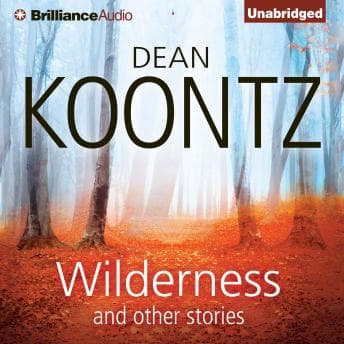
Three AM. Shirley's staring at the wall like she sees something I don't - which, knowing cats, she probably does. I've got my headphones in, lights off (because I never learn), and MacLeod Andrews is describing Addison Goodheart's first encounter with true terror in the wilderness. My apartment is silent except for the occasional creak of old Oregon pipes. Perfect conditions for Koontz to absolutely wreck me.
He did. Sort of.
Fifteen Stories, Four Voices, One Very Uneven Experience
Here's the thing about short story collections in audio format - they're gambling. You're betting thirteen hours that the narrators can shift gears between tales, that the author's range holds up across decades of work, and that the whole thing doesn't feel like a greatest hits album where half the songs are B-sides.
Wilderness and Other Stories lands somewhere in the middle of that bet. The title story? Genuinely unsettling. Andrews captures Addison's isolation with this quiet intensity that made me check my locks twice. The way he voices a child who knows he's unwanted - not melodramatic, just... matter-of-fact about his own wrongness - that's the kind of narrator commitment I preach about on the podcast. That same understanding of atmospheric dread runs through Hound of the Baskervilles, where the moors themselves become a character. He understands that horror isn't about gore - it's about dread.
But then you've got fifteen stories spanning decades, and Koontz from 1995 is not Koontz from 2009. Some of these feel like they were written before he figured out his voice.
The Black Pumpkin Haunted Me (The Morality Lectures Did Not)
"The Black Pumpkin" is the standout for pure Halloween terror. It's the kind of story that makes you remember why you were scared of trick-or-treating as a kid - not the candy razor blade urban legends, but something older. Something watching from porches. It taps into that primal childhood fear the way Treasure State uses Montana's vast emptiness - the terror of being watched from somewhere you can't see. I'm absolutely featuring this on The Witching Hour's October episode.
"The Basement" delivers too. Claustrophobic in the best way.
But here's where I have to be honest with my podcast listeners who might be considering this: Koontz has a tendency - especially in the later stories - to stop trusting his readers. He'll build this gorgeous dread, this creeping wrongness, and then he'll... explain it. Moralize it. There's a moment where you can almost feel him stepping out from behind the curtain to make sure you Got The Point.
Shirley Jackson never did that. She let the horror breathe. (Yes, I'm bringing up Shirley Jackson. I always bring up Shirley Jackson. My cat is named after her. This is who I am.)
Four Narrators Who Actually Earned Their Paychecks
Dick Hill handles the more straightforward thriller pieces with the kind of steady authority that keeps you grounded when things get weird. Will Damron and Tanya Eby - both Earphones Award winners, which tracks - bring distinct textures to their respective stories. Eby in particular has this way of making female characters feel lived-in rather than performed.
But Andrews on "Wilderness" is the real draw here. The way he shifts between Addison's internal narration and the forest sounds he describes - you can hear the trees. The isolation. That story works specifically because Andrews commits to the bizarre without winking at the audience.
No sound effects, no music, just four skilled voices doing the heavy lifting. Clean production from Brilliance Audio. Nothing flashy, nothing distracting.
The Overlap Problem (Check Your Library First)
Fair warning: if you already own Strange Highways or bought "Wilderness" as a standalone e-book, you're paying for repeats. Twelve of these stories appeared in that 1995 collection. The new additions - "The Scariest Thing I Know" from Martha Stewart Living (yes, really) and "Hostage Situation" from the Times - are fine, but they're not enough to justify a double-purchase.
This is a "check what you already own" situation before spending a credit.
Who Should Listen (And Who Should Skip)
Koontz completists, obviously. But also: anyone who wants horror that builds slowly, that earns its scares through atmosphere rather than jump-scare narration tricks. If you're new to Koontz, this is actually a decent sampler - you'll figure out pretty quickly whether his style works for you.
Skip if you hate morality in your horror. Some of us grew up in religious households where horror was forbidden, and we have complicated feelings about authors who can't resist a sermon. (I see you, Dean. I grew up with enough sermons. Let the darkness be dark.)
Skip if you need consistent pacing. Short story collections are inherently choppy, and this one ranges from tight little nightmares to meandering almost-thrillers.
The Verdict From My 2 AM Listening Session
I scared myself exactly twice. Shirley (the cat) remained unimpressed throughout. The title story alone is worth the listen for horror fans who appreciate slow-building dread and a narrator who understands that sometimes the scariest thing is a child who knows he shouldn't exist.
The collection as a whole? Uneven but worthwhile. Wait for a sale unless you're a Koontz devotee or specifically hunting for "Wilderness" as an Innocence prequel. The highs are high enough that I don't regret the thirteen hours. The lows just made me wish Andrews had narrated the whole thing.