
What if the single biggest problem in most organizations isn't strategy, product, or funding — but the fact that they're hiring wrong?
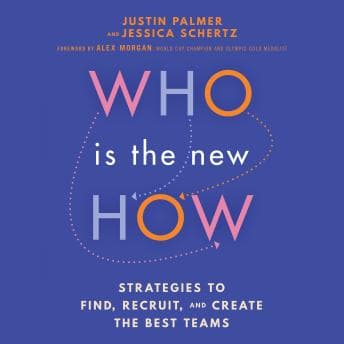
I was chopping onions for a chana masala (the kind that takes two hours because I refuse to use shortcuts, yes I'm that person) when I started Who Is the New How, and honestly, I almost turned it off in the first twenty minutes. The title felt like a LinkedIn post that grew sentient. But somewhere around the section where Schertz and Palmer dismantle the "butts in seats" mentality — this idea that speed of hiring is the metric that matters — I put down the knife and actually started paying attention.
The Psychology of Why We Hire Badly
Here's what got me: this book is, at its core, about a cognitive bias problem. Organizations optimize for the wrong variable. They measure time-to-fill because it's easy to quantify, and they ignore mission alignment because it's hard to quantify. The research actually shows — and Schertz and Palmer lean into this — that cultural misalignment is one of the top drivers of early turnover. We know this. HR people know this. And yet companies keep doing the same thing because the system rewards speed over fit.
The authors frame their argument around what I'd call an identity-matching model: the idea that the "who" — finding people whose values, working style, and sense of purpose align with the organization's actual (not aspirational) culture — matters more than the "how" of filling roles. As someone who studies how narratives shape identity, I found myself asking: why does corporate hiring so consistently ignore the psychological literature on person-environment fit? Schertz and Palmer don't cite the academic research I'd want them to (no mention of Kristof-Brown's work, which felt like a miss), but they arrive at similar conclusions through practitioner experience.
Palmer's background in AI and machine learning shows up in the sections on technology-assisted recruiting. There's a genuinely interesting tension in the book between their advocacy for human judgment in assessing cultural fit and their enthusiasm for tech-driven candidate sourcing. They don't fully resolve this tension, which — honestly? — makes me trust them more. Anyone who tells you they've perfectly balanced algorithms and intuition in hiring is selling something.
Where the Framework Gets Thin
The book runs about six hours, and it feels like a four-hour book stretched to fit a format. The middle section on building "impactful, productive teams" retreads ground that Patrick Lencioni covered more memorably years ago. There's a chapter-length treatment of why saying goodbye to underperformers matters that reads like it was written for an audience that has never encountered the concept before. If you've read any serious management literature in the last decade, you'll find yourself reaching for the 1.25x speed button. (I did.)
Psychologically, there are moments that don't track for me. The book presents mission alignment as almost entirely a recruitment-side problem — find the right people, slot them in, watch them thrive. But identity research tells us that organizational identification is dynamic. People change. Companies change. The neat input-output model here ignores the messy reality of how belonging actually works over time. I kept wanting a chapter on what happens when the mission shifts under people's feet, and it never came.
Dan Strutzel Reads You a Business Book (And That's Fine)
Dan Strutzel narrates with the steady, clear delivery you'd expect from professional business audiobook narration. No accents to differentiate between the two authors' perspectives, no dramatic shifts in energy — it's a single-narrator read of a dual-author book, and you can't always tell whose ideas you're hearing. It's competent. It's clean. It won't distract you from the content, but it also won't elevate it. For a sub-six-hour business listen, that's acceptable. I wouldn't call it a selling point.
Who Should Actually Spend Time on This
If you're an HR leader or hiring manager who's been operating on autopilot — posting jobs, screening resumes, measuring days-to-fill — this book will genuinely challenge some of your assumptions. It's a good starting framework. If you're someone who's already read Work Rules! by Laszlo Bock or keeps up with talent acquisition literature, you'll find the ideas familiar but the Teamable-specific perspective mildly interesting as a case study in how one company operationalizes these principles.
If you're not in a hiring role at all? Skip it. This is a professional tool, not a general interest listen.
My Diagnosis
This is a fascinating case study in a company's founders turning their product philosophy into a broader argument about organizational health. The core insight — that obsessing over who before how changes everything downstream — is sound, even if the execution is uneven. The best parts feel like a practitioner translating research into action. The weaker parts feel like a pitch deck that wandered into a bookstore. I'd recommend it as a commute listen at 1.25x for anyone building teams, with the caveat that you'll want to supplement it with deeper reading on the psychology they gesture toward but never fully explore.
My therapist would probably say something about how I project my need for psychological rigor onto every book I encounter. She'd be right. The same hunger for actual depth over surface-level transformation is what made me appreciate Radical Awakening more than I expected — Dr. Shefali at least refuses to let you off the hook with tidy frameworks. But I'd still want more from this one.