
Bottom Line: Worth your commute if you're looking for communication fundamentals, but this could've been a blog post. Or like, three blog posts.
Okay, so here's my confession: I picked this up because my skip-level manager told me I needed to "work on my listening skills" during my last performance review. (Yes, I was probably checking Slack during our 1:1. Yes, she noticed.) So I figured - fine, let's optimize this whole communication thing.
The irony of listening to a book about listening while half-zoned-out on the 6:47 AM Caltrain is not lost on me.
The ROI Calculation
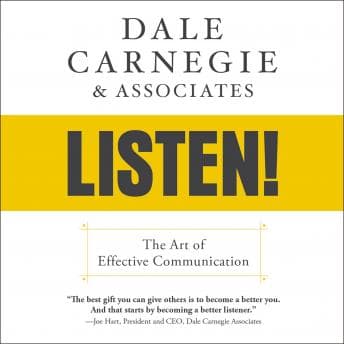
At 3 hours 49 minutes, this is basically a podcast series about not being a terrible conversationalist. Dan Strutzel has this calm, almost therapeutic voice that's perfect for the material - think "HR training video but actually tolerable." I bumped it to 1.5x because honestly, business books that move at normal speed feel like they're wasting my time.
The Carnegie framework is solid. Active listening techniques, how to make people feel heard, dealing with difficult conversations - it's all here. And look, some of it genuinely stuck. The bit about pausing before responding instead of just waiting for your turn to talk? I tried it in a code review last week and my junior engineer actually seemed less defensive. Small wins.
But here's the thing - if you've read any communication book in the last decade, you've probably encountered 70% of this material before. It's basically "How to Win Friends and Influence People" but for the listening half of conversations. Which makes sense, given the Dale Carnegie branding, but still.
Where It Actually Helped
The practical exercises are where this earns its keep. Most self-help audiobooks give you theory and then peace out. This one actually walks through scenarios - workplace conflicts, family disagreements, that coworker who talks over everyone in meetings (we all have one). I found myself mentally applying the techniques to my own situations.
Kevin and I had this ongoing argument about whose turn it was to meal prep, and I tried the "reflect back what you're hearing" technique. Did it solve everything? No. Did he at least stop mid-sentence and go "wait, are you doing a thing right now?" Yes. Progress.
The examples do feel a bit dated though. Some reviewers mentioned wanting more modern scenarios, and I get it - the business cases have that vaguely 2010s corporate vibe. Nothing about remote work, Slack miscommunication, or the particular hell of being on mute when you think you're not.
The Narrator Situation
Dan Strutzel is... fine? His voice is easy on the ears, super neutral, which works for instructional content. You're not getting Ray Porter-level character work here (obviously - it's not fiction), but you're also not fighting the narrator to absorb the information. He's got good pacing, clear enunciation, the audio quality is clean.
I will say - if you're the type who needs an energetic narrator to stay engaged, this might not be your speed. It's calm. Soothing, even. Which is great for the content but dangerous for early morning commutes when you're already operating at 40% consciousness.
Perfect for: train, gym (light cardio only), cleaning your apartment. Skip for: deep work, anything requiring actual focus.
Who Should Listen (And Who Should Skip)
If you're new to communication/self-help books, this is a solid starting point. The Carnegie methodology is classic for a reason, and the audiobook format makes the exercises feel more like coaching than homework.
If you've already read "Crucial Conversations" or "Nonviolent Communication" or literally any other book in this space - you're probably fine. Though if you want something completely different to reset your brain between self-help books, Sorceress gave me that exact palate cleanser. You'll get some reinforcement, maybe a new technique or two, but nothing revolutionary. Skip this if you're a communication book veteran looking for advanced tactics - you'll spend three hours nodding along to stuff you already know.
I finished this in 3 commutes and immediately added it to my "recommend to new grads" list. Not because it's groundbreaking, but because sometimes you need someone to tell you the obvious stuff in a structured way. And hey, my manager did notice I was making more eye contact in our next 1:1.
(She still caught me checking Slack though. Baby steps.)