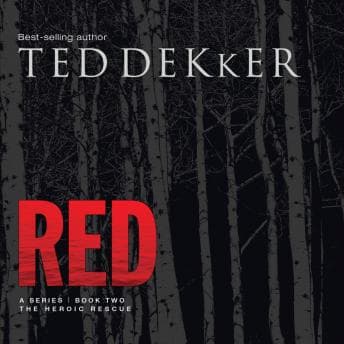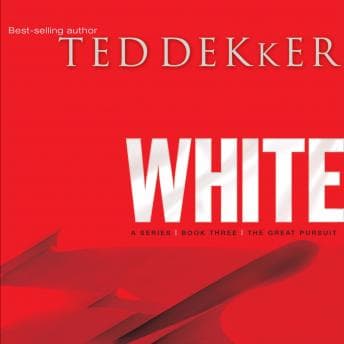

I finished this one at 2 AM on a Tuesday, grading papers long abandoned on my desk, and I sat there in the dark kitchen wondering what exactly Ted Dekker had just done to my brain.
Here's the thing about White - it's the third book in a series that asks you to accept a genuinely wild premise: a man who lives in two realities simultaneously, each one bleeding into the other through dreams. By this point, you're either all in or you've walked away. I was all in. Maybe too in. My wife Denise found me muttering about "the colored forests" while making coffee the next morning.
The Theological Thriller You Didn't Know You Needed
Dekker grew up as a missionary's kid in Indonesia, and you can feel that upbringing seeping through every page. This isn't subtle Christianity-adjacent fiction. This is allegory with a capital A - the kind Bunyan would recognize, dressed up in apocalyptic thriller clothing. The Great Pursuit isn't just a subtitle; it's the entire theological engine driving Thomas Hunter's impossible choices.
What surprised me - and I've read enough religious fiction to be thoroughly skeptical - is how the allegory doesn't smother the story. There's a lethal virus threatening one world. A forbidden love threatening the other. Thomas caught between, realizing he might save neither. The stakes feel genuinely apocalyptic because Dekker commits to the darkness before offering any light.
My students would absolutely hate this. I love it.
Rob Lamont: The Voice That Divides
Now here's where things get interesting. Rob Lamont has divided listeners of this series like nothing I've seen since I tried to teach Faulkner to sophomores. Some folks call him an "amazing storyteller" - and they're not wrong. His emotional delivery during the climactic moments hits with real weight. When Thomas faces impossible choices, Lamont's voice carries the fracture.
But I've also read reviews from listeners who returned the audiobook specifically because of his narration. They preferred reading the paperback. And I understand that too - Lamont has a particular cadence, a way of leaning into the dramatic that works brilliantly for Dekker's heightened prose but might grate if you're looking for something more restrained.
For me? It worked. The material is operatic. Lamont performs it operatically. Match made.
When Dreams Become Structure
This reminds me of what Hemingway said about iceberg theory - except Dekker inverts it. Everything is above the surface here. Both realities, both timelines, all the symbolism laid bare. The dual-world structure could have been gimmicky, but by book three, Dekker has earned it. You stop questioning how Thomas shifts between realities and start feeling the whiplash alongside him.
The prose deserves to be savored. I listened at 1.0x - my students think I'm ancient for this - because Dekker's rhythms are deliberate. The parallel moments between worlds, the echoing imagery, the way a choice in one reality ripples through the other. Speed this up and you lose the architecture.
Who Should Take This Journey (And Who Should Run)
Listen, I need to be honest with you. This is not background listening. This is not "half-attention while doing dishes" material. The dual-world structure demands focus, and the theological weight demands... well, either openness to it or at least tolerance.
If you loved C.S. Lewis's space trilogy, if you've ever wished someone would write Narnia for adults with apocalyptic stakes, if you appreciate fiction that isn't embarrassed about its spiritual convictions - this is your book. I found that same unapologetic theological ambition in City of God, though it takes a very different narrative approach.
If explicit Christian allegory makes you uncomfortable, or if you need your thrillers grounded in a single reality, or if Lamont's dramatic delivery in the earlier books already bothered you - save your credit. No shame in that.
Worth Skipping the Budget Meeting For
I'll confess something. I listened to the final two hours during Principal Martinez's budget presentation last week. (Sorry, Principal Martinez. I was definitely paying attention to your spreadsheets. I wasn't.) But when Thomas makes his final choice - when the Great Pursuit reaches its conclusion - I actually had to pause and collect myself before pretending to care about next year's textbook allocation.
Dekker wrote something genuinely ambitious here. A thriller that's also a meditation on sacrifice. A fantasy that's also an extended theological argument. Children's Bible wrestles with similar questions about faith and crisis, though in a much more contemporary setting. An audiobook that asks for nearly twelve hours of your life and - if you're the right listener - earns every minute.
Lamont understands that pause is punctuation. He gives you room to breathe between the apocalypses. And somehow, impossibly, the ending lands.
Not perfect. Some listeners will bounce hard off the religious elements. Others off Lamont's performance. But for those of us who grew up in pews and still wrestle with what we believe? This is the kind of fiction that keeps us coming back.