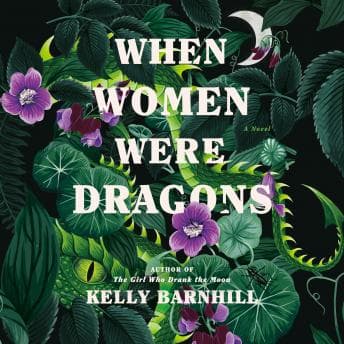

This book made me feel things I wasn't prepared to feel while sitting in my minivan at 2:47 PM waiting for Emma's piano lesson to end.
Let me be upfront: When Women Were Dragons is not my typical comfort read. It's not a rom-com. Nobody opens a bookshop in a small coastal town. Women literally turn into dragons and fly away from their families in 1950s America, and everyone just... pretends it didn't happen. Which, honestly? As a metaphor for how society treats women's rage? Pretty devastating.
The Book That Made Me Google "Can I Actually Breathe Fire"
Here's the setup: Alex Green is a kid whose aunt Marla dragons out — sprouts wings and scales and just leaves — and then Alex's family acts like Marla never existed. They absorb Marla's daughter Beatrice into their household and nobody talks about it. Ever. The whole country does this. Hundreds of thousands of women transform during the Mass Dragoning of 1955, and the national response is basically "shh, we don't discuss that." Congressional hearings happen. Research papers get written by men who clearly don't get it. And Alex grows up carrying all of this silence like a weight.
If you've ever read Lessons in Chemistry and wished Bonnie Garmus had added actual fire-breathing, this is your book. Same 1950s feminist fury, but with scales. The comparison isn't accidental — Garmus herself blurbed it as "completely fierce, unmistakably feminist, and subversively funny." She's not wrong about the fierce part. The funny part comes in smaller doses than I expected.
What got me was how Barnhill uses the dragon thing not just as metaphor but as this deeply specific family story. Alex watching her cousin Beatrice become obsessed with dragoning, her mother becoming more protective and smaller and quieter — that dynamic hit different when you're a mom who left her career and sometimes wonders if she's shrinking too. (Not that I'm going to sprout wings. Though the school carpool lane might finally move faster if I did.)
Kimberly Farr Carries This Thing on Her Back
Two narrators here: Kimberly Farr handles the women and the main storyline, Mark Bramhall takes the male voices and research paper sections. The split works — Bramhall does these dry, clinical committee hearing passages that sound exactly like every condescending male expert you've ever had to sit through, and that's clearly intentional. His urbane doctor reading research papers about dragoning like it's an inconvenient medical condition? Chef's kiss of infuriating.
Farr is the real star though. She voices teenage Alex with this confused warmth that made me ache, and young Beatrice with genuine sparkle. The romantic interludes later in the book? She handles those without that cringe factor that makes you lunge for the volume knob at a red light. Appreciated.
BUT — and this is a real but — at 15 and a half hours, the pacing tested me. There were stretches where I'd come back after Sophie's nap (or non-nap, let's be honest) and feel like I'd lost the thread. Not because the story is complicated, but because it moves at this deliberate, literary pace that doesn't always survive 47 pauses. Some sections felt like wading through something thick. Beautiful thick, but thick. Also, both narrators pronounce "shone" in a way that pulled me out of the story every single time. Once you hear it, you can't unhear it. It's like a tiny splinter.
Who This Is For (And Who Should Bail)
If you want a fast, light listen you can zone in and out of while folding laundry — this isn't it. I tried. I missed things. This one needs your actual brain, which is a big ask when your brain is also tracking whether the toddler has been too quiet for too long.
But if you're in a season where you need a book that says "your anger is valid and maybe even beautiful" — yeah. This one does that. If you loved The Handmaid's Tale but wished it had more hope and also dragons, you'll find something here. If literary speculative fiction with a feminist spine sounds like your thing but you need it to also be warm, Barnhill pulls that off.
Just know: the content warnings list is long. Parent death, emotional abuse, homophobia, gaslighting, grief — it's all in here. This isn't a beach read. I wouldn't call the ending a happy one exactly, but it's satisfying in a way that felt earned rather than forced.
The Car Time Report
I finished this over about ten days, mostly during nap time and my sacred garage-sitting sessions. It took longer than my usual week because I kept needing to sit with certain parts. Made me cry exactly once at school pickup — the scene where Alex finally reckons with what happened to her mother — and I had to pretend it was allergies to another mom in the parking lot. Worth it though.
Not my typical comfort read. Not even close. But sometimes you need a book that's a little uncomfortable, that asks you to look at all the ways women are told to stay small and quiet and grateful. Sometimes you need dragons. Home Front gave me a similar gut-punch about women shrinking themselves to hold everything together — different era, no scales, but that same ache of a life quietly disappearing.