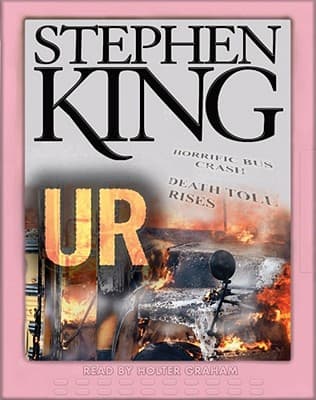

Look, I know what you're thinking. Stephen King wrote a novella about a Kindle? That's the pitch? And yeah, I get it — when UR first dropped as a Kindle exclusive back in 2009, the whole thing reeked of product placement. A lot of listeners still feel that way, calling it an advertising gimmick dressed up in King's name. But here's where I have to push back.
I was shelving returns at the library on a slow Thursday evening — the kind of quiet where you can hear the fluorescent lights buzzing — and I figured a two-hour King novella was the perfect companion. Popped in my earbuds, dimmed the back office lights (because I am who I am), and let Holter Graham do his thing.
The Kindle Is a Trojan Horse
People get hung up on the Kindle thing and miss what King is actually doing here. Wesley Smith, heartbroken English professor, buys an e-reader out of pure spite after his girlfriend mocks his book obsession. (As a librarian surrounded by physical books who also owns an embarrassing number of e-readers, I felt personally called out.) But the Kindle that arrives is wrong — pink instead of white, and it opens doors to alternate realities. Not just alternate timelines. Alternate literary canons. Wesley discovers novels that were never written in our world. Books by authors who died before they could finish their work. Entire bibliographies that don't exist.
This understands that horror isn't about gore — it's about dread. The real terror isn't the device itself. It's the seduction of forbidden knowledge, the way Wesley keeps going deeper into the "Ur" functions, checking other timelines not just for lost books but for newspaper archives. For futures. For things no person should see. King takes what could've been a goofy tech-horror premise and turns it into something genuinely unsettling about obsession and the cost of knowing too much. Shirley Jackson walked so this concept could run — the idea that curiosity is the real monster.
Graham Gets the Job Done (Barely)
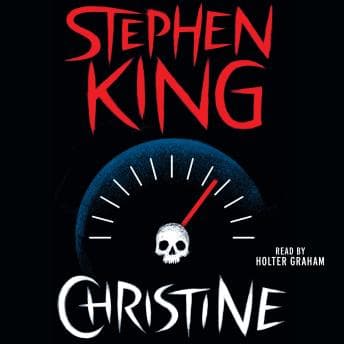
Here's where I have to be honest. Holter Graham is a talented narrator — the man has multiple AudioFile awards, and his work on Christine was genuinely gripping. But UR feels like he's coasting. His Wesley is serviceable, his default American delivery is clean and easy to follow, but there's a flatness to the energy that kept pulling me out of the creepier moments. For a story about existential dread and impossible knowledge, I needed more tension in the delivery. More weight.
Where Graham does shine is the teenage character — there's a voice change there that's note-perfect, capturing that awkward register shift that actual teenagers have. And his first-person digressions feel lived-in, natural, like he genuinely inhabits Wesley's bookish anxiety. But his light, slightly nasal tone works against the horror beats. When the story escalates — when Wesley starts reading about tragedies in other timelines — I wanted Graham to drop into something darker, more urgent. He stays steady. Too steady.
I kept thinking about how King himself would've narrated this. King's not a polished reader, but he commits. He'd have leaned into the weirdness, let his voice crack a little. Graham plays it safe, and safe isn't where horror lives. I clocked that same frustrating restraint recently with Any Means Necessary — a narrator who keeps the dial at six when the material is screaming for ten.
Two Hours of King Being King (For Better and Worse)
At two hours, this is basically a long drive's worth of story, and King uses the runtime efficiently. The setup is quick, the escalation is well-paced, and the Dark Tower connections — oh yeah, the Low Men show up, because of course they do — add stakes without requiring you to have read all seven books. But the ending feels rushed in a way that's very King. He builds this gorgeous, terrifying premise about peering into infinite realities and then wraps it up with a bow that feels a size too small.
The product placement thing? It's there. The Kindle branding is right there in the text, and you can't unhear it. But King has always embedded his horror in the mundane objects of everyday life — Christine was a car, the Buick 8 was a car, the exercise bike in Stationary Bike was literally just an exercise bike. The Kindle fits that tradition. It just has the bad luck of also being a real product that Amazon was actively selling when this came out.
I listened in the dark. Mistake? Maybe. Worth it? Absolutely. There's a sequence where Wesley reads about a catastrophic event from another timeline's newspaper that genuinely made the hair on my arms stand up, even with Graham's understated delivery.
Who Needs This (and Who Can Skip It)
King completists — you probably already have this. Dark Tower fans will want it for the mythology connections. If you're new to King, this is not the place to start. Too short, too dependent on understanding his recurring themes. And if you're coming for a knockout narration performance? Temper your expectations. Graham is competent, not electric.
My podcast listeners are going to love debating this one. Is it a genuine horror story or a glorified Kindle ad? I land firmly on the former, but I won't pretend the branding doesn't leave a weird taste.
Shrley (my cat) was unimpressed. I was unsettled. At two hours, the commitment is minimal and the payoff — while imperfect — is worth your time. Just maybe wait for a sale.