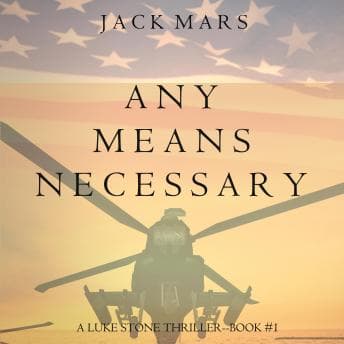

Look, I'll be honest with you. I started this one on a Tuesday morning jog through Cambridge, and by the time I got back to my apartment, I was genuinely annoyed that I had to stop running. That's... not normal for me. My therapist would have thoughts about why I suddenly wanted to keep exercising, but the real answer is simpler: K.C. Kelly had me hooked.
So here's the setup. Nuclear waste gets stolen from a New York hospital (apparently just sitting there, unguarded, because of course it was), jihadists are planning a dirty bomb, and FBI agent Luke Stone has 48 hours to stop them. The target? The President of the United States. And then Luke gets framed for the whole thing because why not pile on more problems.
The protagonist exhibits classic action-hero syndrome - former special forces, elite FBI unit, family in danger, impossible odds. We've seen this guy before. A hundred times. In a hundred different books. But here's the thing: Jack Mars knows exactly what he's doing with the formula. He's not trying to reinvent the wheel. He's trying to make the wheel spin really, really fast. And it works.
Psychologically, this doesn't track in some places. Luke Stone is almost too competent, too unflappable. Real humans under this kind of pressure crack in interesting ways - they make irrational choices, they freeze, they lash out at the wrong people. Luke mostly just... handles it. Which is fine for the genre, I guess, but I found myself asking: why does Luke really keep going when everything's stacked against him? The book gives us surface motivations (family, duty, justice), but never quite gets into the psychological meat of what drives a man to literally sacrifice everything. (Don't tell my students I said that - I'm supposed to appreciate genre fiction on its own terms.)
But okay. Let's talk about why you're actually here: the audiobook experience.
K.C. Kelly. This guy nailed it. His pacing matches the relentless momentum of the plot perfectly - when the action ramps up, his delivery gets tighter, more urgent. When there's a brief moment of calm (rare, but they exist), he lets the tension simmer without losing the thread. His character voices are distinct enough that I never got confused about who was speaking, which sounds like a low bar until you've listened to a thriller where everyone sounds like the same gruff middle-aged man.
The emotional delivery during the family scenes actually surprised me. There's a moment - I won't spoil it - where Luke's personal life crashes into his professional crisis, and Kelly shifts from action-mode to something quieter, more strained. It's subtle, but it elevated what could have been a paint-by-numbers emotional beat.
Now, the criticisms. Some listeners noted minor mispronunciations, including the word 'nuclear' (which, in a book about nuclear terrorism, is... not ideal). I caught it once or twice. Did it ruin the experience? No. Did it make me briefly think about a certain former president's pronunciation issues? Unfortunately yes. But it's a small thing.
The bigger issue - and this is about the book, not the narration - is the political caricature problem. The villains are pretty one-dimensional. The jihadists are stock bad guys with stock motivations. The conspiracy goes exactly where you expect it to go. Mars understands human nature in broad strokes - fear, loyalty, desperation - but he's not interested in the nuances. Which is fine! Not every book needs to be a character study. (I just wish more of them were.)
Research actually shows that readers of action thrillers are often looking for exactly this kind of escapism - clear good guys, clear bad guys, high stakes, fast resolution. If that's you, this delivers. If you're looking for morally ambiguous characters who make you question your own assumptions about justice and violence... maybe try something else.
For that kind of psychological complexity, Gone Girl delivers the moral ambiguity and character depth I'm always craving.
What makes this audiobook work is the combination of Kelly's narration with Mars's pacing. Nine hours flew by. I finished it during a weekend of cooking elaborate dal that I ate alone over three days (don't feel sorry for me, I prefer it), and honestly? Perfect pairing. The kind of book where you keep finding excuses to have your earbuds in.
The audio production is clean - no weird background noise, no volume issues, no jarring transitions. Professional all the way through.
Who Should Listen (And Who Should Skip)
This is for you if you want a political thriller that doesn't ask too much intellectually but delivers on tension and action. Skip it if you need morally complex villains or deep character psychology - you'll be frustrated by the stock bad guys and Luke's superhuman competence.
Final Assessment
K.C. Kelly's narration elevates solid source material into genuinely engaging listening. Just don't expect deep psychological insight into why people do terrible things to each other. (That's what my research papers are for. The ones nobody reads.)
I'm probably going to listen to book two. Maa would not understand why I need more audiobooks when I already have so many.