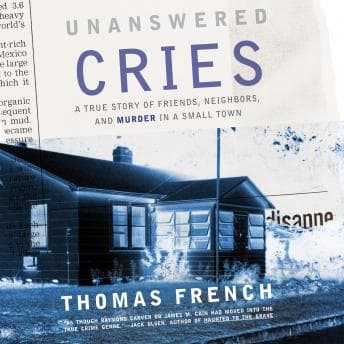

"She screamed. The neighbors heard her scream."
I kept coming back to this detail while cooking dinner alone last Tuesday, the audiobook playing through my kitchen speaker. Karen Gregory screamed for her life, and people heard her. And nobody came. Thomas French doesn't let you forget this. He won't let you off the hook. And honestly? My therapist would have thoughts about why I kept replaying that section.
The Bystander Effect Made Flesh
As someone who's published on diffusion of responsibility (to approximately zero fanfare, but still), this case is a fascinating—and devastating—case study in everything we know about why people don't intervene. French, a Pulitzer Prize-winning journalist, doesn't just report what happened. He reconstructs the psychological architecture of a neighborhood that heard a woman dying and rationalized their inaction. The research actually shows that the more witnesses present, the less likely any single person is to help. Genovese syndrome, we call it. But reading about it in a journal article is one thing. Hearing Mikael Naramore narrate the specific rationalizations these specific neighbors made? That's something else entirely.
What makes this true crime account compelling is French's refusal to turn Karen into a victim-shaped void. She's not just a body on a crime scene photo. She had friends who adored her. She had a life that was specifically, particularly hers. By the time you understand what was taken, you're invested in a way that feels almost unbearable.
Detective Tosi and the Horror of Recognition
Tosi exhibits classic obsessive investigator behavior—staying up nights watching crime scene video, looking for the detail everyone else missed. But French gives us something more psychologically interesting than just a dedicated cop. Tosi slowly realizes the killer is someone he knows. Someone he called a friend.
I found myself asking: why does this revelation hit so hard? Because it shatters the comforting fiction we tell ourselves about monsters. We want killers to be strangers. We want them to look wrong, act wrong, feel wrong. Beneath This Mask explores this same terrifying disconnect between who people appear to be and who they actually are. The research is clear—we're terrible at identifying dangerous people in our own lives. Our pattern recognition fails precisely when we're emotionally close. Tosi's journey from investigation to horrified recognition is the book's psychological spine, and French handles it with restraint that makes the horror land harder.
The Pacing Problem (Yes, There Is One)
Look, I'm going to be honest. The first few chapters move like molasses. French is doing the journalistic thing—setting up the community, establishing context, building the world before he breaks it. I get it. I respect it. I also nearly abandoned the book around hour two while waiting for my dal to simmer. If you're the type who needs immediate momentum, you'll struggle. But if you push through? The slow burn pays off. By the time you're deep into the investigation, you understand why French needed you to know this place, these people, this particular Florida town where everyone knew everyone and nobody knew anything.
Naramore's narration is well-balanced—not over-dramatic, not flat. He doesn't do theatrical voices or melodramatic pauses. For true crime, this is actually ideal. You don't want someone performing tragedy; you want someone bearing witness to it. The pacing criticism from some listeners is fair, but I'd argue it's more about French's prose than Naramore's delivery.
Who Should Listen—And Who Should Skip
This is not background listening. Don't put this on while folding laundry or scrolling your phone. French's narrative journalism demands attention—he's building something careful, and if you miss pieces, the whole structure wobbles. Some listeners found it confusing, and I suspect that's because they weren't fully present. If you're frustrated by true crime that glosses over systemic failures, you might find this cathartic—French doesn't shy away from questioning police and prosecutorial decisions. But if you want clear-cut heroes and villains, you'll be disappointed. Psychologically, this doesn't track as a simple good-versus-evil story. It's messier than that. More human.
Content warning: this is a rape and murder case. French doesn't exploit the violence, but he doesn't sanitize it either. The white lace teddy missing from Karen's drawer. The barefoot bloody footprints. These details matter to the investigation, and French includes them. Know yourself before you commit to thirteen hours.
The Question That Kept Me Up at 2 AM
The title is perfect, actually. "Unanswered Cries." Not just Karen's screams that night, but all the questions this case leaves hanging. Why didn't anyone help? How do we live next door to killers without knowing? Good Samaritan wrestles with similar questions about intervention and moral responsibility. What does it mean that the monster was someone's friend?
I finished this at 2 AM, unable to sleep, thinking about the neighbors who heard and didn't come. We like to believe we'd be different. The research says we probably wouldn't be. French knows this. He's not letting any of us off the hook.