
"People are the foundation of any company's success."
I hit pause on that line somewhere around the 45-minute mark. Not because it was revolutionary—my parents ran their dry cleaning business on that exact principle for 30 years without a single TED talk. But because hearing Eric Schmidt say it made me realize what this book actually is: Silicon Valley finally discovering what immigrant small business owners have known forever.
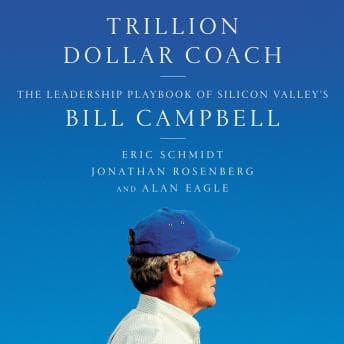
Look, here's the thing. Bill Campbell was clearly a remarkable human. The guy coached Steve Jobs. Larry Page. Eric Schmidt himself. He was the "Coach" everyone in tech wanted in their corner. And at 5 hours and 42 minutes, this is mercifully short for a business book—which I respect. But let's be real about what you're getting here.
The Playbook That Isn't Really a Playbook
The title promises a "Leadership Playbook." What you actually get is closer to a eulogy with bullet points. And I don't mean that as harshly as it sounds—the stories are good. Bill hugging people. Bill calling BS on executives. Bill showing up for people when it mattered. The man clearly had emotional intelligence that most tech founders couldn't buy with their IPO money.
But the "codified wisdom"? It's stuff like: trust your people, build relationships, be present. My 2.0x speed couldn't save me from the feeling that I'd heard most of this before. Not because it's wrong—it's absolutely right—but because the principles aren't the hard part. The execution is. And this book is light on the "how" of becoming someone like Bill Campbell.
I listened to this during a client engagement with a Series B startup whose founders couldn't agree on who should run product. Would Bill's advice to "love your people" help them? Sure. Eventually. Maybe. But they needed tactical conflict resolution, not inspiration.
Dan Woren Does the Heavy Lifting
Here's what actually works: Dan Woren's narration is clean and smooth. No weird inflections. No dramatic pauses where they don't belong. He reads like a competent executive giving a keynote—which, given the content, is exactly right. The production quality is solid, no complaints there.
The stories about Bill are genuinely warm. There's a moment where they describe how he'd start meetings by asking about people's weekends, their kids, their lives—before any business talk. That landed for me. My parents did the same thing with their customers. Mrs. Kim's daughter getting into UCLA was as important as her dry cleaning order. That's relationship building. That's trust.
But then the book would pivot back to "Bill believed in X" and I'd feel the energy drain.
The Silicon Valley Bubble Problem
Here's my real issue. This book is written by Google executives, about a guy who coached Google executives, for people who want to be like Google executives. The examples are all Apple, Google, Intuit. The relationships are all venture capitalists and tech founders.
If you're running a 50-person manufacturing company in Ohio, how much of this translates? Some of it, sure. The core human stuff is universal. But the context is so specific to a certain world that it can feel like reading about leadership on another planet.
I've seen this pattern before. Successful people write books about their mentors, and the lessons get filtered through the success. Bill Campbell's principles worked—but so did a thousand other factors. The sample size is tiny. The survivorship bias is real.
(Jenny would say I'm being harsh. Jenny is right. But she also didn't have to sit through three different clients this quarter who wanted to "be like Google" without Google's resources.)
Worth the Listen? Depends on Your Starting Point
Bottom line: If you want to feel inspired about leadership and human connection, this delivers. If you want a tactical manual for becoming a better coach yourself, you'll need to supplement heavily. The book confirms good instincts more than it teaches new skills. The 50th Law at least gives you frameworks you can actually apply, even if the street-to-boardroom metaphors get heavy-handed.
Skip to the chapters on team dynamics and conflict resolution—that's where the meat is. The origin story stuff and the endless parade of testimonials from famous people? Skim-worthy at best.
For commuters who want something light but business-adjacent, this works. Dare to Lead tries harder on the transformation front, though it has its own issues with tactical depth. For anyone looking for genuine transformation in their leadership approach, you'll finish feeling warm but not much wiser. It's a tribute dressed as a playbook, and once you accept that, the expectations calibrate properly.
Who Gets Value Here (And Who Doesn't)
Listen if you're a mid-career leader who's already got the tactical chops and needs a reminder that the soft stuff matters. Skip if you're looking for a step-by-step coaching methodology—this isn't it. And if you're outside the tech bubble entirely? Brace yourself for a lot of name-dropping that won't mean much.
The ROI Calculation
At under 6 hours, it doesn't overstay its welcome. That alone puts it ahead of 80% of the genre. But "not as bad as most" isn't exactly a ringing endorsement.
Would I recommend it? To the right person, yes. To my startup clients? Only if they've already mastered the basics and need a reminder of why the soft stuff matters. To my parents? They'd listen, nod, and say "we already knew this." They'd be right.