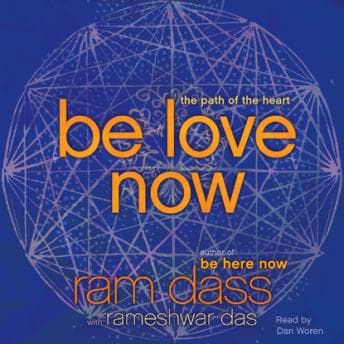

I was on a red-eye to Denver, couldn't sleep, and figured - okay, let's do some spiritual growth at 35,000 feet. Ram Dass has been on my list forever. My parents never had time for meditation or mantras. They had a dry cleaning business to run. But I've always been curious about the guy who told a generation to "be here now" and then spent forty years figuring out what that actually meant.
Bottom line: There's maybe three hours of genuine wisdom buried in ten hours of repetition. My 2.0x speed couldn't save this one.
The Maharaj-ji Problem
Look, Ram Dass clearly had a life-changing experience with his guru Neem Karoli Baba (Maharaj-ji), and I respect that. The man went from Harvard professor to spiritual seeker to stroke survivor, and he's got hard-won insights about love, service, and letting go of ego. Some of it genuinely landed. His reflections on aging and mortality hit different when you know he's speaking from a body that betrayed him. The framework of moving from ego to soul to pure awareness - that's useful stuff.
But here's the thing. He tells the same Maharaj-ji stories. Over. And over. Different chapters, slightly different framing, same anecdotes. By hour six, I could predict which guru encounter was coming next. This is what my parents did instinctively - loving through action, serving without attachment - except they never needed eight hours to explain it. They just opened the shop at 6 AM and pressed shirts until their backs ached.
When Your Narrator Doesn't Speak the Language
Dan Woren has an Earphones Award. He's clearly a professional. And he sounds like he's reading a script he doesn't understand.
The mispronunciations of Indian terms, city names, and people's names are constant and distracting. When you're trying to absorb teachings about bhakti yoga and the narrator stumbles through Sanskrit like he's reading a pharmaceutical insert, it breaks the spell. Spiritual audiobooks live or die on whether the narrator can create sacred space with their voice. Woren creates... a conference room. Pleasant enough. Competent. But you can hear the disconnect between the words coming out and any felt sense of what they mean.
I kept thinking - Ram Dass himself narrated some of his earlier work. Why wasn't he involved here? Even post-stroke, his voice carried something Woren's simply doesn't. Jenny would say I'm being harsh. Jenny is right. But also, I'm right.
The 10-Hour Question
Here's my McKinsey brain talking: what's the ROI on ten hours of spiritual teaching that could've been three? The core message - that love is the path, that serving others opens the heart, that the guru is ultimately within you - is valuable. But Ram Dass circles it endlessly, approaching from every angle, when sometimes you just need the direct route.
Skip to chapter 5. Thank me later. Actually, skip around liberally. The book doesn't build linearly anyway. It's more like a meditation retreat where the teacher keeps returning to the same themes. Which is fine in a weekend intensive. Less fine when you're trying to get through it on business trips.
I've seen this pattern in consulting too - the client who can't stop telling you about their founding story instead of getting to the problem. Passion without editing.
Who Should Listen (And Who Should Skip)
If you're already a Ram Dass devotee, you'll probably love this. It's like sitting with an old friend who wants to share everything he's learned. The devotional quality is genuine. The love is real.
If you're new to his work? Start with the original "Be Here Now" or find his lecture recordings where his actual voice carries the teaching. This audiobook is the padded corporate version of something that was once raw and revolutionary.
If you're a skeptic looking for practical application? Skip this entirely. There's no framework, no action steps, no metrics. It's pure devotional teaching, and either that lands in your heart or it doesn't. Prayer: Experiencing Awe and Intimacy with God operates in similar territory—devotional rather than prescriptive—but at least Keller gives you something to do with the longing.
The Credit Decision
I can't tell you this is worth a full credit. Ten hours is a significant commitment, the narration undercuts the material, and the repetition tests your patience. But I also can't tell you it's worthless. Ram Dass earned his wisdom the hard way, and some of it genuinely transmits - even through Woren's clinical delivery.
Wait for a sale. Or better yet, stream it through your library. Treat it like background listening while you're doing something else. Let the concepts wash over you without demanding your full attention. That's actually closer to how meditation works anyway.
My parents would've called this "too much talking, not enough doing." They weren't wrong. But they also never stopped moving long enough to ask what all the doing was for. Maybe that's the real teaching here - somewhere between Ram Dass's endless contemplation and my parents' relentless action, there's a middle path. The audiobook just takes too long to say so.