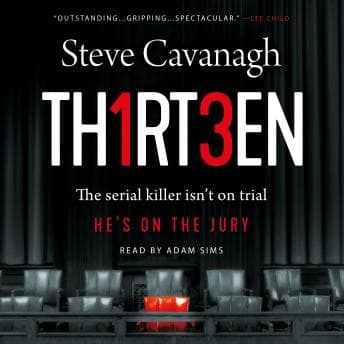

What would you do if you found out the person deciding your client's fate was the actual killer?
I was making scrambled eggs for the kids at 7:45 AM - still wired from a shift where we'd had three traumas roll in back-to-back - and I had about twenty minutes left on this book. Carlos walked in, saw my face, and asked if someone had died at work. No. Someone died in my earbuds. Multiple someones. And I was absolutely furious I had to pause to plate breakfast.
The Premise That Made Me Almost Miss My Exit
Look, I've listened to a lot of legal thrillers. A LOT. Most of them blur together after a while - same cynical defense attorney, same impossible case, same last-minute courtroom revelation. Cold Vengeance was the last one that actually stuck with me before this - and even that didn't do anything quite this bold with its setup. Steve Cavanagh's Thirteen starts with a premise so audacious I actually laughed out loud on my drive home the first night. The serial killer isn't the defendant. He's sitting in the jury box. Joshua Kane has literally murdered people to secure his spot on a jury so he can make sure the wrong man gets convicted.
That's... that's not how jury selection works, my brain screamed. And then Cavanagh - who is an actual practicing lawyer - walked me through exactly how Kane gamed the system, step by methodical step. And I stopped laughing. Because it felt plausible. Uncomfortably plausible. The same way I feel when a thriller gets triage protocols right - that cold little chill of "oh, someone actually knows what they're talking about."
Eddie Flynn, the former con man turned defense attorney, is the kind of protagonist I didn't know I needed. He's not slick. He's scrappy. He uses his grifter past to read people, to spot lies, to pull courtroom moves that feel like street magic. There's a scene where he demonstrates to the jury how a dollar bill trick works to make a point about misdirection, and I swear I held my breath in my car like I was watching it happen live.
The Killer's POV Segments Hit Different at 4 AM
Here's what surprised me. The chapters from Kane's perspective? Cold. Clinical. Not theatrical-evil-villain cold, but the kind of detached, procedural coldness I've seen in real life from patients who scare the attending physicians. The way he calculates, plans, treats people as obstacles rather than humans - Cavanagh writes a psychopath the way they actually present. Not with dramatic monologues. With checklists.
Adam Sims narrates, and he makes a smart choice here. Eddie's chapters get this scrappy New York energy - not a thick accent, just enough edge to remind you this guy grew up running cons, not studying for the bar. But when he shifts to Kane's POV, the voice goes flat. Controlled. Almost pleasant. That contrast is what kept me checking my rearview mirror on dark Phoenix highways at 3:30 AM. Sims gives the supporting cast enough distinction that I could follow who was talking, which matters because - fair warning - there are a LOT of characters. Lawyers, jurors, FBI agents, witnesses. I won't pretend I kept every single name straight, but the voices helped.
Where It Stumbles (But Doesn't Fall)
The character overload is real. Cavanagh throws names at you fast, especially in the first few hours, and if you're listening while doing anything else - charting, cooking, existing as a tired human - you might lose track of who's who on the jury. This is not a background-listening book. This is a "pause the audiobook when someone talks to you" book.
And some of the coincidences in the plot require you to just... go with it. Kane's ability to be in the right place at the right time, his seemingly unlimited skill set - there are moments where the thriller logic stretches past what feels possible. But honestly? The pacing is so relentless that by the time my brain caught up to say "wait, that's a stretch," we were already three moves ahead.
The dual perspective structure - bouncing between Eddie trying to prove his movie-star client innocent and Kane trying to ensure a guilty verdict from inside the jury room - creates this ticking-clock tension that genuinely had my heart rate up. As someone who's actually worked a code, I know what real adrenaline feels like. This book got close.
Who Needs This in Their Ears
If you love legal thrillers but you're tired of the same formula, this is it. If you want a villain who's terrifying because he's competent rather than cartoonish, this is it. If you need something to keep you awake and engaged during a long commute or a quiet night shift - night shift approved.
Skip it if you need a slow build. This thing hits the ground running and doesn't really let up, which is either a feature or a bug depending on your mood.
Carlos asked why I was so amped up after my drive home. I told him about the jury twist. He said, "That's not how juries work." I said, "That's what I thought. Listen to the book." He's on chapter three.
The Discharge Orders
Eleven and a half hours well spent. Steve Cavanagh knows his courtrooms the way I know my trauma bays - from the inside, with the scars to prove it. Thirteen isn't flawless, but it's the kind of thriller that makes you forget you've been awake for sixteen hours. And coming from me, that's the highest compliment I've got.