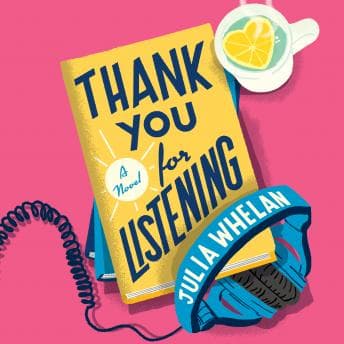

I was supposed to be grading sophomore essays on The Great Gatsby. It was 11:47 PM, the stack wasn't getting any smaller, and I made the executive decision that Nick Carraway's unreliable narration could wait until tomorrow. So I put on what I thought would be light background listening while I at least pretended to work.
Three hours later, the essays remained untouched. Denise found me at 2 AM, headphones in, openly weeping at my kitchen table.
This is not background listening material. This is a book that demands your full attention and will absolutely wreck you if you let it.
When the Author IS the Narrator (And Actually Gets It)
Here's the thing about Julia Whelan—she's narrated over 600 audiobooks. She knows this industry the way I know which students actually read the assigned chapters versus which ones skimmed SparkNotes. And she wrote a novel about audiobook narration, then narrated it herself. The meta-layers here could fuel an entire semester of literary analysis.
But it works. God, does it work.
The opening scene—Sewanee on an airplane, her racy romance novel narration blasting through a fellow passenger's headphones—is the kind of cringe-comedy that made me literally pause and take off my own headphones to recover. Whelan's timing is impeccable. She knows exactly when to lean into the absurdity and when to pull back. When she slips into Brock McNight's voice, deepening her register for the male protagonist, there's this wonderful tension between performance and authenticity that mirrors exactly what the book is exploring.
My students would hate this. I love it.
The Romance Novel Defense I Never Expected to Write
Look, I teach Hemingway and Faulkner. I've spent twenty years defending the canon to teenagers who'd rather watch TikToks. I am not, traditionally, a romance guy.
But Whelan does something sneaky here. She writes a romance novel that's also a meditation on storytelling itself—on why we read, why we listen, why we need narratives that promise happy endings even when life doesn't. That same exploration of why we need stories—especially ones with hope baked in—runs through Jane Eyre, though Brontë's version involves significantly more Gothic mansions and fewer recording booths. There's a scene where Sewanee discusses the audiobook narration process, the technical choices involved in translating text into voice, and I found myself nodding along like she was describing what I try to do in every class.
Is the plot predictable? Sure. You can see where it's going by hour four. But this reminds me of what Hemingway said about knowing the ending—it's not about surprise, it's about inevitability feeling earned. And Whelan earns it.
Some reviewers complained about social and political commentary woven into the narrative. I'll be honest—I barely noticed it. Maybe because I'm used to finding subtext in everything (occupational hazard), or maybe because it felt organic to the characters rather than preachy. Your mileage may vary.
Who Should Listen (And Who Should Skip)
If you love audiobooks—I mean really love them, love the medium itself, love thinking about what makes a great narrator great—this is required listening. It's a love letter to the art form wrapped in a genuinely affecting romance.
If you're allergic to romance novel conventions, even when they're being examined and celebrated, you'll probably get frustrated. The steamy scenes are there. The grand gestures are there. The secrets-and-miscommunication plot beats are there. Whelan isn't deconstructing romance so much as asking us to take it seriously.
And if you need constant plot twists to stay engaged? This isn't that. It's a slow burn that trusts you to care about the characters enough to follow them through their emotional journey.
Worth Showing Up to First Period Looking Wrecked
I finished this at 3 AM on a school night and showed up to class looking like I'd been crying. (I had been.) One of my students asked if I was okay. I told her I'd been reading. She looked at me like I was insane.
Maybe I am. But Julia Whelan wrote a book about a woman who lost her dreams and found new ones, narrated it with the kind of emotional precision that only comes from truly understanding both the craft and the content, and made this cynical English teacher believe in happy endings for eleven hours and sixteen minutes.
I listened at 1.0x, obviously. The author chose those words. Whelan chose exactly how to deliver them. And I chose to hear them properly.
The essays got graded eventually. Gatsby's still unreliable. But I'm adding this to my secret list of books I recommend to students who say they don't like reading. Sometimes the best defense of literature comes from the genres we're taught to dismiss.