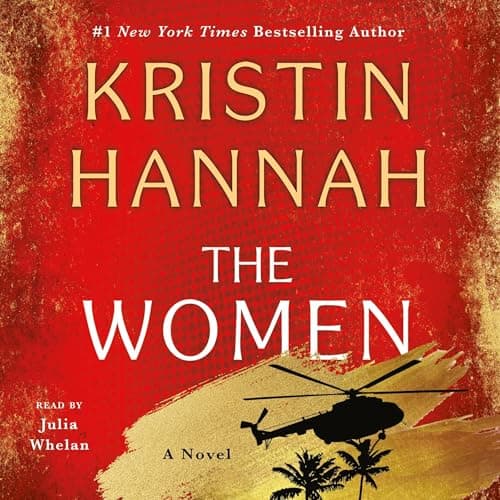

I have a standing complaint about a certain kind of historical fiction: too many novels want the war to be dramatic and the aftermath to be tidy. Clean tears. Noble suffering. A final chapter that pats everyone on the head and sends them home. The Women refuses that comfort, and thank God for that.
I listened to big chunks of this one while walking the lakefront with Denise, gray water on one side, runners pretending January in Chicago is "invigorating" on the other. And this book did that rare thing - it made me stop noticing the scenery. I was too busy being furious at the way Frankie McGrath is sent into history and then practically erased from it.
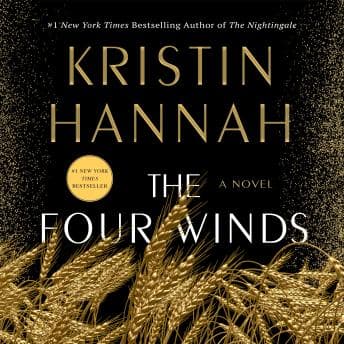
Kristin Hannah has always known how to write pain in a way that keeps pages turning. Here, she aims that instinct at Vietnam, but not from the battlefield perspective we've been trained to expect. She gives us a young Army nurse from a sheltered Southern California family, a woman raised to be good before she learns how expensive goodness can be. That's the engine of the novel. Frankie doesn't begin as a rebel or a symbol. She begins as a believer. Which makes what happens to her hit harder.
The history class we never taught properly
Let's talk about what the author is really saying. This isn't just "women were there too," though that matters. It's about what happens when a country builds its myths around male heroism and then has no language for the women who bled in the same war zone, carried the same trauma, and came home to the same wreckage.
The Vietnam sections work because Hannah doesn't romanticize chaos. The nerve-racking helicopter ride into danger has the kind of audio tension that makes your shoulders climb toward your ears. And the hospital scenes - where youth, terror, triage, and sheer overload collapse into each other - feel relentless in the right way. Not exploitative. Just brutal. My students would hate this. I love it.
Then comes the part many war novels shortchange: home. Frankie returns not to gratitude or even clarity, but to a country divided against itself and determined to simplify everyone else's suffering. The peace rally scenes are especially effective because they don't flatten the moral mess into easy villains and saints. You feel the anger, the confusion, the generational rupture. More importantly, you feel Frankie's dislocation. War made her visible to herself. America makes her invisible again.
Hannah is smart enough to show that trauma rarely arrives alone. PTSD, substance abuse, heartbreak, the humiliating question of whether your pain "counts" - it all stacks. Frankie's breakdown scenes are difficult to hear, and they should be. This reminds me of what Hemingway said about real courage: grace under pressure. But Hannah adds the corrective history has often skipped - what if the pressure never ends once the war is over?
What Julia Whelan understands about sorrow
Julia Whelan was the right narrator for this. Full stop.
She has that low-pitched, fluid voice that can sound calm without ever sounding detached, and that's a hard trick. Frankie needs a narrator who can register innocence, competence, panic, and later that frayed, almost dissociated exhaustion of someone carrying too much for too long. Whelan gets all of it. She understands that pause is punctuation. She knows when to let a line sit there and accuse you.
Her performance in Frankie's emotional and physical collapse is probably the reason this audiobook works as well as it does. On the page, those scenes might risk tipping into melodrama for some readers - and to be fair, Hannah sometimes writes near the edge of overstatement. In audio, Whelan gives the pain shape and restraint. She doesn't sob at you. She lets the hurt spread gradually through the sentence, which is much more devastating.
She's also excellent at small shifts between characters. Not cartoon voices. Not "look at me, I'm acting" nonsense. Just enough tonal adjustment that conversations stay clear, and the mood changes land. That matters in a novel where friendship is as important as romance, and where emotional allegiance can shift scene by scene.
If I have one caveat, it's this: Whelan's natural melancholy won't suit every listener. There is a sadness in her instrument even before the book earns it. I happen to think that's a feature, not a bug, because this story is haunted from the beginning by what Frankie doesn't yet know. But if you prefer brighter, brisker narration, you'll notice it.
No sound effects. No production gimmicks. Just clean audio and a performer who trusts the material. Worth pausing the faculty meeting for.
Who this is for - and who should back away slowly
If you loved The Nightingale, this is its spiritual successor, though with more institutional anger and less sentimental glow. It's for listeners who want historical fiction to do more than recreate clothing and slang - people willing to sit with war's afterlife, not just its explosions. And it's absolutely for anyone interested in the forgotten history of women who served in Vietnam.
Skip it, or at least save it for a steadier season, if you're looking for comfort listening. I had a similar warning to issue when I reviewed Enemy (Jack Reacher 8) — lighter genre, yes, but that one also surprised me with how dark and institutional its violence gets, which not every listener is ready for. This book carries violence, PTSD, substance abuse, suicide attempt, infidelity, miscarriage, and enough emotional wreckage to flatten a weekend. Also, despite the romance elements, this is not primarily a love story. The deepest relationships here are friendships forged under pressure and tested long after the uniforms come off.
One more thing before the bell
The Women works because it is angry in a disciplined way. It wants remembrance, not just tears. It wants to restore women to the historical record, yes - but also to the emotional record. That's bigger. That's harder.
So no, this isn't a subtle little chamber piece. Hannah swings for the back row. Sometimes she swings so hard you can see the machinery. But when she's this locked in, and when Julia Whelan is there to carry the emotional weight, I don't much care. The writing deserves to be savored, and the pain deserves to be heard properly at 1.0x.
I finished it a little after 11 PM, papers still ungraded, house quiet, that particular post-book silence settling in. The kind where you don't start another audiobook right away because anything else would feel trivial.
That's usually how I know one got me.