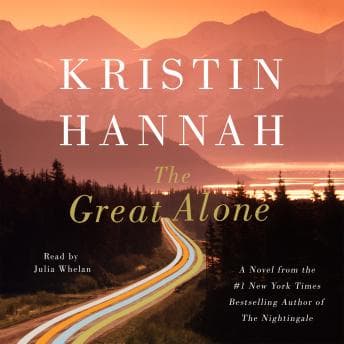

Cold Wind and Colder Fiction
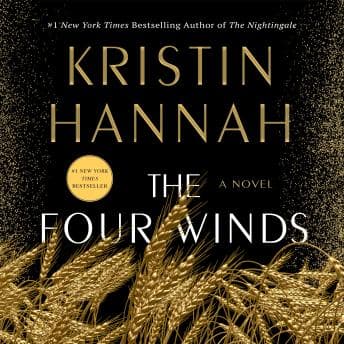
I was walking the Lakefront Trail here in Chicago—mid-February, wind whipping off the water like it has a personal vendetta against my ears—when I started this book. I thought I knew cold. I didn't know cold.
(And yes, I know listening to a book about freezing to death in Alaska while freezing my face off in Illinois is a specific kind of masochism. My wife Denise just rolled her eyes when I told her. She's smarter than me.)
Usually, I'm buried in The Great Gatsby essays this time of year, trying to explain to 16-year-olds why the green light isn't just a traffic signal. But I needed a break. I needed something that wasn't homework. And honestly? This book wrecked me. In the best way possible.
The "Julia Whelan" Factor
Let's be real for a second. If you listen to audiobooks, you know Julia Whelan. She's like the Meryl Streep of the narrator booth. She does the same kind of magic in Beach Read, where she somehow makes a rom-com feel like it has actual stakes.
My students think I'm ancient because I talk about "performance" in reading, but Whelan proves my point. She doesn't just read the words; she inhabits the white space between the lines.
The story is told mostly through Leni, a teenager caught between a rock and a hard place (the rock is Alaska; the hard place is her father's PTSD-fueled rage). Narrating a 13-year-old girl is usually a disaster zone for adult narrators. It gets squeaky. It gets annoying. But Whelan? She nails the vulnerability without making Leni sound like a cartoon character.
Where she really scares the hell out of you is with Ernt, the father. She drops her register just enough—not a caricature of a man, but a shifting, dangerous tone that made the hair on my arms stand up. There were moments walking home where I literally stopped moving because the tension in her voice was so thick I couldn't focus on putting one foot in front of the other.
Alaska as a Character (Yes, I'm Going There)
Okay, English teacher hat on for a second. (Sorry, I can't help it.)
In the classics, we talk about setting as character. Hardy's heath, Conrad's jungle. Kristin Hannah does that here with Alaska. It's beautiful, sure. But it's also trying to kill you.
The descriptions are lush—maybe a little purple at times, if I'm being critical—but in audio? They sing. Whelan paces the landscape descriptions slowly, letting you feel the isolation. You get the sense that the silence of the snow is just as dangerous as the volatile father inside the cabin.
It reminds me a bit of Jack London, but if London cared more about domestic dynamics than wolves. Kristin Hannah pulls off that same balance of historical weight and intimate character work in Nightingale: A Novel, though that one trades Alaska for occupied France. The survival isn't just physical; it's emotional. And frankly, the emotional stuff is harder to listen to. The domestic abuse scenes are raw. There's a "trap" feeling to the narration that makes you feel claustrophobic, even though they're in the middle of a vast wilderness.
Where It Wobbles (But I Don't Care)
Look, is it perfect? No.
Toward the end, the plot goes a little… soap opera. I won't spoil it, but things happen fast and the trauma pile-up gets to be a bit much. If I were reading this with my eyes, I might've skimmed. I might've rolled my eyes at the melodrama.
But this is why audio is magic. Whelan sells it. She sells the rush, the panic, the grief. She commits so hard to the emotional reality of the characters that you forgive the plot for going off the rails a bit.
I found myself sitting in my car in the school parking lot for twenty minutes after a faculty meeting, just letting the engine run, listening to the final chapters. Principal Martinez waved at me. I didn't wave back. I was in 1974 Alaska.
The Bottom Line
This isn't "high literature" like the Faulkner I force on my podcast listeners (all 47 of them). It's melodramatic, it's intense, and it wears its heart on its sleeve.
But the narration is exceptional. It's a performance that grabs you by the throat and drags you into the snow. If you can handle the heavy themes—domestic abuse, PTSD, survival at its rawest—this is worth every minute. Skip it if you need something light, or if you're not ready for unflinching portrayals of family violence.
Just maybe don't listen to it in the middle of a Chicago winter. It's cold enough already.