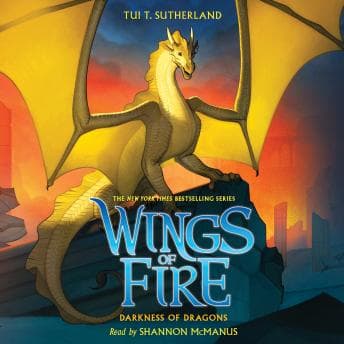

"Someone needs to stop him. A real hero."
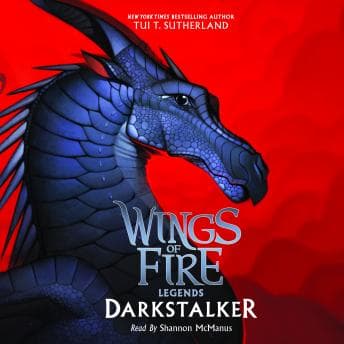
That line hit me at about the halfway mark while I was stress-cleaning the kitchen at 11 PM - Jenny was already asleep, and I was scrubbing the stovetop like it owed me money. And look, I need to explain something: I'm a 38-year-old management consultant reviewing a middle-grade dragon fantasy. Book nine of a series. For kids. My niece got me into Wings of Fire last summer when she stayed with us, and now I'm 70,000 words deep into dragon politics at 2.0x speed on a Tuesday night. We don't talk about that either.
But here's the thing - Turtle's entire arc in this book is basically the story of every quiet operator I've ever coached in a startup. He has power. Real, world-altering animus magic. And he hides it. Not because he's lazy, but because he's watched what power does to the people who use it. This is what my parents did instinctively. Now it has a TED talk. My dad could've expanded, franchised, leveraged. He kept one shop. He kept it clean. He kept it honest. Turtle gets that impulse, and Tui T. Sutherland writes it with genuine understanding of what it costs to stay small when you could be big.
The Reluctant Protagonist Problem
Here's where the book struggles, and the listener complaints about filler aren't wrong. Turtle spends a LOT of this 7 hours and 54 minutes watching. Observing. Following Darkstalker around Jade Mountain Academy like a nervous intern tailing a charismatic CEO who everyone loves but whose numbers don't add up. I've seen this dynamic at three different companies - the founder everyone adores, the quiet finance person who sees the cracks, and nobody listens until quarter four when the whole thing implodes.
The problem is that observation isn't inherently dramatic in audio form. Sutherland is building tension, and I respect the craft - Darkstalker's charm offensive is genuinely unsettling because you can feel how reasonable he sounds. His logic for each "small" use of power is impeccable. Classic scope creep. But the middle section drags. Even at 2.0x, there are stretches where Turtle is essentially eavesdropping on conversations that don't move the needle. Skip to chapter 5. Thank me later. That's where the real tension between Turtle's passivity and the escalating threat starts cooking.
The ending, though - it goes from simmer to full boil in about 20 minutes. Way too fast. It's like a pitch deck that spends 45 slides on the market analysis and crams the financials into two. The epilogue cliffhanger is effective, almost annoyingly so, because it earns about 60% of the emotional weight it's reaching for. The other 40% needed another chapter of buildup that got sacrificed somewhere.
Shannon McManus Carries the Inventory
McManus is doing real work here. She's voicing an entire civilization of dragons across multiple tribes, and each one lands distinct enough that you don't lose track during the political maneuvering. Her Darkstalker has this warm, almost paternal quality that makes his manipulation land - you understand why everyone buys what he's selling. And her Turtle is deliberately understated, a little hesitant, which is perfect for the character but occasionally makes the slower sections feel even slower.
The contrast between her Darkstalker voice and her Anemone voice - Turtle's sister, who's becoming increasingly volatile with her own animus power - that's where the performance really earns its keep. You can hear the family resemblance and the divergence simultaneously. It's subtle character work in a genre that doesn't always demand it.
Who Gets ROI on This
If your kids are already in the Wings of Fire universe, this is a mandatory listen. Full stop. The series continuity demands it, and the Darkstalker arc is building toward something significant. If you're a parent listening along (don't judge me), there's genuine substance in the power-and-responsibility themes. Better ethics curriculum than most MBA programs I've sat through, honestly.
If you're thinking about starting the series here - don't. You'll be lost within 10 minutes. This is book nine. It assumes you know the tribes, the prophecies, the history. Jumping in cold would be like joining a board meeting in progress with no deck.
The key takeaway is worth the listen. The other 7 hours? Not so much. Maybe 5.5 hours of real substance once you trim the observational padding.
The Dry Cleaning Test
My parents would've understood Turtle immediately. The kid who has the talent to change everything but chooses restraint because he's watched ambition corrode everyone around him. That's not cowardice - it's pattern recognition. Sutherland gets this right even when the pacing stumbles. The same quiet recognition - that sometimes the most radical act is refusing to become what the world keeps rewarding - is what made Dying to Be Me stick with me in a completely different register: Anita Moorjani also had to learn that staying small isn't the same as staying safe, and that the courage to stop performing power is its own kind of transformation. Jenny would say I'm being harsh on a children's book. Jenny is right. But even kids' books should respect the listener's time, and this one asks for patience it doesn't always repay. Still - that core idea about the courage it takes to stay invisible when you could be powerful? That's a lesson most business books at ten times the price never figure out.