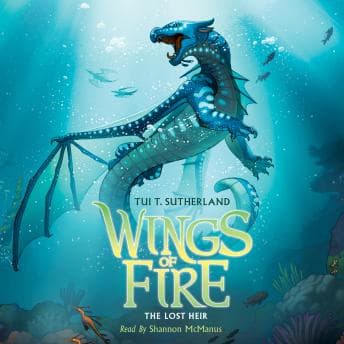

Okay, so here's the thing about middle-grade fantasy: it either takes you seriously or it doesn't. And Wings of Fire? It takes you seriously.
I grabbed this audiobook because my D&D group has been running a dragon-heavy campaign and I needed... research. Yeah, let's call it research. Eight and a half hours later, I'm genuinely invested in dragonet politics and wondering why more adult fantasy doesn't have this level of world-building clarity.
Five Dragonets Walk Into a Prophecy
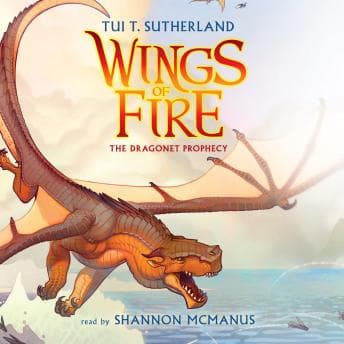
The setup is deceptively simple—five young dragons, raised in a cave, destined to end a generations-long war between seven dragon tribes. Classic chosen-one stuff, right? Except Sutherland does something clever. These dragonets didn't ask for this. They were literally collected as eggs, raised by guardians who range from "well-meaning but strict" to "genuinely terrible," and they're kind of over it.
Clay, our main POV character, is a MudWing who's supposed to be some prophesied hero but mostly just wants everyone to get along and maybe have a snack. He's a big sweet boy in a world that keeps demanding violence from him. And honestly? That tension carries the whole book. The prophecy says these five will end the war. The dragonets just want to find their families and figure out who they actually are.
The world-building here is chef's kiss. Seven distinct dragon tribes, each with their own abilities, territories, and political alliances. SandWings can survive in deserts. SeaWings breathe underwater. NightWings have mysterious powers and even more mysterious motives. It's giving D&D dragon ecology but for kids, and I mean that as the highest compliment.
Shannon McManus Understood the Assignment
Narrating a book with this many dragon characters could go wrong in so many ways. You've got five main dragonets, multiple adult dragons, different tribes with different vibes—it's a lot. McManus doesn't just handle it, she makes it look easy.
Each dragonet gets their own voice. Glory (the RainWing who everyone underestimates) sounds appropriately sardonic. Tsunami (the SeaWing princess who doesn't know she's a princess yet) has this fierce energy that matches her personality. Starflight (the anxious NightWing) sounds exactly like that kid in your class who read the textbook ahead of time.
But what really works is the pacing. This book has action sequences—escape attempts, fights, genuinely tense moments—and McManus keeps the energy up without going over the top. She's not doing theatrical voices for the sake of it. She's serving the story. One listener review said she "goes straight to the action with breathless excitement" and yeah, that's exactly right.
The production is clean, no weird audio glitches or background noise. Just solid, professional work that lets you focus on the actual story.
Roll for Initiative (Or Don't)
Here's where I get real for a second. This is middle-grade fantasy. The target audience is like 8-12 year olds. And it's genuinely great for that demographic—my cousin's kids are obsessed with this series.
But.
I'm a grown adult who writes about procedural generation (theoretically) and plays D&D every week, and I had a good time. The writing is accessible without being dumbed down. The politics between dragon tribes are legit interesting. Jungle Book pulls off that same trick—stories that work for kids without talking down to anyone. The characters have actual arcs.
If you're looking for something to listen to with kids on a road trip? This is perfect. If you're a fantasy nerd who wants something lighter between your Sanderson epics? Also works. If you need grimdark and moral ambiguity in every book you consume? Maybe skip this one.
Fair warning: there's some violence. Dragons fight. Characters die. It's not gratuitous, but it's not sanitized either. Sutherland respects her readers enough to have real stakes, which I appreciate.
Campaign Complete
Eight and a half hours went by faster than I expected. The world-building is solid, the characters are distinct, and McManus delivers a narration that keeps things moving without overshadowing the story.
Is it the most complex fantasy I've ever consumed? No. But it's doing exactly what it sets out to do, and doing it well. There's a reason this series has like fifteen books and a Netflix adaptation in the works.
My D&D group would love this. I'm probably going to recommend it for our next long car trip to a convention. And honestly? I might just keep going with the series. For research purposes. Obviously.