
"In my sleep, I saw the Sunshine." Lestat says this early on, and honestly? It stopped me mid-jog through Cambridge. I actually had to pause and just... stand there on the sidewalk like a weirdo while joggers passed me with concerned looks.
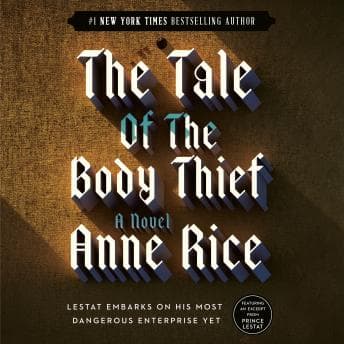
Here's the thing about Lestat as a psychological subject—and yes, I'm treating a vampire like a case study, my dissertation committee would be so proud—he's been through Interview, through Lestat, through Queen of the Damned. By this fourth book, you'd think Anne Rice would've exhausted his character arc. But no. She does something fascinating here: she strips away everything that makes him powerful and forces him to confront what he actually is without the immortality crutch.
The Psychology of Wanting to Be Human Again
The body thief premise is basically a thought experiment I'd assign my students if I could get away with it. What happens when a being who's spent centuries building identity around power, beauty, and eternal life suddenly... isn't any of those things? Lestat trades bodies with a mortal con man named Raglan James, and watching him experience human weakness is genuinely uncomfortable. Not in a bad way. In a "my therapist would have thoughts about this character" way.
Rice understands something crucial about identity: we don't know who we are until everything we rely on gets yanked away. Memoirs of a Geisha explores that same psychological territory—what happens when someone's entire identity is constructed around external performance and then the foundation shifts. Lestat thinks he wants mortality. He romanticizes it. And then he gets it and realizes—oh. Oh no. Being human is actually terrible? The cold, the illness, the vulnerability? It's a fascinating case study in the gap between what we think we want and what we actually want.
Simon Vance narrates this existential crisis with exactly the right amount of drama. His Lestat is arrogant but wounded, theatrical but genuinely suffering. Some listeners have complained his accent isn't French enough—and okay, fair, it's pretty generic European aristocrat—but I found myself not caring? The emotional delivery matters more here than perfect accent work. When Lestat is panicking in his fragile human body, Vance makes you feel that panic.
Where Vance Shines (And Where He Stumbles)
I listened to this over two weeks of morning runs and late-night cooking sessions. Eighteen hours is a commitment. And Vance carried me through it. His pacing is excellent—he knows when to slow down for Rice's more philosophical passages and when to pick up during the thriller elements.
But I have to be honest about the Louis voice. Some listeners have compared it to Dracula, and... yeah. I hear it. It's a bit much. Louis appears less in this book than in previous ones, so it wasn't a dealbreaker for me, but if you're particularly attached to a specific Louis in your head, this might pull you out.
The multi-character conversations work surprisingly well, though. Vance has this ability to shift between characters without making it feel like a performance. It just feels like people talking. David Talbot, the aging Talamasca scholar who becomes central to this story, gets a particularly warm treatment. Vance makes him feel wise without being preachy.
When Rice Gets Indulgent (And When It Pays Off)
I'll admit—there are stretches where Rice's prose gets... indulgent. She loves describing things. Rooms, clothes, the way light falls. Around hour seven, I was making elaborate dal and thinking "okay, Anne, we get it, the furniture is expensive." But here's the thing: when the plot kicks in, it kicks. The body theft itself, the desperate chase to reclaim what Lestat has lost, the moral complications of what he has to do to get his body back—it all builds to something genuinely tense.
And psychologically? The ending raises questions I'm still chewing on. What does Lestat learn from being human? Does he learn anything? Or does he just confirm what he already believed about himself? Rice doesn't give easy answers, which I respect. The human mind doesn't work in neat resolutions.
Your Ideal Listening Scenario (And Who Should Skip)
If you've been following the Vampire Chronicles, this is essential. It's a different vibe than Queen of the Damned—smaller scale, more intimate, more introspective. If you're new to Rice, start with Interview. This one assumes you know these characters. Skip this if you need fast pacing or can't tolerate lengthy descriptive passages; Rice takes her time here.
Commuters, this is your audiobook. Long drives, long runs, long cooking projects. The length works in its favor because you get genuinely immersed. Bedtime listeners might struggle—it's engaging enough that I kept saying "one more chapter" at midnight, which my 6 AM alarm did not appreciate.
Content-wise: there's violence, some sexual content, and Lestat being Lestat (which means occasional moral choices that would concern any ethics board). Standard Rice territory.
Case Study: Closed
Vance's narration elevated this for me. Not perfect—that Louis voice, the generic accent thing—but his emotional intelligence with the material is exactly what Rice's prose needs. He doesn't fight the drama; he leans into it. And for a book about a vampire having an identity crisis? That's the right call.