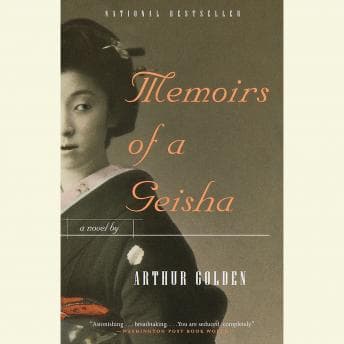

Look, I started this one on a Tuesday night shift when the unit was eerily quiet (I know, I know, never say the Q-word) and by 4 AM I was completely transported to 1930s Kyoto. Eighteen hours is a commitment. But honestly? The time flew in a way that made my charting feel like an afterthought.
The Voice That Carried Me Through
Bernadette Dunne does something really difficult here - she ages with Sayuri. When we meet nine-year-old Chiyo with those striking blue-gray eyes, being ripped from her fishing village and sold into a world she doesn't understand, Dunne's voice has this innocence that just... gets you. And then slowly, over hours of listening, that voice transforms into something more guarded, more calculated, more weary. The way she captures Sayuri's journey from terrified child to accomplished geisha to survivor - it's subtle work. Not flashy. Just true.
Now, I gotta be honest about something that bothered some listeners: the Japanese pronunciation isn't perfect. "Nitta" gets mangled a few times, and if you're someone who speaks Japanese or has studied the culture deeply, this might pull you out of the story. For me? I noticed it, filed it away, and kept listening. The emotional truth of the performance outweighed the technical slips. But I get why it bugs people.
When the Story Becomes a Window
Arthur Golden spent ten years researching geisha culture, and you can feel that obsessive attention in every detail. The way Sayuri describes applying makeup, the politics of the okiya, the careful dance of securing a danna - it's immersive in a way that feels almost documentary. My mom would eat this up. She's always been fascinated by Japanese culture, and this book clears up so many misconceptions about what geisha actually were (and weren't).
That same kind of cultural immersion—where you're learning while you're living in the story—shows up in Second Wife, though set in a completely different time and place.
The pacing is deliberate. Some folks might call it slow, but I'd argue it matches the world it's depicting. Geisha culture was about patience, about playing the long game, about tiny gestures carrying enormous weight. Dunne's reserved delivery fits that perfectly. This isn't a thriller with cliffhangers every chapter. It's a life unfolding.
That said - and here's where my night shift brain kicks in - there were moments during World War II sections where I felt the story drag. The geisha houses close, Sayuri's world contracts, and the narrative loses some of its lush detail. Necessary for the story, but I found myself checking how much time was left. Not often, but it happened.
The Emotional Gut Punches
I cried in my car twice. Carlos asked what was wrong when I came home one morning and I just said "allergies" because how do you explain that a fictional geisha from 1930s Japan broke your heart during your commute?
The relationship between Sayuri and the Chairman - I won't spoil it, but the longing that Dunne puts into Sayuri's voice when she speaks about him? As someone who's actually worked with patients at the end of their lives, who's seen what real love and real regret look like - it felt authentic. The way hope can sustain you through impossible circumstances. The way one moment of kindness can anchor an entire life.
The themes of servitude and survival hit differently when you work in healthcare. Sayuri's lack of agency, the way she's traded and evaluated and used - it's uncomfortable. The book doesn't shy away from the darker aspects of the geisha world, though it handles them with discretion rather than exploitation.
Would I Listen Again?
Here's the thing: this is a perfect post-shift decompression book. Long enough to really sink into, beautiful enough to pull you out of whatever chaos you just witnessed, and emotionally complex in a way that feels earned rather than manipulative. The production quality is clean - no weird audio issues, no jarring transitions.
Who Should Listen (And Who Should Skip)
If you're looking for action or high drama, skip this. If you want to disappear into another world, another time, another way of living entirely - eighteen hours well spent. Just maybe don't start it when you're already exhausted. You'll want to be present for this one.
Night shift approved. My dashboard didn't get yelled at once.