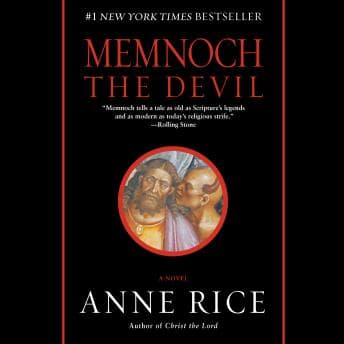

I was making dal makhani at 11 PM—the kind of elaborate cooking I do when my brain won't stop spinning—when Anne Rice decided to take me on a theological field trip through Heaven and Hell. And I mean that literally. Memnoch the Devil isn't your typical vampire novel. It's a 15-hour philosophical treatise disguised as dark fiction, and I'm still processing whether that's genius or audacity.
Here's the thing about Lestat as a character: he exhibits classic narcissistic personality patterns, but Rice makes you love him anyway. That's the trick, isn't it? She's been doing this since Interview with the Vampire, creating monsters who are so desperately, achingly human that you forget they're supposed to be the villains. Cast plays with similar moral ambiguity, though in a contemporary setting where the monsters wear different masks. In Memnoch, Lestat gets recruited by the Devil himself for what amounts to a cosmic job interview—and the Devil's pitch is... surprisingly compelling.
When Satan Makes More Sense Than You'd Like
The research actually shows that Rice does something fascinating here: she flips the entire Christian mythology on its head by making Memnoch (the Devil) a sympathetic figure who genuinely believes he's helping humanity. This is a case study in moral relativism that would make my ethics professor weep. Memnoch argues that suffering creates empathy, that God is too detached, that someone needs to advocate for the messy, broken humans down here in the muck.
Psychologically, this tracks. We're drawn to narratives that challenge our assumptions because they force cognitive engagement. Rice isn't just writing horror—she's writing theodicy, the philosophical attempt to reconcile evil with a supposedly benevolent God. Heavy stuff for audiobook listening, but I found myself pausing the dal to actually think about what I was hearing. (The dal burned. Worth it.)
Simon Vance Understands Fever Dreams
Vance narrates with what I can only describe as controlled mania. The "fever-pitch intensity" that reviewers mention isn't hyperbole—there's a breathless quality to his Lestat that feels almost manic, which is exactly right for a vampire having an existential crisis while touring the afterlife. His voice carries the weight of Lestat's arrogance and his terror in equal measure.
What makes this performance compelling is the consistency. Fifteen hours is a long time to maintain that edge without tipping into melodrama, and Vance walks that line carefully. When Lestat witnesses the Passion of Christ (yes, really—Rice goes there), the narration shifts from sardonic to genuinely shaken. It's a subtle modulation that lesser narrators would have overplayed.
My therapist would have thoughts about this character. Lestat spends most of the book oscillating between grandiosity and self-loathing, convinced he's uniquely qualified to judge cosmic truths while simultaneously terrified he's being manipulated. It's textbook ambivalent attachment played out on a supernatural scale.
The Commitment Problem
Here's where I have to be honest: this audiobook requires dedicated listening. You cannot do this on a morning jog. The philosophical passages are dense, the mythology is layered, and Rice assumes you've been following Lestat's journey through the previous four books. If you're coming in cold, you'll be lost by hour two.
The pacing is slow—deliberately so. Rice takes her time building Memnoch's argument, letting the theological implications unfold gradually. For some listeners, this will feel indulgent. For others (raises hand), it's exactly the kind of cerebral horror that rewards patience. But know what you're signing up for: this is not action-packed vampire fiction. This is Anne Rice working through her own complicated relationship with Catholicism, using Lestat as her vehicle.
Who Should Take This Cosmic Field Trip
If you're a Vampire Chronicles devotee who's been following Lestat since the beginning, this is essential listening. The payoff is significant—Rice treats this as a capstone to the series (even though she wrote more books later), and it shows.
If you're interested in religious philosophy dressed up in gothic clothing, you'll find plenty to chew on here. Rice's version of Heaven is uncomfortably bureaucratic; her Hell is more rehabilitation center than torture chamber. Devil's Corner explores a different kind of hell—the institutional kind where good intentions get corrupted by systems. It's genuinely interesting stuff.
But if you're looking for a quick, thrilling vampire story? Skip this one. If you haven't read the earlier books? Start with Interview. If dense theological arguments make your eyes glaze over? This isn't your book, and that's okay.
Case Notes: Final Assessment
Memnoch the Devil is ambitious in ways that don't always work, but I respect the swing. Rice asks big questions—about suffering, about divine justice, about whether the Devil might have a point—and she doesn't offer easy answers. Simon Vance's narration elevates material that could easily become ponderous, keeping Lestat's voice sharp and compelling even during the most abstract passages.
The protagonist exhibits classic patterns of someone in crisis: seeking external validation for internal doubts, oscillating between belief and skepticism, ultimately unable to commit to any single truth. Which, honestly, feels pretty human for a vampire.
I finished the book around 2 AM, dal long forgotten, staring at my ceiling and wondering what I actually believe about good and evil. That's either a recommendation or a warning, depending on what you're looking for.