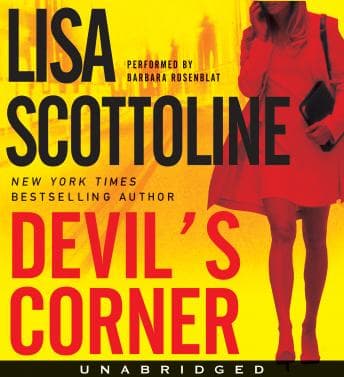

Look, I need to talk about the mouth sounds first. I'm sorry, but I do. I was making biryani at 10 PM on a Tuesday - the kind of elaborate cooking project that requires audiobook accompaniment and a complete refusal to acknowledge tomorrow's 8 AM lecture - when I first noticed it. That wet, clicking, saliva-adjacent noise that made me wonder if Barbara Rosenblat was eating something during recording. She wasn't. It's just... there. Intermittently. Like a tiny gremlin living in my earbuds.
I had to get that out of my system because otherwise it would haunt this entire review.
The Protagonist Exhibits Classic Survivor's Guilt With a Side of Recklessness
Vicki Allegretti is a fascinating case study in what happens when a Type-A prosecutor witnesses a double homicide and decides the appropriate response is to become a one-woman investigation unit. The research actually shows that trauma responses vary wildly, but Vicki's particular brand of "I will solve this myself even if it kills me" tracks psychologically. She's not processing; she's displacing. Classic.
Scottoline - who was a trial lawyer before she started writing - understands how legal professionals think. The procedural elements feel authentic in a way that made me genuinely curious rather than bored. Vicki's investigation into Devil's Corner (a West Philly neighborhood that functions almost as its own character) involves the federal detention center's "bowl," drug trafficking networks, and the kind of conspiracy that feels both outlandish and depressingly plausible.
What makes this character compelling is her refusal to stay in her lane. She's not a detective. She's a prosecutor. But she watched two people die and she cannot let it go. That same drive-past-professional-boundaries energy shows up in Left To Die, where the protagonist also can't seem to stop herself from diving into dangerous territory. My therapist would have thoughts about this character - specifically about the difference between seeking justice and seeking control after experiencing powerlessness.
Rosenblat's Voice Work: When It Works, It Really Works
Barbara Rosenblat gives each character a distinct personality and sound. This is not a small thing across 11+ hours. Her theatrical background shows - there's an emotional delivery during the wrenching moments that genuinely elevated the material. I found myself asking: why does Vicki really keep pushing when everyone tells her to stop? And Rosenblat's performance made me feel like I understood the answer even before the text spelled it out.
But here's where I have to be honest. Her voicing of African American characters doesn't land well. It's the kind of well-intentioned attempt that still makes you wince. Some listeners praised her character differentiation universally; I'm not one of them. The voices for the residents of Devil's Corner - the "broken souls" and "innocent youth" the description mentions - felt like caricature rather than characterization. Psychologically, this doesn't track with the otherwise nuanced portrayal of a neighborhood in crisis.
And yes. The mouth sounds. They're real. They're distracting. I didn't have to turn it off entirely, but I noticed them enough that I'm mentioning them in a review, which tells you something.
A Fascinating Case Study in Legal Thriller Pacing
Compared to Scottoline's other work, this one felt less intense to me. Not bad - just more of a simmer than a boil. The conspiracy unfolds methodically, which works if you're in the mood for it and frustrates if you want the thriller equivalent of a shot of espresso. P Is for Peril has that same methodical build—less adrenaline rush, more careful excavation of secrets. I was stirring onions and letting them caramelize slowly, so the pacing matched my evening. But if you're looking for relentless momentum, adjust your expectations.
The "unlikely ally" the description teases adds an interesting dynamic, though I won't spoil who it is. Scottoline understands human nature well enough to make the partnership feel earned rather than convenient.
Who Should Listen (And Who Should Maybe Read Instead)
This is good for focused listening - not background noise. The legal procedural elements require attention, and the emotional beats hit harder when you're actually present for them.
You'll love it if: You're a legal thriller fan who appreciates character psychology over pure action. If you want to understand why someone would risk their career and safety to solve a case that isn't technically theirs.
Skip the audiobook specifically if: Narration inconsistencies pull you out of a story. The voice work issues and audio artifacts are real, and they might bother you more than they bothered me. (I have a high tolerance for imperfection. My dissertation committee can confirm.)
Content note: Violence, language, drug trafficking, murder. It's a thriller about a neighborhood "thick with broken souls" - expect the content to match.
The Case File Closes
Devil's Corner gave me a protagonist whose trauma response I found genuinely interesting to analyze, wrapped in a legal thriller that knows its Philadelphia setting intimately. Rosenblat's performance is skilled but imperfect - sometimes distractingly so. I finished my biryani and I finished the book, and both left me satisfied if not transformed.
The mouth sounds, though. I'm going to remember those.