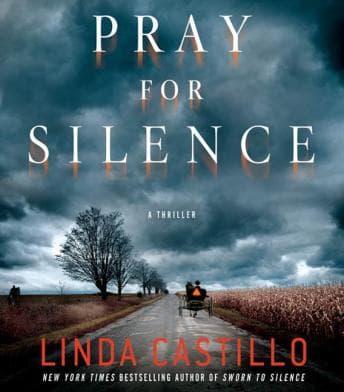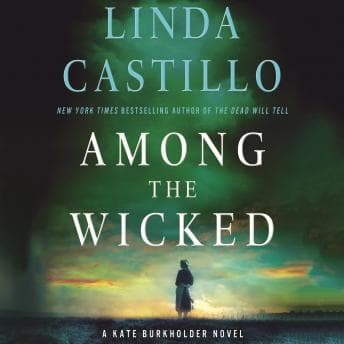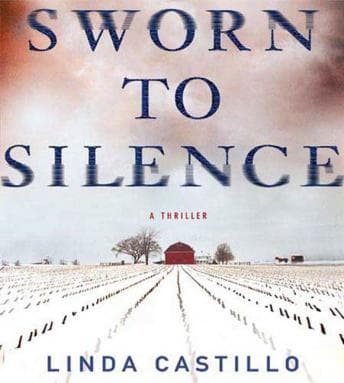

Look, I have a bone to pick with Linda Castillo. I started this audiobook on a Tuesday morning jog through Cambridge, thinking I'd get through maybe the first hour before my usual podcast rotation. Eleven hours later—spread across three days of cooking, cleaning, and one very long session of pretending to grade papers—I'm emotionally compromised and already eyeing book two. This is not what I planned for my week.
The protagonist exhibits classic trauma-response patterns that actually make psychological sense. Honestly? That's rare enough in thrillers that I need to talk about it.
Kate Burkholder Is a Case Study I'd Actually Assign
Kate is fascinating. She's an ex-Amish woman who left her community after surviving a serial killer as a teenager, and now she's back as Chief of Police in the same small Ohio town where it all happened. The research shows that trauma survivors often develop what we call "approach-avoidance conflict"—simultaneously drawn to and repelled by reminders of their trauma. Kate returning to Painters Mill? Textbook. But Castillo doesn't just use this as backstory decoration. Kate's hypervigilance, her difficulty with intimacy, her need to control her environment—it all tracks.
What makes this character compelling is that she's not written as a "strong female protagonist" in that hollow, performative way. She's competent but messy. She makes decisions that are ethically questionable (my therapist would have thoughts about this character, believe me) and the narrative doesn't let her off the hook for them. That same moral ambiguity shows up in Mind Prey, where the protagonist's choices kept me equally uncomfortable. There's a secret Kate's carrying that genuinely had me pausing the audiobook to stare at my kitchen ceiling and think "oh no, Kate, what did you do."
Kathleen McInerney Lived in My Head for Three Days
Audie Award winner. And I get it now.
She does this thing with Kate's internal monologue—slightly clipped, almost detached—that perfectly captures dissociation under stress. When Kate is examining a crime scene, McInerney's delivery goes clinical. When Kate is confronting her Amish family, there's this subtle tension underneath. The Pennsylvania Dutch accent work is solid without being cartoonish, which I appreciated. Nothing pulls me out of a story faster than an accent that sounds like a parody.
The character differentiation is genuinely good. I could tell who was speaking without dialogue tags, especially in the scenes between Kate and John Tomasetti (an agent with his own trauma—Castillo clearly has a type, and I'm not complaining). Some listeners found the pacing slower than reading would be, and I can see that. There are descriptive passages that might drag for impatient listeners. But I found myself asking: why does the slower pace bother some people when it works so well for building dread?
This is a book about a community holding its breath. The pacing matches the content.
The Amish Angle That Actually Works
I was skeptical. "Amish thriller" sounds like a gimmick. But Castillo clearly did her homework—the cultural details feel researched rather than exploitative. The tension between the Amish community's desire for privacy and the police investigation's demands for transparency creates genuine ethical complexity. Kate is caught between two worlds that both claim her and reject her, and that liminality drives the emotional engine of the whole book.
Psychologically, this isn't just a murder mystery. It's a story about identity fragmentation, about what happens when you can't go home but you can't fully leave either. The Amish setting isn't window dressing—it's essential to Kate's internal conflict. To Die For uses its setting with similar intentionality, though in a completely different context.
Content Warning: This Gets Dark
The violence is graphic—we're talking about a serial killer called the "Slaughterhouse Killer" and Castillo doesn't shy away from what that means. If you're sensitive to descriptions of violence against women, this might not be your book. I listened to some of the crime scene descriptions while chopping onions and had to stop. (The onions were fine. I was not.)
Who's This For (And Who Should Skip)
If you're a commuter looking for something that'll make your drive disappear, this is it. If you're interested in Amish culture but want it served with a side of psychological complexity and murder, also this. Skip it if you need your thrillers to move at breakneck speed with no breathing room—or try 1.25x speed if you're impatient.
The Prognosis
Already planning a relisten. I need to know what happens to Kate, and more importantly, I need to see how she continues to cope—or doesn't—with the impossible situation she's created for herself. McInerney's narration elevated what could have been a standard thriller into something genuinely immersive. The production is clean, no weird audio artifacts or volume inconsistencies.
I'm adding the whole series to my list. Don't tell my dissertation committee.