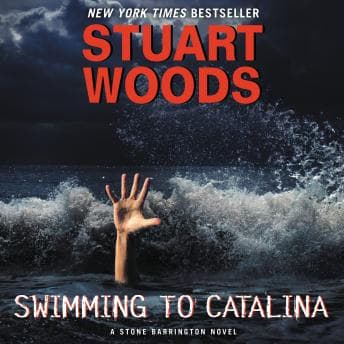

I was grading sophomore essays on The Great Gatsby at 11:30 PM - the ones where they all insist Gatsby's green light means money, as if Fitzgerald wasn't more complicated than that - when I needed something to keep me from writing increasingly sarcastic margin notes. Swimming to Catalina turned out to be exactly the palate cleanser I didn't know I needed.
Here's the thing about Stuart Woods that I've come to appreciate after years of literary snobbery: the man writes the way a good cocktail goes down. Smooth, efficient, and you're three chapters in before you realize you've stopped thinking about thesis statements entirely. Stone Barrington is not a complex character. He's not meant to be. He's a fantasy of competence - an ex-cop turned attorney who can navigate both courtrooms and crime scenes, who dates magazine writers and gets called by movie stars for help. It's wish fulfillment, and Woods knows exactly what he's doing. Prince operates in that same wish-fulfillment space, though with a royal fantasy instead of a legal one.
The Hard-Boiled Hollywood Shuffle
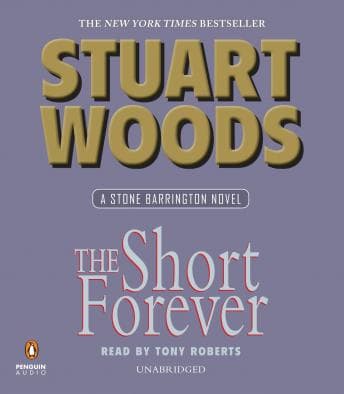
Tony Roberts narrates Stone Barrington the way I imagine Bogart would have if Bogart had been raised on martinis instead of cigarettes. There's this breezy confidence to his delivery that carries real charm without tipping into smarm. When Stone arrives in L.A. to find his ex-girlfriend - who, by the way, left him to marry Hollywood's biggest star, which is a premise that would make my students roll their eyes right out of their heads - Roberts makes the wounded pride feel genuine underneath all that professional cool.
The Hollywood setting is pure escapism. Bel Air. Malibu. Rodeo Drive. Woods name-drops locations like a tourist brochure, but Roberts delivers it with enough sardonic edge that you're laughing with the book, not at it. This is a world where the sharks drive Bentleys, and Woods leans into that metaphor hard. It's not subtle. But then again, neither is Hollywood.
Where the Prose Meets Its Limits
I'll be honest - this isn't the kind of book I'd normally champion. My podcast listeners (all 47 of them, including my mother who definitely falls asleep during my Faulkner episodes) expect me to talk about Middlemarch and Hemingway, not beach-read thrillers. But there's something to be said for a book that knows exactly what it is and executes that vision with precision.
The plot twists come fast. Almost too fast. Woods throws complications at Stone like he's got a quota to meet, and somewhere around hour six, I stopped trying to track every thread and just let the current carry me. This is not a criticism, exactly. It's more of a feature. You don't read Swimming to Catalina for the carefully constructed mystery. You read it for the ride.
Roberts handles the pacing well, though I found myself wishing for more vocal distinction between the parade of Hollywood types Stone encounters. Everyone sounds vaguely sophisticated and vaguely suspicious, which - fair enough, that's probably accurate for the setting. But when you're grading papers and half-listening, it can be tricky to remember which producer is which.
Who Should Queue This Up (And Who Should Keep Scrolling)
If you're looking for literary fiction that will challenge your assumptions about the human condition, keep walking. This is not that book. But if you want something that moves, something that entertains without demanding too much, something you can listen to while your eyes are bleeding from reading seventeen variations of "the American Dream is about money" - this works. Skip it if you need tight plotting or distinctive character voices; grab it if you want eleven hours of competent escapism.
My students would hate this. They'd call it formulaic, predictable, a product of its genre conventions. They wouldn't be wrong. But I've been teaching long enough to know that sometimes you need the literary equivalent of a cheeseburger. Not every meal needs to be a five-course tasting menu.
Woods has written dozens of Stone Barrington novels, and there's a reason they keep selling. This is comfort food for thriller fans. Roberts is a reliable narrator who knows the material and delivers it with the right amount of swagger. At nearly eleven hours, it's substantial enough to get you through a week of commutes or, in my case, a particularly brutal stack of essays.
Class Dismissed
Look, I'm not going to pretend this changed my life. It didn't. But it got me through a Wednesday night without losing my mind, and Stone Barrington's competence fantasy was a nice break from teenagers who think symbolism is a personal attack. If you've read other Woods novels, you know exactly what you're getting. If you haven't, this is a perfectly fine place to start - though I'm told the earlier books provide more context for Stone's backstory.
Denise asked me what I was listening to, and I told her it was research for understanding popular fiction. She didn't believe me. She was right not to. Sometimes you just want to listen to a guy punch above his weight in Hollywood and somehow come out on top. There's no shame in that.