
I was halfway through my mother's rajma recipe - the three-hour version that requires you to grind your own spices because "Priya, the pre-ground ones have no soul" - when I realized Stone Barrington and I have something in common. We both move through our respective worlds with a confidence that's maybe not entirely earned. The difference is, I know it.
When the Protagonist's Biggest Fear Is... Inconvenience?
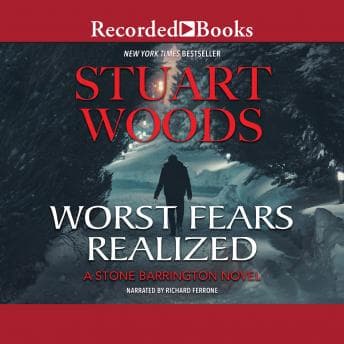
The premise here is genuinely promising from a psychological standpoint. Someone from Stone and Dino's past - someone they put away - is systematically murdering the people closest to them. That's a setup loaded with potential: survivor guilt, the moral weight of a career in law enforcement, the paranoia of knowing your loved ones are targets because of you. I found myself asking: why does Stone seem more bothered by his complicated love life than by the fact that his friends are being picked off?
The protagonist exhibits classic compartmentalization, sure. But there's a difference between a character who compartmentalizes as a coping mechanism - which would be psychologically fascinating - and one who compartmentalizes because the author hasn't bothered to write the interior life. Stone Barrington falls squarely into the second camp. He moves from glitzy restaurants to dark alleys to posh summer communities, and in each setting he's essentially the same unflappable, well-dressed problem-solver. The "distracting relationship with a woman who may be as dangerous as she is beautiful"? It's exactly what it sounds like. The femme fatale trope, deployed without any real interrogation of why Stone keeps gravitating toward women who are terrible for him. (My therapist would have thoughts about this character. Many thoughts. Billable thoughts.)
The body count multiplies. The stakes technically escalate. And yet I kept stirring my rajma, unbothered, because Stuart Woods writes danger the way some people describe traffic - it's happening, it's technically serious, but nobody's really sweating.
Ferrone Carries What the Page Won't
Here's where the comparison gets interesting. I've listened to Richard Ferrone narrate other Stuart Woods entries, and the man is doing something Woods himself doesn't seem invested in doing: giving these characters weight. His Stone has a dry, assured baritone that at least suggests depth, even when the text provides none. His Dino comes through warmer, slightly rougher around the edges - the kind of voice that tells you this guy grew up in a different zip code than Stone's current lifestyle. Ferrone keeps these voices consistent not just within this book but across the series, which is genuinely impressive given that he's working with character writing that hands him almost nothing to differentiate with.
I've heard Ferrone bring that same vocal presence to Secret Prey, where he didn't have to work quite so hard to sell the stakes.Compare this to, say, a narrator who has to voice characters in a more psychologically layered thriller - someone narrating Tana French or Dennis Lehane. Those narrators get texture from the text. Ferrone is manufacturing texture from thin air. And honestly? He's pretty good at it. The pacing of his read suits the material - brisk, no-nonsense, the kind of delivery that keeps you moving through chapters without making you stop and think. Which might be exactly the point.
This is a 9-hour listen that functions best as background companionship. Engaging enough to follow, not so demanding that you'll burn your dinner.
Who Needs This in Their Ears (And Who Doesn't)
If you're already five books deep into Stone Barrington's world and you enjoy the formula - suave protagonist, escalating danger, a new romantic interest who is inevitably trouble - this delivers exactly that. I found the same comfortable, formulaic rhythm in Doing Hard Time, another Stone Barrington outing that asks little and gives just enough. Ferrone's narration is the consistent thread that makes the series listenable even when individual entries feel like they're running on autopilot. One listener called it a "cash cow" book, and I can't entirely argue. It has the energy of a fifth album from a band that knows their fans will buy it regardless.
But if you need character motivations that psychologically track? If you want to understand why a character makes the choices they do, beyond "he's the hero and that's what heroes do"? Psychologically, this doesn't track. The killer's identity reveal doesn't land with the weight it should, because the book never invests enough in the emotional relationships that are supposedly being destroyed. You can't make me grieve a body count when I barely knew the people while they were alive.
My Case Notes
This is a case study in competence without ambition. The plot moves. The narration is solid. The protagonist looks great on paper and feels like nothing in practice. Stuart Woods can clearly construct a mechanism that pushes you forward - I just wish he'd construct a character who made me care about the destination. The research actually shows that readers bond with fictional characters through perceived psychological complexity, and Stone Barrington has about as much complexity as his well-pressed suit. Nice to look at. Nothing underneath.
I ate my rajma alone, which I prefer, and I finished the book, which I'm neutral about. That probably tells you everything.