
"He was grieving, and grief made a man dangerous."
That line hit me somewhere around hour two, walking the lakefront with Denise on one of those rare October evenings where Chicago pretends it's not about to become uninhabitable for five months. She was pointing at something on the water. I was nodding. I was not looking at the water. I was in Santa Fe with Teddy Fay, watching a man channel loss into something precise and cold and, honestly, kind of thrilling.
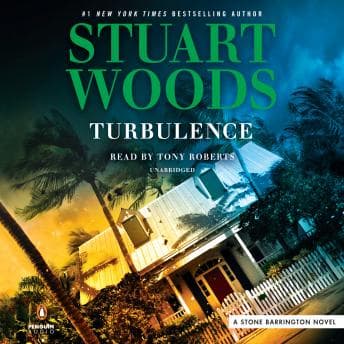
Let me be straight with you: this is book forty-four in the Stone Barrington series. Forty-four. That's more entries than my students have excuses for not reading The Great Gatsby. And I came to it knowing exactly what Stuart Woods delivers at this point in a long-running series — comfort, velocity, and a world where everyone is impossibly wealthy, impossibly connected, and impossibly good at getting out of trouble.
Teddy Fay Steals the Show (And Maybe the Series)
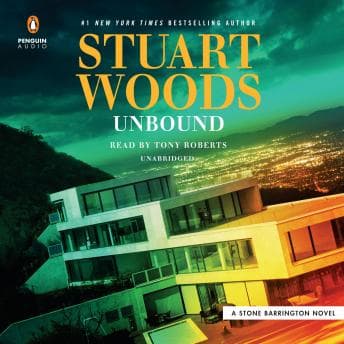
Here's the thing nobody warns you about with Unbound: Stone Barrington is barely the protagonist. This is Teddy Fay's book, full stop. Teddy — former CIA operative turned Hollywood producer under the name Billy Barnett — is grieving a personal loss, and Woods makes the interesting choice of letting that grief drive the entire plot rather than Stone's usual cocktail-party diplomacy. Stone is here, sure, orbiting the action like a well-dressed satellite, offering legal counsel and dinner reservations. But Teddy is the engine.
And that shift rubbed some listeners the wrong way. I get it. You pick up a Stone Barrington novel expecting Stone Barrington. It's like ordering a bourbon and getting a very good scotch — you're not mad, exactly, but you're confused. For me, though, Teddy's quiet revenge arc — this careful, methodical dismantling of a man who helped cover up the crime that caused his loss — was more interesting than Stone's usual fare. The cat-and-mouse escalation from subtle sabotage to genuine danger gave the book a darker pulse than I expected at under eight hours.
Now, is it le Carré? No. Is the revenge plot as psychologically complex as, say, The Count of Monte Cristo? Absolutely not. But Woods wasn't trying for that. He was writing a propulsive, clean thriller that moves from Santa Fe's desert light to Hollywood's particular brand of manicured chaos, and at that, he succeeds. That same propulsive, family-destroying momentum — where characters methodically dismantle the people around them with chilling precision — is what made me tear through How to Kill Your Family in almost a single sitting, though that one leans into the dark comedy in ways Woods never quite dares.
Tony Roberts Knows Exactly What This Is
Tony Roberts has narrated so many of these books that he is the Stone Barrington universe at this point. His voice carries a breezy, slightly amused authority — like a man who's been to every party in Manhattan and found them all just a little predictable but went anyway because the wine was good.
What I appreciate about Roberts here is his comedic timing. There's a scene where Stone is essentially mediating between Teddy's covert operations and Ed Eagle's legal sensibilities, and Roberts lands the dry humor with the kind of precise pause that tells you he understands the absurdity Woods is going for. The narrator understands that pause is punctuation. He doesn't overplay it. A lesser narrator would've leaned into the action sequences and flattened the wit, but Roberts keeps the charm front and center even when the stakes escalate.
His character differentiation is subtle — tone shifts rather than full-on vocal transformations. You won't mistake Teddy for Stone, but you also won't get the kind of dramatic range you'd hear in, say, a Scott Brick performance. For this material, though? It works. Roberts matches the prose's energy: smooth, confident, never asking you to work too hard. He's an AudioFile Earphones Award winner for a reason, and that reason is consistency. You always know what you're getting, and what you're getting is professional and pleasant.
The Violence Question
Some listeners flagged Unbound as needlessly violent, and I want to address that because it caught me off guard too. There are moments where the "discreet game of sabotage" turns genuinely lethal, and Woods doesn't shy away from the consequences. For a series that often plays like a daydream of the one-percent lifestyle — fine restaurants, beautiful women, private jets — the violence here feels like it belongs to a different, harder book. It's not gratuitous, exactly, but it's noticeable. If you're coming to Stone Barrington for escapist fantasy, just know this installment has some teeth.
Who Gets the Assignment
This is a road trip book. Pure and simple. It's under eight hours, the plot moves without asking you to remember seventeen subplots from previous entries, and Tony Roberts' narration is designed for the kind of half-attention you give when you're also navigating I-90. If you've been with the series, you'll enjoy the Teddy Fay focus even if you miss Stone being more central. If you're new — honestly, you could start here and be fine, though you'd miss some emotional context for Teddy's grief.
My students would hate this. They'd call it "boomer fiction" and go back to whatever BookTok told them to read this week. But there's something to be said for a book that knows exactly what it is, does it cleanly, and doesn't waste your time. Stuart Woods wrote over ninety novels. That kind of output doesn't happen without craft, even if it's the kind of craft that looks easy.
The Grade I'd Write in Red Ink
I'm not going to pretend Unbound changed my life or made me rethink the thriller genre. It didn't. But I finished it in two lakefront walks and one late-night grading session, and I never once reached for my phone. For book forty-four in a series? That's not nothing. The prose deserves to be savored — not because it's Faulkner, but because Woods understood rhythm, and Roberts delivers it at exactly the right tempo. Worth pausing the faculty meeting for? Maybe not Principal Martinez's budget presentation specifically. But close.