
Everyone keeps telling me Sue Grafton is comfort reading. Cozy mysteries with a tough-talking PI, alphabetical titles, the literary equivalent of a warm blanket. And sure, I get that. But here's the thing - I came to Kinsey Millhone late, and what struck me wasn't comfort. It was how psychologically sharp Grafton is about the people orbiting her detective.
I was chopping onions for a chana masala at 9 PM on a Tuesday - the kind of evening where you need something in your ears to stop your brain from writing that overdue lit review - when Judy Kaye's voice filled my kitchen. Three novels in under nine hours. Which should've been my first red flag.
Three Books, Eight Hours, and the Elephant in the Room
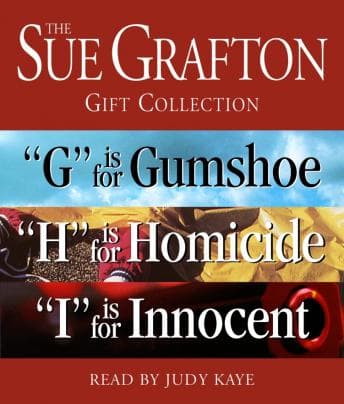
Let's address it immediately: these are abridged. Eight hours and forty-six minutes for three full novels? The math doesn't work. Each unabridged Kinsey Millhone book runs roughly ten to twelve hours on its own. So you're getting maybe a third of each story, and you can feel it. Scenes that should breathe get cut to their bones. Character development that Grafton is genuinely good at - Kinsey's internal monologues, her observations about people's micro-behaviors - gets trimmed in favor of plot mechanics.
And that's a loss. Because what makes Grafton worth reading isn't the whodunit. It's Kinsey's psychology.
Why Kinsey Millhone Is a Better Character Study Than Most "Literary" Protagonists
The protagonist exhibits classic avoidant attachment patterns, and Grafton knows it. Kinsey lives alone, eats alone, keeps her apartment deliberately small. In 'G' Is for Gumshoe, her thirty-third birthday becomes this quiet crisis point - not because of the hit list she lands on (though that's the plot engine), but because the renovations to her apartment feel like an intrusion on her carefully controlled space. Grafton understands that for someone like Kinsey, a new kitchen counter is more psychologically threatening than a contract killer. That's character writing.
In 'H' Is for Homicide, the setup with Bibianna Diaz is a fascinating case study in how proximity to chaos changes a person's risk calculus. Kinsey goes undercover into a world of insurance fraud and violent relationships, and even in abridged form, you can feel how Grafton is interested in the question of why Bibianna stays with Raymond Maldonado. It's not simple. It's not "she's weak." Grafton gets the psychology of coercive control better than half the true crime podcasts I listen to. That same unflinching look at what keeps people locked in dangerous situations shows up in Undone, though it takes a more thriller-paced route to get there.
'I' Is for Innocent plays with something I love - the gap between legal innocence and actual innocence. David Barney was acquitted of murder, and now a civil suit is reopening the wound. I found myself asking: why does Kenneth Voight really want this? Justice? Revenge? The inability to grieve without a target? Grafton leaves enough ambiguity that even the abridged version lets you sit with that discomfort. Devil's Hand does something similar with its central obsession - that question of whether the people driving a case forward actually want resolution, or just a place to put their rage.
Judy Kaye Does the Work (With One Caveat)
Kaye's narration is clean and professional. She uses subtle tone shifts between characters rather than big vocal transformations - Kinsey gets a dry, clipped delivery that matches the first-person narration well. The male characters are differentiated more by cadence than pitch, which I actually prefer. Nothing pulls me out of a mystery faster than a female narrator doing a cartoonish baritone.
But - and this matters - the abridged format means Kaye is essentially narrating plot summaries in places where full scenes should exist. She's good enough that she carries it, but there are moments where you can feel the connective tissue missing. Transitions that feel rushed. Emotional beats that land and then immediately get abandoned for the next plot point. That's not Kaye's fault. That's the editing.
Who Gets the Most Out of This (And Who Should Look Elsewhere)
If you've already read these novels and want a refresher while driving or doing dishes? This collection works. It's a competent CliffsNotes version delivered by a skilled narrator. If you're a completist working through the alphabet, it's fine background companionship.
But if this is your first time with Kinsey Millhone, please don't start here. You'll get the skeleton of three good mysteries and miss the muscle. Grafton's strength is in the details - the way Kinsey notices how someone holds their coffee cup and draws conclusions that pay off two hundred pages later. That stuff gets cut in abridged editions.
Psychologically, this doesn't track as a full Grafton experience. It tracks as a sampler.
My Therapist Would Say I Have Commitment Issues With Abridged Books
I wanted to love this more than I did. Grafton earned her Grand Master title because she wrote a character whose internal world is as interesting as her cases. Cutting that internal world down to fit a gift collection format is like serving someone the broth but not the biryani. You get the flavor. You don't get the meal.
Three clever mysteries, one reliable narrator, and about sixty percent of the experience you deserve. If you're already a fan, you know what you're getting. If you're not yet - go find the unabridged versions. Kinsey Millhone is worth the full commitment.