
"Welcome to Hollow's Edge, where you can find secrets, scandal, and a suspected killer—all on one street."
That's the setup, and honestly, it's a good one. I was up past midnight with this one—Linda was asleep, Ranger was snoring on his bed, and I was sitting on the back porch with my earbuds in, staring at the houses across the street and wondering which of my own neighbors might be hiding something. That's the mark of effective suburban suspense. It gets under your skin even when you know it's manipulating you.
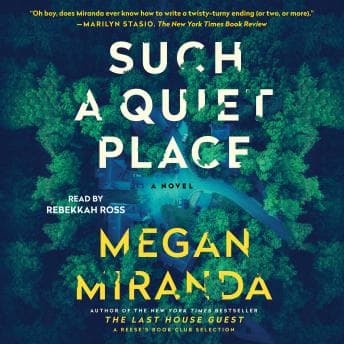
Let me cut to the chase: Such a Quiet Place is a solid neighborhood thriller that does some things very well and other things just well enough. It's not going to change your life, but it'll keep you locked in for about nine and a half hours.
The HOA From Hell
Megan Miranda builds Hollow's Edge as this claustrophobic little pressure cooker—a gated community where everyone testified against Ruby Fletcher for the murder of two neighbors, and now Ruby's back with her conviction overturned. She just waltzes right back into Harper Nash's house like nothing happened. The dynamic between Ruby and Harper is the engine of this whole book. Ruby is magnetic, unpredictable, maybe dangerous—the kind of person who makes you feel stupid for trusting them and stupid for not trusting them. Harper, our narrator, is five years older, cautious, increasingly paranoid, and honestly a little exhausting in the way that first-person unreliable narrators can be.
Here's what Miranda does well: the neighborhood web page posts. These little community forum snippets—where neighbors are passive-aggressively sniping at each other behind screen names—feel painfully authentic. Anyone who's ever been on a Nextdoor thread knows exactly this flavor of suburban warfare. Ross reads them with just the right amount of self-righteous energy, shifting her tone to distinguish the different posters. It's a small detail but it grounds the whole story.
What frustrated me is that beyond Ruby and Harper, the neighbors blend together. There's a whole cast of suspects—couples, singles, the concerned citizens of this little enclave—and I kept losing track of who was married to whom and which house was on which side of the cul-de-sac. In a mystery where "which neighbor did it" is the central question, you need me to care about each suspect individually. I didn't quite get there with most of them.
Slow Fuse, Decent Detonation
The first couple hours are slow. I won't sugarcoat it. Miranda is laying groundwork—establishing the neighborhood dynamics, the backstory of the Truett murders, Harper's anxiety about Ruby's return. It's necessary setup, but at 1.25x speed I was still checking how much time was left in the chapter. The pacing picks up considerably once the threatening notes start appearing and neighbors begin turning on each other. By the back third, I was genuinely invested in figuring out the truth.
The twists? Look, I've read enough thrillers to spot most reveals before they land, and I called about half of what happens here. But there was one misdirection around the three-quarter mark that actually got me—Miranda pulls your attention one direction while the real thread is unraveling somewhere else entirely. I respect the craft even when the execution isn't always airtight.
My main gripe: the resolution feels a little too neat. After all that paranoia and ambiguity, the ending wraps up in a way that answers questions but doesn't quite earn the emotional payoff. It's like running a complex operation and then filing a one-page after-action report. I wanted more.
Ross Holds the Line
Rebekkah Ross is a polarizing narrator for this one, apparently—some people loved her, some nearly bailed. I land closer to the positive side. Her pacing matches the suspense well; she knows when to slow down and let a silence breathe, when to tighten up during confrontations. Her Harper voice carries just the right amount of anxiety without tipping into whiny. Ruby gets this cool, almost amused quality that keeps you guessing about her motives.
Where Ross is less effective is in the male characters. They tend to blur together vocally, which compounds the problem I already had keeping the neighbors straight. It's not bad narration—it's just not distinctive enough when you've got six or seven suspects who all need to feel different.
At 1.25x, the pacing felt right. Wouldn't go faster or you'll miss the clues Miranda drops in throwaway lines.
Who Should Deploy to Hollow's Edge
If you like suburban suspense—The Woman in the Window, Big Little Lies territory—this is worth your time. Paris Apartment scratched a similar itch for me—closed setting, confined cast of suspects, that same slow-building dread that makes you want to keep the lights on. It's a good summer listen, focused enough to keep you engaged during a long drive but not so complex you'll get lost if you miss thirty seconds. If you need military-grade plot mechanics or airtight whodunit logic, you might find it a little soft. And if you bounced off Miranda's other books, this won't convert you.
Ranger slept through the whole thing, which either means it's a peaceful listen or he's heard better. I'll call it somewhere in between.
Mission Debrief
Worth your time? Here's the debrief: Such a Quiet Place is a competent, atmospheric suburban thriller with one great character (Ruby), a narrator who mostly delivers, and a plot that takes a while to warm up but rewards your patience. It's not Miranda's best work—it's the kind of book you enjoy, recommend with a caveat, and move on from. Good for a credit if you're in the mood. Not essential if you're not.