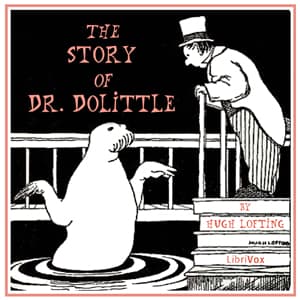

I was walking my Golden Retriever, Buster, along the freezing Chicago lakefront when I started this one. (Denise says I talk to the dog like he's a tenured professor, so honestly, *Doctor Dolittle* feels like a biography of my future self.) I needed a break. I'd just spent three hours grading sophomore essays on *Lord of the Flies*, which is basically a manual on how terrible humans are. I needed something where the animals are the civilized ones.
So, I plugged into Hugh Lofting's world.
When Animals Make More Sense Than People
Here's the thing about Dolittle—he's the original anti-social socialite. The man fills his house with rabbits in the pantry and mice in the piano because people annoy him. Relatable.
If you grew up watching the Eddie Murphy movies (or even the RDJ one, though we don't talk about that), you might be expecting a chaotic comedy. But this? The original text? It's much gentler. It's quiet. It reminds me of reading *The Wind in the Willows* or *Winnie-the-Pooh*. There's a specific, polite British absurdity to it that modern books just don't replicate. You accept that the parrot, Polynesia, is teaching the Doctor to speak animal languages, and you don't question the logic. It just is.
Phil Chenevert, the narrator, really leans into this old-school storytime vibe. He's not doing a Hollywood performance; he's doing a "library reading circle" performance. I heard that same friendly, slightly musty story-hour charm in Scarecrow of Oz (Version 2), where Chenevert sounds like he wandered in carrying a carpetbag full of weird little voices. He gives the animals distinct voices—Polynesia sounds appropriately bossy, the dog Jip is enthusiastic. It's energetic. My students would probably call it "cringe" or "extra," but for a children's classic, you need that energy. Otherwise, you're just listening to a guy talk about a hedgehog in the cellar for three hours.
Chenevert's darker register in Six Creepy Stories by Edgar Allan Poe is a nice reminder that the man can leave the nursery and go straight to the haunted basement when required.The "Product of Its Time" Warning Label
But—and we have to talk about this—it's not all wholesome animal chats.
As an English teacher, I spend half my life explaining context. "Yes, Hemingway was misogynistic," "Yes, Conrad had issues." Lofting wrote this in the trenches of WWI to send home to his kids, which is sweet, but he also brought the colonialist attitudes of 1920 along for the ride.
There are moments in this book involving Prince Bumpo and the Doctor's travels to Africa that are... rough. Outdated is a polite word for it. It's the kind of casual, structural racism that was invisible to the author but screams at a modern listener. If you're playing this for kids today, treat it like I treat *Huck Finn* in the classroom: use it as a teaching moment, or maybe skip those chapters if you just want a bedtime story without a lecture on colonial history.
Who This Is For (And Who Should Maybe Skip It)
Parents who want to share a classic with their kids but are comfortable having conversations about historical context—this is your jam. Nostalgic adults curious about the source material behind all those adaptations will find it fascinating. But if you're looking for something to put on and walk away? The dated racial elements make this a "supervised listening" situation for young ones.
Grading This One on a Curve
Phil Chenevert keeps the pacing tight—under three hours, which is perfect for a long commute or a week of dog walks. He manages to make the whimsy land without sounding condescending, which is a hard line to walk with children's lit.
Listening to this was a weird mix of nostalgia and wincing. The animal parts? Pure magic. The human parts? Complicated. It's a fascinating look at what we used to consider innocent entertainment. I enjoyed it for the linguistic gymnastics with the animals, but yeah, keep your critical thinking cap on for this one.