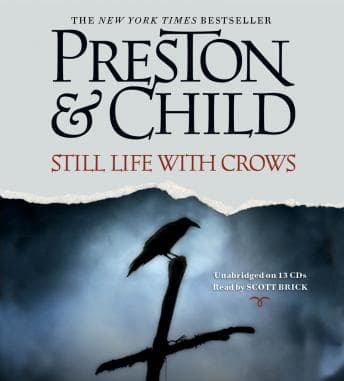

There's a specific kind of silence described in this book—the heavy, suffocating silence of a Kansas cornfield right before something terrible happens. I was listening at 11 PM, supposedly finishing up a stack of sophomore essays on The Great Gatsby, and I swear I had to turn the lights up in my home office.
(Yes, I know. I teach classics. I preach the gospel of Steinbeck. But sometimes a man needs a thriller that isn't trying to be an allegory for the decline of the American Dream. Sometimes you just want a creepy FBI agent and a serial killer.)
The Scott Brick Experience
Look, I spent twenty minutes reading reviews before I hit play—habit of the trade, I guess—and the internet is pretty divided on Scott Brick. The main complaint? He's "too dramatic."
Here's my take: They're right, and it absolutely works.
Agent Pendergast is not a normal human being. He's this pale, Southern-gothic, Sherlock Holmes figure who speaks in riddles and wears black suits in the middle of summer. A subtle narrator would ruin him. Brick leans into the melodrama. He whispers. He pauses. He does something similar in Jurassic Park, where the material practically demands that level of commitment. He enunciates every syllable like he's tasting a fine wine. It's performance art. For a character this eccentric, you need a narrator who isn't afraid to chew the scenery a little bit.
But—and this is where the English teacher in me started twitching—we need to talk about geography.
The story is set in Kansas. The Midwest. Flat vowels. Hard R's. But Brick decides to give the locals this slow, molasses-thick Southern drawl that belongs in Alabama, not Medicine Creek, Kansas. It drove me crazy for the first two hours. I kept wanting to pause the track and explain dialect regions to my empty office. Eventually, the plot got weird enough that I stopped caring, but fair warning: if you're from the Midwest, you might roll your eyes a few times.
Gothic Horror in the Heartland
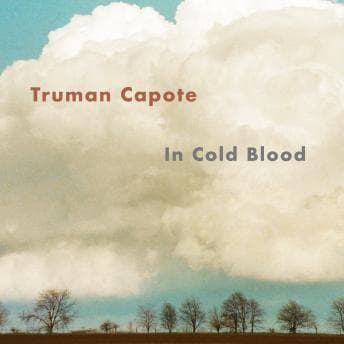
What Preston and Child do here is basically In Cold Blood meets The X-Files, and honestly? It's a vibe.
The pacing is a slow burn—which usually makes my students fall asleep, but here it builds incredible tension. Not just jump scares. It's the atmosphere. The arrowheads. The crows. The feeling that the land itself is cursed. Identicals builds that same kind of creeping dread, where the setting becomes its own character.
I usually listen to audiobooks at 1.0x speed because I believe in savoring the prose (my students roll their eyes at this, I know). But with this one? I found myself checking the time, not because I was bored, but because I had to wake up at 6 AM and I couldn't stop listening. The 16-hour runtime looks intimidating, but it moves.
Who's This For?
If you want atmospheric horror that takes its time—think creeping dread over cheap thrills—you'll love this. Fans of eccentric detective figures and small-town mysteries with supernatural undertones, this is your jam. Skip it if inaccurate regional accents will pull you out of the story, or if you need your thrillers to move at breakneck speed from page one.
The Bell Just Rang
Is this high literature? No. Will I be adding it to the AP English curriculum? Definitely not. (Principal Martinez would have my badge.)
But as a piece of storytelling, it does exactly what it's supposed to do. It made me forget about the stack of ungraded papers on my desk for three nights straight. Scott Brick might not know where Kansas is on a map, but he knows how to tell a ghost story. If you can forgive the accents, it's a ride worth taking.