
How many times can you tell the same story before it stops being a story and starts being a briefing you've already sat through?
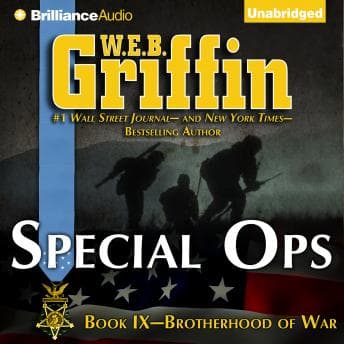
I was deep into a night drive back from a client meeting in Houston—Ranger snoring in the back seat, coffee going cold in the cupholder—when this question started gnawing at me. Twenty-three hours is a serious commitment. That's longer than most deployments' worth of pre-mission briefs. And somewhere around hour twelve, I realized I'd heard significant chunks of this book before. Verbatim.
The Che Problem (And Why Griffin Gets It Right)
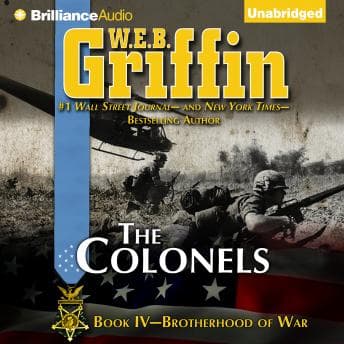
Let me cut to the chase on what works here. W.E.B. Griffin was an Army vet, and it shows. The operational details of Green Berets in the Congo and Bolivia during the mid-60s? Solid. The bureaucratic nightmare of running covert ops while Washington politicians play their games? Painfully accurate. I've sat in rooms where the same kind of inter-agency turf wars played out—different decade, same headaches.
The premise itself is fascinating: Che Guevara as a bumbling revolutionary whose legend far exceeded his competence. Griffin doesn't buy the romantic myth, and neither do I. The book tracks our boys—Lowell, Felter, Lunsford, and the rest—as they work to either neutralize or preserve Che depending on which faction of the U.S. government you're asking. That moral ambiguity? That's real-world ops. Nobody hands you clean missions.
Eric G. Dove handles the narration with the kind of steady professionalism you want for a book this dense. His vocal range keeps the massive cast from blending into one indistinguishable mass of military brass. When Father Lunsford speaks, you hear the weight of experience. When the politicians talk, you hear the slickness. Dove's been narrating Griffin for years, and the familiarity shows in the best way.
The Recycling Problem
Here's where it lost me.
I've listened to earlier books in this series. And I kept getting this déjà vu that wasn't déjà vu—it was actual repeated content. Word for word passages from previous Brotherhood of War novels showing up here like Griffin hit copy-paste and called it a day. Some reviewers claim half the book is recycled material. I won't go that far, but it's enough to notice. Enough to annoy.
The constant time and date stamps don't help. I get it—military operations require precise timelines. But when you're listening at 1.25x and the narrator announces "0600 Hours, 14 November 1964, Leopoldville, Congo" for the fortieth time, you start feeling like you're reading an after-action report instead of a novel. Necessary for authenticity? Maybe. Tedious? Absolutely.
And the ending. Man. It just... stops. Like someone ran out of pages. No resolution, no payoff, just a hard cut to silence. I actually checked if my download was corrupted. It wasn't. That's just how Griffin ended it.
Who Should Saddle Up (And Who Should Stand Down)
If you've never read the Brotherhood of War series, start earlier. Books one through six will give you the foundation and the character investment you need. Coming in cold at book nine is like joining a unit mid-deployment—you'll catch up, but you'll miss context.
If you're a completionist who's already invested in these characters, you'll push through despite the recycled material. The Congo and Bolivia settings offer something different from the Vietnam-heavy earlier entries, and there's genuine Cold War intrigue here.
But if you're looking for tight, economical storytelling? This isn't your mission. Billy Summers gave me that same sprawling runtime, but King earned every minute of it. At 23 hours with significant padding, Special Ops demands patience I'm not sure it earns.
Dove's narration is the saving grace. Multiple Earphones Awards don't lie—the man knows how to deliver military fiction. He can't fix structural problems, but he makes the journey bearable.
Mission Debrief
Worth your time? Conditional yes. Worth a full credit? That's harder. This is a book for the faithful, not the curious. The historical elements are genuinely interesting—Griffin clearly did his homework on Cold War special operations in Africa and South America. But the execution feels tired, like a soldier who's done too many tours and is just going through the motions.
Ranger woke up when I pulled into the driveway, looked at me like he knew I had mixed feelings. Smart dog.
If you're deep in this series, you'll finish it. If you're not, there are tighter military thrillers that respect your time better. Griffin built something impressive over nine books, but this one feels like he was running on fumes.