What do you do with a patient who won't stop fighting - not because he's combative, but because his nervous system literally doesn't know the war is over?
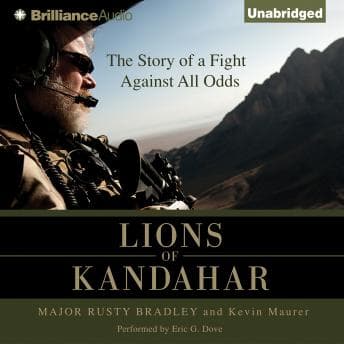
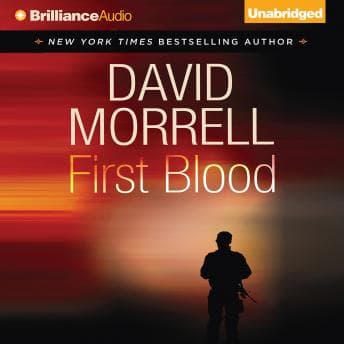
I've worked codes on veterans. I've held down arms that were swinging not at me but at ghosts from Fallujah, from Kandahar. That same haunted look is laid bare in Lions of Kandahar, Eric G. Dove narrating a true account of the Battle of Sperwan Ghar that reads like a thriller but never lets you forget the human cost. So when David Morrell wrote Rambo in 1972 - before PTSD even had a name, before anyone in medicine was really talking about what combat does to the brain long after the bullets stop - yeah, that hit different. I picked this one up on my day off, 6 AM, wide awake because night shift has permanently rewired my circadian rhythm. Carlos and the kids were still asleep. The house was dark and quiet. Perfect conditions for a book that is, frankly, much darker than anyone expecting Stallone flexing in a headband is ready for.
This Is Not the Rambo You Think You Know
Forget the movie. I mean it. The Rambo in this book is not an underdog you're rooting for with a lump in your throat. He's damaged. Dangerous. And Morrell doesn't let you off the hook by making him purely sympathetic. The book alternates perspective between Rambo and Sheriff Teasle, and here's the thing that got me - Teasle isn't a cartoon villain either. He's a Korean War vet himself, rigid and prideful and broken in his own quieter way. Two men who can't back down, whose trauma manifests as stubbornness they mistake for strength. As someone who's actually worked a code on patients who fight you while you're trying to save them, I recognized that dynamic instantly. The body remembers what the mind tries to bury.
Morrell - who has a PhD in American literature, which explains a lot - wrote this thing with a precision that surprised me. The injuries track. When someone gets hurt in these pages, the consequences linger. No one takes a bullet and keeps running like nothing happened. The medical details are accurate. Finally. I didn't yell at my dashboard once. Another thriller that respects the clinical side without making me want to throw my mug is Promises in Death—J.D. Robb's homicide detective wades through death with a realism that never feels cheap. (Okay, I wasn't in my car, but I didn't yell at my coffee mug either, which is the at-home equivalent.)
The Violence Has Weight - and That's the Point
Here's what separates this from 90% of the thrillers on my Audible library: the killing costs something. Every death in this book matters to someone. Morrell doesn't write action sequences like a video game. He writes them like someone who understood - in 1972, before most novelists caught on - that violence without consequence is just noise. The pacing is steady, not breakneck. It builds pressure like a trauma bay at 2 AM when three rigs call in at once. You know it's going to get bad. You just don't know exactly when.
Eric G. Dove handles the narration with a steadiness I appreciated. No theatrical overacting, no trying to make Rambo sound like some gravel-voiced action figure. He plays it straight, which is exactly what this material needs. The restraint lets the tension do the work. Clean audio, smooth delivery, the kind of narrator who trusts the text enough to get out of its way. I'd give him a solid recommendation - he kept me locked in for all eight and a half hours on what was supposed to be my day to catch up on sleep.
Who Needs to Hear This (and Who Should Brace Themselves)
If you watched the Rambo movies and thought "that was fun" - this book is going to challenge you. There's no triumphant third act where the hero walks away clean. Morrell wrote an anti-war novel disguised as a thriller, and he doesn't flinch. If you work in trauma, in emergency medicine, in any field where you see what happens to people after the system chews them up - you're going to feel this one in your chest.
If you need a clear hero to root for, this might frustrate you. Both Rambo and Teasle are stubborn to the point of self-destruction, and the book doesn't pick a side. That's what makes it good. That's also what makes it hard.
Carlos asked why I was sitting at the kitchen table staring at nothing when he came down for coffee. I blamed the early morning light. But really I was thinking about a patient I had three years ago - young guy, Marine, came in after a car accident but the way he reacted to the trauma team... anyway. This book understands something most thrillers don't even try to understand.
Night Shift Prescription
First Blood is the rare thriller that actually earns its violence. It's not fun. It's not supposed to be. It's a 1972 novel about two broken men that somehow feels more relevant now than most books published this year. Eight and a half hours well spent - even on a day off when I should've been sleeping. My mom would love this (she still thinks I should've been a doctor) - she's always had a thing for books where men refuse to ask for help until everything's destroyed. Wonder where I've seen that before.