The Korean War usually gets skipped over in history class. Griffin doesn't skip a damn thing.
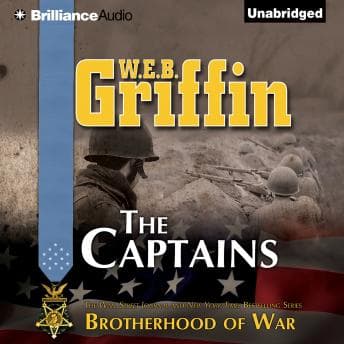
I picked this up for a long haul to Dallas—four hours of windshield time on I-35 requires something substantial. W.E.B. Griffin has always been a staple on my shelf because he understands something most thriller writers miss: the Army runs on paperwork, politics, and personalities just as much as it runs on ammunition. Griffin leans on that machinery again in Under Fire, where the bureaucracy is every bit as dangerous as the enemy. Captains captures that awkward, terrifying transition from the peace of the occupation to the absolute chaos of the 38th parallel.
The Voice in the Headset
Let's address the elephant in the room. I know a lot of Brotherhood of War fans are die-hard Scott Brick loyalists. I get it. Brick is a legend. But Eric G. Dove? The man holds his own.
I had the same reaction to Dove's steadiness in Colonels; he knows when to get out of the Army's way.Dove brings a certain grit to the performance that fits the desperation of the Korean theater. He doesn't over-dramatize. When you're listening to men realizing their tanks are obsolete and their orders are suicide, you don't need a narrator chewing the scenery. You need clarity. Dove delivers distinct voices for the officers without turning them into cartoons.
(I did crank him up to 1.25x speed, though. Griffin can be wordy—he loves describing a uniform down to the stitching—and at normal speed, my mind started wandering to my grocery list. At 1.25x, the pacing snapped right into place.)
Content Advisory: Barracks Talk, Circa 1950
This isn't a Hollywood movie. The culture of the Army back then wasn't exactly HR-compliant.
The book contains language and attitudes—specifically regarding homosexuality—that are ugly. Period. Some folks might call it "dated," but let's be real: it's offensive by modern standards. As someone who studies history, I recognize it as an accurate portrayal of barracks talk from that era. Doesn't make it right, but scrubbing it would make the story less honest about who these men were, warts and all. If that kind of raw, unfiltered dialogue ruins a book for you, consider this your warning.
Mission Complete
What Griffin nails here is the "Brotherhood" part of the series title. It's about the guys you serve with. The plot meanders a bit—there were moments where I wondered if we were ever going to get to the point—but the character work is top-tier.
Ranger slept through the whole thing, which is usually a sign the audio quality is smooth (no jarring volume spikes). If you want a shooter, go play a video game. If you want to understand what it felt like to be a Captain trying to keep your men alive with bad intel and worse equipment, this is your book. Skip it if you need fast-paced action or can't stomach period-accurate ugliness.