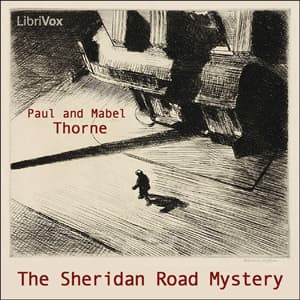

A locked apartment, a gunshot, and no body. That's the setup for The Sheridan Road Mystery, and honestly? It's the kind of premise that made me pause my morning jog just to rewind and make sure I heard it right.
Look, I spend my days analyzing why fictional characters do what they do. It's literally my job. So when a 1920s mystery opens with a crime scene that shouldn't exist—a shot fired in a locked, empty apartment—my brain immediately started running through possibilities. The protagonist exhibits classic investigator psychology here: that need to make sense of the impossible. And the Thornes (yes, this is a husband-wife writing team, which I find delightful) clearly understood that the best mysteries aren't about the what. They're about the why.
When the Detective Steps Back
Here's something that might throw you if you're expecting a standard whodunit: the main detective character kind of... recedes. I know. I had the same reaction. But the more I listened, the more I realized this is actually a fascinating structural choice. Instead of one brilliant mind solving everything, we get this layered unpeeling of truth and assumption. It's less Sherlock Holmes, more... group therapy for a crime scene? (My therapist would have thoughts about this character dynamic, honestly.)
Early 20th century mysteries often played with narrative authority in ways we've kind of forgotten about. We're so used to the genius detective now. But this book reminds you that mystery-solving used to be messier, more collaborative. Blue Cross has that same collaborative energy—multiple perspectives piecing together what actually happened. More human, maybe.
The Voice That Carried Me Through Cambridge
J.M. Smallheer's narration is the reason this works as an audiobook. I couldn't find much about Smallheer online beyond their LibriVox work, but based on this performance? They get it. The pacing is spot-on—never rushing through the careful layering of clues, never dragging during the slower investigative scenes. Character voices are distinct without being cartoonish, which is harder than it sounds. Trust me, I've listened to plenty of audiobooks where every character sounds like the narrator doing a bad impression of someone's uncle.
What makes this narrator compelling is the clarity. Classic mysteries can get bogged down in period-appropriate language and convoluted explanations. Smallheer cuts through that. I was cooking a pretty elaborate dal makhani (don't ask how long it took, I'm still annoyed) and never once had to stop and rewind because I'd lost the thread.
The emotional delivery lands too. There's this moment—I won't spoil it—where the assumptions everyone's been making start to crack. Smallheer's voice shifts just enough that you feel the ground moving under the narrative. Subtle stuff. Really well done.
Psychologically, This Tracks
What I found myself asking: why does this mystery still work, a century later? I think it's because the Thornes understood something fundamental about human nature. We build stories to explain what we see. We fill in gaps with what makes sense to us. And sometimes—often, actually—we're completely wrong.
The "careful layers of truth and assumption getting peeled back," as one listener put it, is basically a case study in confirmation bias. The characters see what they expect to see. They hear a gunshot and assume murder. They find a locked door and assume the killer escaped. Each assumption builds on the last until the whole structure is this precarious tower of maybe-logic.
I teach this stuff. I write papers about it. I saw similar psychological patterns in Good Girl, though that one leans harder into the unreliable narrator territory. Watching it play out in a mystery from 1921 was genuinely satisfying in a way I wasn't expecting.
Skip If You Want Action, Stay If You Like to Think
If you want explosions and car chases and a detective who punches first and asks questions never, this isn't your book. Just skip it. You'll be bored and annoyed. But if you're the kind of person who likes to sit with a mystery—really sit with it, turning the pieces over in your mind while you're doing dishes or stuck in traffic—this is a gem. It's short, too. Under five hours. Perfect for a weekend of errands or a couple of commutes.
The production is clean, no weird audio artifacts or volume jumps. The story is engaging without being frantic. And Smallheer's narration makes it easy to just... sink in.
Case Closed (But Worth Reopening)
I found this one by accident, honestly. Was looking for something to fill time between heavier research reads. Ended up genuinely charmed. Sometimes the old stuff holds up. This does.