
The 2 AM Vibe Check
Okay, so picture this: It’s 11:30 PM. Shirley (my cat, not the author, though the confusion is intentional) is staring at me from the top of the bookshelf like a judgment demon while I’m folding laundry. I usually stick to ghosts or eldritch horrors, but sometimes—just sometimes—I need a reminder that regular humans are actually the worst monsters.
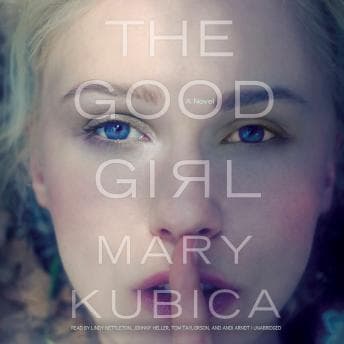
Enter The Good Girl.
I picked this up because I saw "four narrators" and thought, okay, this is either going to be a masterpiece of audio drama or a disjointed mess. Spoiler: It's mostly the first one. Mostly. (We'll get to the accents in a second.)
The "Four-Headed Monster" Approach
Here’s the thing about multi-cast audiobooks—they usually feel like a gimmick. But Kubica writes this story in shifting perspectives (The Mother, The Detective, The Kidnapper), and frankly, having distinct voices for each was the only way this was going to work.
Let’s talk about Johnny Heller first. He voices Gabe, the detective. If you looked up "gritty, tired detective who has seen too much" in the dictionary, you’d find a clip of Heller’s voice. He sounds like sandpaper and stale coffee. I loved it. It grounded the story in that classic noir vibe I secretly adore.
Then you have Tom Taylorson as Colin (the kidnapper). This is where the "creepy" factor I crave actually hits. He plays it cold. Detached. But not robotic—just... wrong. It’s that specific kind of "nice guy" menace that makes your skin crawl. He doesn't need to shout to be scary. He just needs to whisper.
Lindy Nettleton plays Eve, the mother. This is where I struggled a bit. Her performance is drenched in emotion—you can practically hear the Xanax and the repression in her voice—but the accent work? A little shaky. Some listeners might find it distracting. I managed to tune it out because the dread she conveyed was so palpable, but fair warning: if wonky accents make you twitch, you might want to sample this first.
The "Stockholm" of It All
I’m a sucker for a "Before" and "After" timeline. It’s cheap, I know. But it works. We know Mia comes back. We know she’s broken. The horror isn't if she survives, it's how she broke.
The cabin scenes between Mia and Colin? That’s the good stuff. It’s claustrophobic. It’s uncomfortable. It plays with that Stockholm Syndrome trope in a way that feels gross and compelling at the same time. I found myself sitting on the floor, laundry forgotten, just listening to the weird, shifting power dynamic between them.
Taylorson really sells the ambiguity here. Is he a villain? A victim? (Okay, he kidnapped someone, so definitely a villain, but you know what I mean.)
Where It Drags (Just a Little)
Look, I’m a librarian. I shelve 400-page thrillers all day. I know the formula. The middle of this book? It sags. There were moments around the 6-hour mark where I checked the time remaining and thought, "Okay, we get it, the mom is sad, the detective is frustrated, move it along."
It’s not a dealbreaker. But compared to the tight pacing of something like Gone Girl (which this clearly wants to be), it meanders. Kubica does better with pacing in Other Mrs., though that one trades some of this book's creep factor for twistier plotting. I actually sped it up to 1.3x speed during some of the detective procedural parts, and honestly? It improved the experience.
The Verdict
Is it the scariest thing I've listened to this year? No. It lacks the supernatural dread I live for. But is it a solid, psychological head-trip with a cast that (mostly) understands the assignment? Absolutely.
The ending—which I won't spoil, obviously—actually got a "Hmph, okay then" out of me. Which, coming from someone who usually guesses the twist by Chapter 3, is high praise.
Listen to it for Johnny Heller’s grit and Tom Taylorson’s creep factor. Just maybe keep the speed button handy for the middle bits.