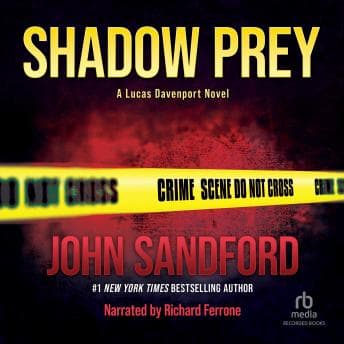

Look, I have a confession. I started this audiobook while prepping a lecture on moral disengagement - you know, how people justify doing terrible things - and within twenty minutes I'd completely abandoned my notes. Shadow Prey is basically a case study in exactly that, except way more compelling than anything I could put in a PowerPoint.
John Sandford does something here that most thriller writers don't even attempt. He gives us killers with a cause. Native American activists targeting officials with documented histories of prejudice against their communities. And here's the thing - the research actually shows that when violence is framed as justice, our moral calculus gets... complicated. Sandford gets this. He doesn't make it simple. He doesn't let you off the hook.
The Psychology of a Justified Killer
What makes this work is the ambivalence Sandford builds into the narrative. These aren't cartoon villains. They're people who've been pushed, and pushed, and pushed until something broke. Lucas Davenport hunting men whose grievances he can't entirely dismiss - that's classic cognitive dissonance in action. That tension? That's where the book lives.
I found myself asking: why does Davenport really pursue this case with such intensity? There's something going on beneath the surface with him - a darkness that mirrors what he's chasing. My therapist would have thoughts about this character. (Actually, she'd probably have thoughts about why I'm so drawn to morally ambiguous protagonists, but that's a different session.)
Lily Rothenburg adds another layer. A no-nonsense cop who doesn't exist to be Davenport's love interest - though there's chemistry there, sure. She's a professional equal, and their partnership feels earned rather than manufactured. The human mind has patterns when it comes to trust-building, and Sandford nails the slow accumulation of respect between them.
Richard Ferrone's Gritty Voice
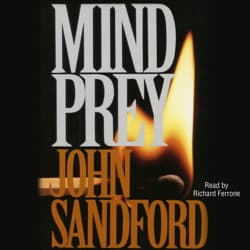
Okay, so Richard Ferrone. The man has won an Audie Award for a reason. His voice is dry and cool in a way that matches Davenport's cynicism perfectly. There's a folksy warmth underneath the grit that keeps twelve hours from feeling like a slog.
But - and this is important - some listeners find his character voices irritating. I get it. His approach to the Native American characters doesn't always land. If voice authenticity is something that pulls you out of a story, you might want to sample first. I personally found his emotional delivery compelling enough to overlook the occasional clunky voice choice, but your mileage may vary.
The pacing is excellent. Ferrone knows when to push and when to let scenes breathe. There were moments - particularly in the quieter investigative sequences - where I caught myself holding my breath. That's not the book. That's the narrator understanding rhythm.
Where It Dragged (A Little)
I won't pretend this is perfect. There are stretches in the middle where the procedural elements feel more like procedure than story. Sandford clearly did his research on law enforcement, and sometimes you can tell. (Don't tell my students I said that - I'm supposed to advocate for thorough research.)
Also, heads up: there's a lot of strong language. And violence. And some sexual content. This is a gritty book about gritty people doing gritty things. If that's not your vibe, this isn't your book.
But here's the thing - when Shadow Prey works, it really works. The climax builds with the kind of inevitability that makes you want to pull over and just listen. I was on the Mass Pike when things started coming together and I genuinely considered taking an extra lap around Cambridge just to finish.
Your Ideal Listener Profile (And Who Should Skip)
This is a fascinating case study in how thriller writers can engage with real social issues without becoming preachy. Outsider: A Novel does something similar with its exploration of the inexplicable—forcing you to wrestle with ambiguity rather than offering easy answers. Sandford trusts his readers to sit with discomfort. The Native American activists aren't heroes, but they're not villains either. They're people. Complex, damaged, dangerous people.
If you're into character-driven crime fiction - the kind where motivations matter as much as body counts - this delivers. I got that same psychological depth from Family Upstairs: A Novel, where understanding why people do terrible things becomes as gripping as the mystery itself. Fans of the Prey series already know what they're getting. For newcomers, this is actually a solid entry point. You don't need book one to understand what's happening.
Skip it if you need your moral lines drawn clearly. Skip it if distinctive narration styles grate on you. Skip it if you're looking for something light.
Case Closed (For Now)
If you want a thriller that treats its subject matter with the complexity it deserves? If you want a narrator who understands that less is sometimes more? Shadow Prey is twelve hours well spent. I finished it three days ago and I'm still thinking about it.
That's just the vibe I got.