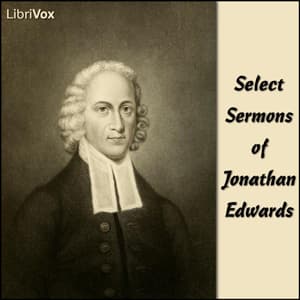

Let me start with my complaint: Jonathan Edwards has no business being this quotable when he's essentially telling you that you're dangling over a pit of fire by a thread and God's the only reason you haven't dropped yet. I mean, the man wrote "Sinners in the Hands of an Angry God" in 1741 and it still hits harder than ninety percent of what passes for persuasive writing in my AP English class. My students read excerpts of that sermon every year. They groan. Then they get quiet. Then they start arguing about whether Edwards was a genius or a manipulator. That's how you know the writing works.
I spent most of these nineteen-plus hours listening during late-night grading sessions — Denise had already gone to bed, the red pen was doing its damage, and Edwards was in my earbuds telling me about divine wrath and human depravity. Honestly? Weirdly appropriate soundtrack for reading sophomore essays on The Great Gatsby.
The Prose Deserves to Be Savored, Even When It's Terrifying
Here's what people miss about Edwards: they think he's all hellfire, all the time. "Sinners in the Hands of an Angry God" is the one everyone knows — the spider metaphor, the bow-and-arrow imagery, that famous line about the God who holds you over the pit of hell "much as one holds a spider, or some loathsome insect over the fire." It's visceral. It's supposed to be. But that's one sermon out of nineteen here, and the collection shows a theologian with a much wider range than his reputation suggests.
Some of these sermons are dense philosophical arguments about free will, predestination, the nature of grace — the kind of sustained logical reasoning that would make a modern philosophy professor nod along, even if they disagreed with every premise. Edwards builds arguments the way a bricklayer builds walls. One proposition stacked on another, mortared together with Scripture. It's methodical. I got a similar sense of cumulative, deliberate structure listening to The Dhammapada — completely different tradition, obviously, but that same quality of ancient wisdom built verse by verse into something you feel in your bones. Sometimes exhaustingly so. But when you step back and see the whole structure, you realize the man was operating on a different intellectual level than most of his contemporaries.
This reminds me of what Hemingway said about prose being architecture. Edwards isn't Hemingway — not remotely — but there's a structural integrity to his sermons that rewards close attention. The sentences are long, Latinate, subordinate-clause-heavy in that 18th-century way. At 1.0x speed (yes, I listened at 1.0x, because the author chose those words), you feel every clause. Some listeners will find that punishing. I found it meditative, mostly. Though I'll admit there were moments around hour twelve where the theological distinctions between types of grace started to blur together and I had to rewind.
LibriVox Volunteers and the Pulpit Problem
Let's talk about what's actually in your ears. This is a LibriVox production, which means volunteer readers, no professional direction, and quality that varies from chapter to chapter — or in this case, sermon to sermon. Some readers approach the text with the gravity it demands. Others sound like they're reading a grocery list that happens to contain eternal damnation. There's no consistency in tone, pacing, or even microphone quality between sermons. You'll go from a reader with a warm, steady delivery to one who sounds like they recorded in a bathroom with the fan on.
The narrator understands that pause is punctuation — except when they don't. And with multiple volunteers, some absolutely do not. Edwards's sentences need breathing room. They need the kind of dramatic pause that lets the weight of "the wrath of the Almighty is pressing upon you" actually land. When a reader rushes through those moments, the rhetorical power just evaporates. It's like watching someone speed-read Shakespeare aloud. You get the words but lose the performance.
That said — it's free. And for a text this old, this public-domain, you're not going to find a big-name narrator doing a prestige production. You get what you get.
Who Should Wrestle With This
If you loved reading the Puritans in college — or if you never did and you're curious what all the fuss is about — this is worth your time. Students of American literature need to hear Edwards because his influence bleeds through Hawthorne, Melville, Flannery O'Connor, even Marilynne Robinson. You can't understand the American literary tradition without understanding the theological soil it grew from.
But if you're looking for a polished audio experience? This isn't it. If dense 18th-century theological prose makes your eyes (or ears) glaze over? Skip it. If you want just the greatest hits, find a standalone recording of "Sinners" with a single dedicated narrator and save yourself eighteen hours.
My students would hate this. I love it. Well — I love about twelve of the nineteen sermons. The other seven I endured. But the ones that land? They land like a sermon should: right in your chest.
The Red Pen Goes Down
Edwards is still worth reading — or hearing — three centuries later because he asked the questions that haven't gone away. What do we owe to something larger than ourselves? What does justice actually mean? How do you live when you believe every moment matters eternally? You don't have to agree with his answers. Richard Dawkins tackles some of these same questions from the opposite direction in God Delusion, and honestly, the two make a fascinating pair — one building the case for divine sovereignty, the other dismantling it brick by brick. I'm not sure I do. But the questions are the point, and nobody in American letters has ever asked them with more intellectual force. Worth the listen, even through the uneven production. Especially at 2 AM with a stack of ungraded papers and the quiet conviction that someone, somewhere, is holding you over a fire.