
"As the fletcher whittles and makes straight his arrows, so the master directs his straying thoughts."
That line stopped me mid-step on the lakefront path. Denise had to grab my elbow because I'd just frozen there, staring at nothing, thinking about the twenty-three years I've spent trying to make straight arrows out of teenagers who'd rather be anywhere else. The Buddha, it turns out, understood high school English teachers.
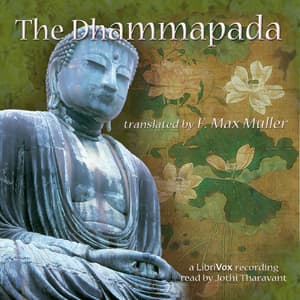
I came to the Dhammapada the way I come to most ancient texts now—through exhaustion. Faculty meeting season. Budget presentations that could cure insomnia. I needed something to anchor me while pretending to take notes, and two hours of Buddhist wisdom seemed exactly right. Jothi Tharavant's reading became my secret rebellion against Principal Martinez's PowerPoint slides.
Müller's Translation Trusts You to Keep Up
Here's what struck me about F. Max Müller's translation: it reads like poetry written by someone who assumes you're paying attention. These 423 verses don't explain themselves. They don't hold your hand. "The fool who knows his foolishness is wise at least so far. But a fool who thinks himself wise, he is called a fool indeed." The Buddha had no patience for pretense, and Müller's Victorian-era translation somehow preserves that directness.
At two hours and twenty-three minutes, this isn't a commitment—it's a meditation session that happens to span several commutes. But here's the thing. You can't listen to this the way my students listen to their podcasts at 2x speed while also watching TikTok. (Yes, they do this. Yes, I've asked them to explain how. They cannot.) The verses are terse by design. Rush them and you'll hear words. Pause between them and you'll hear wisdom.
Tharavant understands this. Her pacing has breath in it. She doesn't race through the similes—the cart's wheel, the man's shadow, the deep pool, the flowers. She lets them land. Her English is clear and unadorned, which is exactly what this text needs. No theatrical flourishes. No attempt to make the Buddha sound mystical or exotic. Just steady, contemplative delivery that respects the source.
Precision Over Complexity
I teach Hemingway. I teach Fitzgerald. I teach Faulkner to kids who'd rather read nothing at all. And what I'm always trying to get them to see is that great writing isn't about complexity—it's about precision. The Dhammapada is 2,500 years old and it's doing what I beg my juniors to do: say exactly what you mean, using images anyone can understand.
"Hatred does not cease by hatred, but only by love; this is the eternal rule."
No metaphor there. No clever wordplay. Just truth, stated plainly. My students would probably hate this—no plot, no romance, no cliffhangers. But that's exactly why I love it. Some wisdom doesn't expire. That same timeless quality runs through Bible (KJV) NT 20: James, another text that refuses to coddle its readers.
The LibriVox production is clean and simple. No music, no sound effects, no production tricks. Just Tharavant's voice and the text. For a work like this, that's the right choice. Anything else would be distraction.
Who Should Listen (And Who Should Keep Walking)
If you want narrative drive, character arcs, or anything resembling a story—this isn't it. Skip to your thrillers. No judgment.
But if you're the kind of person who underlines passages in books, who pauses audiobooks to think, who believes that some texts reward slowness—the Dhammapada will meet you where you are. It's perfect for morning walks, for those quiet moments before the house wakes up, for faculty meetings where your body needs to be present but your mind can wander toward something better.
I've listened to it twice now. The second time, different verses stopped me. That's the mark of something worth returning to.
Worth Pausing the Faculty Meeting For
This is a free LibriVox recording of one of humanity's foundational texts, read by a narrator who treats the material with appropriate reverence without making it feel like church. At under two and a half hours, it asks almost nothing of your time while offering quite a lot to your thinking.
Is it entertainment? No. Is it the kind of thing you'll quote to your wife while walking the lakefront until she asks you to please stop being so profound before 7 AM? Absolutely. (Sorry, Denise.)
The Buddha said the conquest of self is the greatest of all conquests. I'm still working on that one. But listening to someone read his words aloud, slowly, while Lake Michigan does its thing—that feels like a start.