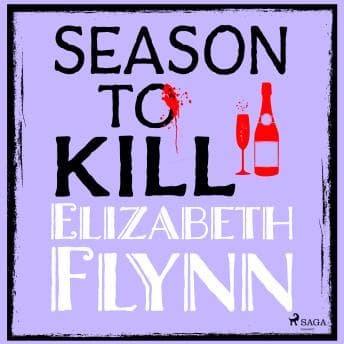

"Cyanide-laced champagne at a book launch party." That's the setup, and honestly? I respect the audacity. There's something deeply satisfying about a murder mystery that picks the most civilized possible setting - in this case, the Chelsea Flower Show and its surrounding London social scene - and just ruins everyone's evening with poison.
I was shelving returns at the library on a rainy Tuesday, earbuds in, when this one kicked off. And look, I need to be upfront: Season to Kill is the fourth book in Elizabeth Flynn's DI Angela Costello series, and I jumped in cold. No prior relationship with Costello, no context for her team dynamics, no history. Sometimes that's fatal for a series entry. Here? It wasn't. Flynn does enough situating without making you sit through a recap episode, which tells me she's confident in her character work.
Cyanide and Chrysanthemums
The central conceit - a Welsh TV chef named Griff Madoc gets poisoned at his own book launch - is the kind of cozy-adjacent mystery setup that either works for you or doesn't. Flynn's background as an ex-actress and bereavement officer bleeds into the writing in interesting ways. There's a theatrical quality to how she stages her suspects, each one positioned like they're waiting for their cue. The Chelsea Flower Show setting isn't just window dressing; it becomes this weird pressure cooker of appearances and ambition where everyone has a reason to smile and everyone has a reason to kill.
The suspect list is long - maybe too long at points. Around hour five I was juggling enough names that I had to mentally reorganize, which in audio format is always a gamble. But DI Costello herself is a solid anchor. She's methodical without being boring, which is harder to pull off than people think. Publisher's Weekly called her "appealing," and yeah, that tracks. She's not a tortured genius. She's not battling inner demons every chapter. She's a competent detective doing detective work, and sometimes that's exactly what you want.
The cyanide-in-champagne angle gives the whole thing this Agatha Christie energy - very "someone in this room is a murderer" - but filtered through a modern procedural lens. If you're expecting the darkness of, say, Tana French or the psychological gut-punches of Ruth Ware, recalibrate. This is a mystery that wants you to enjoy the puzzle, not lose sleep over it.
Kim Hicks Does the Thing
Kim Hicks narrates, and she's good. Not flashy, not doing vocal gymnastics, but steady and clear in a way that actually serves this kind of ensemble mystery well. With a cast this large, clarity is everything - if I can't tell who's speaking, the whole investigation falls apart in audio. Hicks keeps everyone distinct enough that I never got lost on who was accusing whom.
Her delivery is warm without being cozy-podcast-warm, if that makes sense. There's a crispness to how she handles the procedural sections that keeps things moving. I wouldn't say the narrator commits in that bone-deep way I crave from horror narration - but this isn't horror. This is a different kind of performance, and Hicks understands the assignment. She's not trying to scare you. She's trying to keep you guessing. And she does.
At nine hours and change, the pacing is comfortable. Not rushed, not dragging. I got through it across three shifts at the library and one late-night session with Shirley (my cat) sprawled across my chest, which is about the coziest possible listening arrangement for a book about poisoning.
Who Gets an Invitation to This Party
If you're a Thursday Murder Club fan - and the publisher comparison isn't wrong, tonally - this will slot right into your rotation. It's got that same "clever people solving crimes in pleasant settings" energy. If you like your mysteries with a side of British social comedy and your murders elegant rather than gory, you're home.
Skip if you need your thrillers dark and visceral. This isn't that book. There's violence referenced but not dwelled on. The horror here is social - who would poison someone at a party, and why - not physical. As someone who lives in the dark stuff, I can appreciate a mystery that knows exactly what it is and doesn't pretend to be something heavier.
Also worth noting: you can absolutely start here without reading the first three Costello books. I did, and I'm fine. Might go back for them, actually.
Shelve It Under "Satisfying"
Season to Kill isn't going to haunt you. It's not going to make you turn on all the lights at 2 AM (that's my department). But it's a well-constructed puzzle box with a likable detective, a genuinely fun setting, and a narrator who keeps the whole thing humming along nicely. Sometimes you don't need dread. Sometimes you just need a good mystery and a glass of wine that definitely isn't laced with anything. I clocked a similar "just let me enjoy the puzzle" energy in Strange Disappearance, though that one left me slightly less satisfied by the end.
Probably.