
Look, I spend nine months of the year telling teenagers that literature is about "breaking boundaries" and "finding your unique voice." I tell them art can't be contained in a box. Then summer break hits, I try to write my own Great American Novel, and I stare at a blinking cursor for six weeks until my eyes bleed.
So, I picked this up. Mostly out of desperation. Partly because I wanted to see if I could sell a screenplay and retire to a cabin where I never have to grade another essay on The Great Gatsby.
(Don't tell Principal Martinez I said that. Actually, tell him. He knows I'm tired.)
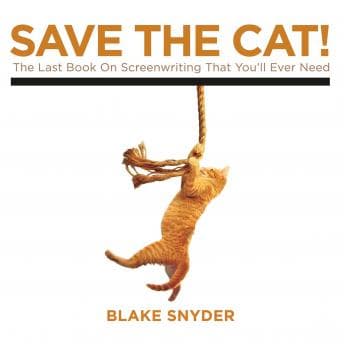
Here's the thing about Save the Cat!—it basically argues that every hit movie follows the exact same structure. My literary soul wants to scream at this. It feels like cheating. It feels like painting by numbers. But after listening to Blake Snyder break down Miss Congeniality with the precision of a surgeon, I realized something annoying: he's right.
When Art Meets Algebra
Snyder doesn't just give advice; he gives you a map. A very specific, rigid map. He calls it the "Blake Snyder Beat Sheet" (BS2), and honestly? It's kind of a lifesaver. He breaks a story down into 15 specific beats—like "Theme Stated" at page 5 and "All is Lost" at page 75.
My students would hate this. They want to write 40 pages of vibe-based poetry about vampires. But for anyone who has ever gotten stuck in the "mushy middle" of a story—which is basically me every November—this structure is like someone turning the lights on in a dark room. It forces you to stop meandering and actually tell a story.
Is it formulaic? Absolutely. That's the point. Snyder is unapologetic about the fact that Hollywood buys formulas. If you're looking for a guide on writing experimental, stream-of-consciousness literary fiction, this isn't it. This is about commercial storytelling. It's about selling the script. And frankly, there's a certain honesty in that which I appreciate.
George Newbern's Cool Uncle Energy
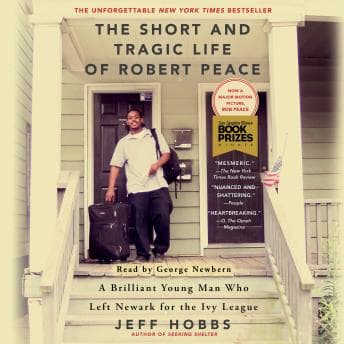
Let's talk about the ear-feel. George Newbern narrates this, and he nailed it. He sounds exactly like that one cool uncle who works in "the industry" and buys you lunch just to give you life advice. Newbern brings that same warmth to Short and Tragic Life of Robert Peace, though the subject matter is obviously heavier.
It's not a performance in the dramatic sense—he's not doing voices for the characters in the movies Snyder references. Instead, he adopts this warm, engaging, mentorship tone. He understands the humor in Snyder's writing. (And Snyder is funny—he's self-deprecating about his own failures in Hollywood, which I relate to on a spiritual level.)
Newbern's pacing is spot on for instructional content. I listened at 1.0x speed, which is rare for me with non-fiction, but I needed time to mentally map his points to whatever book I was currently failing to write. He makes the "rules" sound less like commands and more like insider secrets.
The Lake Michigan Epiphany
I was listening to the chapter on "The Pope in the Pool" (a trick for delivering exposition without boring the audience) while walking along Lake Michigan, and I literally stopped walking. I realized I've been boring my poor podcast listeners for years.
The book is full of these little "aha" moments. Yes, the terminology is a bit much sometimes—Snyder loves his own buzzwords. But once you get past the jargon, the logic is sound. It's practical. It's actionable.
Does it take the magic out of writing? Maybe a little. But as I tell my students (usually when they hand in a paper with no thesis statement): you have to know the rules before you can break them. Snyder teaches you the rules. Heart of Everything That Is also has Newbern narrating, if you want more of his voice in your ears while learning something completely different.
Who This Is (and Isn't) For
If you're trying to write something commercially viable—screenplays, genre fiction, anything with a plot that needs to actually move—this is your book. Skip it if you're committed to writing the next Ulysses or if the idea of structure makes you break out in hives.
Mr. Williams's Final Grade
Will this book make you the next Spielberg? Probably not. But it might stop you from writing a script where nothing happens for 40 pages. And for that alone, it's worth the credit.