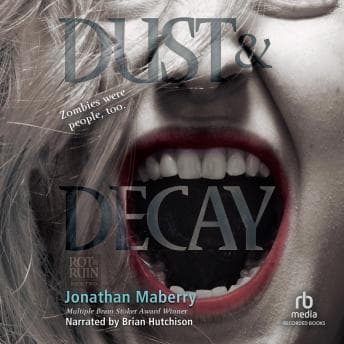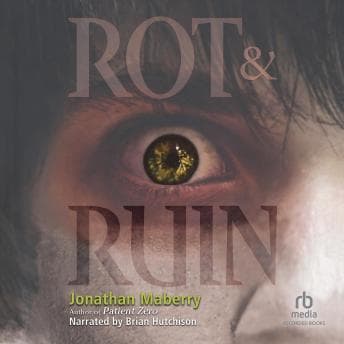

"When you look at the zombies, what do you see?" Tom asks Benny somewhere around hour three. It's the question that turns this from another zombie survival story into something my parents would've understood—a meditation on what we owe the dead, and what the dead can teach us about living.
I started this on a red-eye to Seattle, figured a YA zombie book would be easy background noise while I prepped client decks. By hour four, the laptop was closed. By hour six, I was genuinely irritated when the flight attendant interrupted for beverage service.
The Business Model Nobody Teaches at HBS
Here's what grabbed me: Benny Imura lives in a post-apocalypse with a functioning economy. Kids turn fifteen, they get jobs or they lose food rations. No safety net. No excuses. My parents ran their dry cleaning shop with the same brutal clarity—you work or you don't eat. Maberry gets this. The zombie-killing isn't glamorous bounty hunting; it's a family trade, like plumbing or accounting, passed down because someone has to do it.
Tom Imura isn't teaching his little brother to be a warrior. He's teaching him to be a professional. There's a scene where Tom explains the economics of closure—families pay to have their zombified loved ones found and put to rest. It's grief work. It's service industry. It's the least cool, most human thing I've encountered in zombie fiction.
This is what my parents did instinctively. Now it has a Bram Stoker Award.
The Narrator Problem (And Why I'm Torn)
Brian Hutchison is technically excellent. Clear diction, emotional precision when it counts. When Benny's worldview starts cracking around hour five, Hutchison sells the confusion and dawning horror beautifully.
But here's the issue: Benny is fifteen. His friends are teenagers. And Hutchison sounds like a forty-year-old reading a book he discovered that morning. There are pauses that feel like he's turning pages, not building tension. The teenage banter lands flat because it's delivered in adult NPR cadence.
I've seen this fail at three different companies—you can have the right message with the wrong messenger. Hutchison isn't bad. He's just... miscast. A narrator like MacLeod Andrews would've made this jump from good to genuinely great. At 1.5x speed, the pacing issues mostly disappear, but you shouldn't need to hack an audiobook to make it work.
Skip to Chapter 5. Thank Me Later.
The first few hours are setup—Benny trying various jobs, failing at all of them, being generally insufferable about his brother. Standard YA protagonist stuff. Necessary, but not riveting.
The book ignites when Benny and Tom venture into the Rot and Ruin together. Maberry's zombie mythology is surprisingly thoughtful—these aren't just monsters, they're neighbors, family members, people with names and histories. The ethical complexity here rivals anything in the adult horror space. 12 Rules for Life tries to build a similar framework around responsibility and meaning, though Peterson's approach is far more abstract. When Tom shows Benny how to approach a zombie with respect instead of just violence, it hit me harder than most business books on leadership.
Thirteen hours is a commitment. Those core hours—probably 5 through 10—contain some genuinely profound stuff about duty, family, and what it means to do necessary work that nobody wants to do. The rest? Padding.
Who Gets Value Here (And Who Doesn't)
Parents looking for something to share with their teenagers: yes, absolutely. The violence is present but purposeful, never gratuitous. There's a moral framework here that's surprisingly sophisticated.
Zombie genre veterans expecting gore and action: you'll be disappointed. This is character work wearing zombie makeup.
Anyone who grew up watching their parents do unglamorous essential work: this one's for you. Benny's journey from entitled kid to someone who understands the dignity of necessary labor—that's the real story.
Skip if: You need fast-paced horror or can't tolerate a slow-burn opening. Also skip if adult narrators voicing teenagers pulls you out of the story.
Final Assessment
Bottom line: Maberry wrote something genuinely special here—a coming-of-age story that uses zombies to explore work, family, and moral courage. The audiobook execution is competent but not optimal; Hutchison's adult tone creates friction with the teenage cast. Worth the credit if you're okay with 1.25-1.5x speed and can push through a slow opening act.
Jenny would say I'm being harsh. Jenny is right. But I'm also right that a different narrator could've made this a must-listen instead of a qualified recommendation. The book earns four stars. The audiobook experience loses half a star on execution.
My parents never got to read about passive income. But they would've recognized Tom Imura immediately—someone doing hard, unglamorous work because it needs doing, and teaching the next generation why that matters.