"Exercise six days a week for the rest of your life."
That line hits you somewhere around the 45-minute mark, and honestly? I almost spit out my coffee. I was prepping for a 7 AM call with a founder who thinks product-market fit is optional, and Jim Frangione delivers that rule with the casual authority of a doctor telling you to floss — except this one actually matters.
Your Parents Already Knew This (They Just Called It "Work")
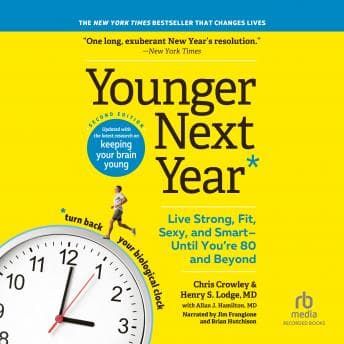
Here's the thing about Younger Next Year. The core thesis — that your body is designed to decay unless you send it daily signals to grow — is genuinely useful biology. Dr. Henry Lodge's explanation of C-6 and C-10 cytokines (the "decay" and "growth" chemicals your body produces) is the kind of framework that actually changes behavior. When you understand that sitting on the couch literally sends your cells a memo to die faster, the treadmill starts looking less optional.
But I kept thinking about my parents. Six days a week, on their feet, lifting, moving, hauling garments. Nobody told them about cytokines. They just worked. My dad is 74 and still walks three miles every morning because sitting still makes him anxious. Rich Dad Poor Dad triggered the same reaction in me — here's a whole book retrofitting theory onto things immigrant parents just... did. This is what my parents did instinctively. Now it has a TED talk.
The book splits duties: Chris Crowley is the enthusiastic, slightly manic motivational voice — the retired lawyer who found religion through exercise in his 70s. Lodge is the science guy. And new to this second edition, neurologist Allan Hamilton adds brain-health chapters that connect the exercise argument to cognitive decline prevention. The Crowley-Lodge dynamic works because Crowley is genuinely funny in that wealthy-retiree-who-discovered-rowing way, and Lodge keeps him honest with actual data.
Two Narrators, One Buddy Comedy
Brian Hutchison handles Chris Crowley's chapters and Jim Frangione takes Lodge's science sections. Smart production choice. Frangione's delivery on Crowley's parts especially — he captures this infectious energy that borders on annoying but stays on the right side of charming. Like your friend's dad who won't stop talking about his bike stats at dinner but you secretly find yourself Googling bikes afterward. Hutchison brings a steadier, more measured tone to the medical explanations, which helps when you're processing actual biology.
The shift between voices creates natural chapter breaks that keep you oriented. At 2.0x, this is critical — you always know whether you're getting a pep talk or a lecture, and both narrators earned their spots.
11 Hours Is About 4 Hours Too Many
Bottom line: this book has maybe 7 hours of genuinely valuable content stretched across 11.5. The science chapters — cytokines, the role of aerobic exercise vs. strength training, the brain-health additions from Hamilton — those are gold. "Harry's Rules" (exercise six days a week, spend less than you make, stay connected to other people, care about something) are deceptively simple and backed by enough biology to stick.
But Crowley repeats himself. A lot. There are entire chapters that amount to "exercise is great, here's another anecdote about my ski trip / bike ride / sailing adventure" that read like a retired guy's holiday newsletter. By hour 8, I was toggling between genuine respect for the framework and genuine impatience with the padding. Skip to chapter 5. Thank me later. That's where Lodge drops the C-6/C-10 biology, and it's the intellectual backbone everything else hangs on.
The Hamilton brain chapters in this second edition are the real upgrade. If you listened to the first edition and are wondering whether to re-up, the neurology additions — specifically how aerobic exercise promotes BDNF (brain-derived neurotrophic factor) production — justify the revisit. It's the strongest argument I've heard for why exercise isn't just a body thing.
Who Gets the ROI
If you're 40-plus and your exercise routine is "I walk to the fridge" — this book will probably change your life. Not exaggerating. The science is sound, the motivation is real, and having it in your ears during a workout is solid accountability.
If you're already exercising regularly and reading health literature, you'll find maybe 30% new material. The brain chapters justify a listen, but you'll want 1.5x minimum.
If you're a startup founder running on caffeine and four hours of sleep, telling yourself you'll "get healthy after the Series A" — I've seen this fail at three different companies. The founders who lasted were the ones who treated their bodies like infrastructure. This book explains why.
Jenny would say I'm being harsh about the padding. Jenny is right. But Crowley's enthusiasm is genuine, Lodge's science holds up, and the core message — that aging is mostly optional decay you're choosing through inaction — is worth hearing at least once.
The Consultant's Recommendation
Worth a credit if you need the push. The framework is sound, the narration keeps you moving, and the biology will stick with you longer than most business books I've reviewed this quarter. Just know that you're paying for 11 hours and getting 7 hours of signal. Which, honestly, is a better ratio than most McKinsey decks I've written.