
Maberry doesn't write zombie books. He writes survival stories that happen to have zombies in them.
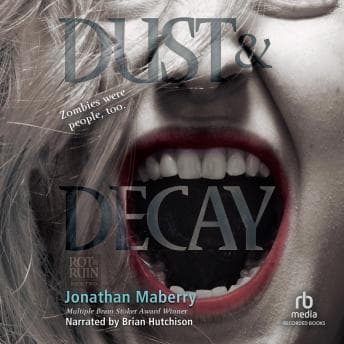
I finished Dust & Decay at 2 AM, sitting in my apartment surrounded by ungraded thesis drafts and the lingering guilt of not working on my own research. Dr. Patel would be disappointed. I am not. Because this book absolutely wrecked me in the best possible way, and honestly? Worth every hour I should've spent on procedural generation algorithms.
The Rot & Ruin Formula, Perfected
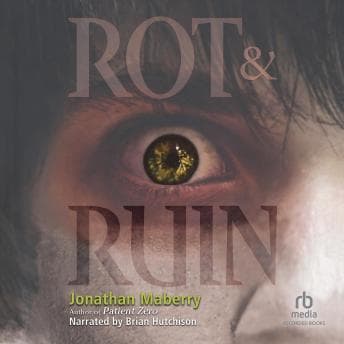
If you haven't read the first book, go do that. I'll wait. My own review of Rot & Ruin covers why Hutchison's narration works so well even from the jump—short version: he makes Benny's naivety feel genuine rather than annoying. (Actually, don't wait—it's fine as a standalone, but you'll miss context that makes this one hit harder.) Six months after the events of Rot & Ruin, Benny Imura and Nix Riley are training under Tom to become zombie hunters—or as Maberry calls it, "bounty hunters" in a world where the undead are just... everywhere. But here's the thing: the zombies are almost background noise. The real tension? It's human. It's always human.
Maberry pulls this trick where he makes you forget you're reading a YA zombie book. The training sequences feel like something out of a martial arts novel—there's weight to every lesson Tom teaches, and you can tell Maberry has actually studied this stuff. My D&D group would go absolutely feral for the combat system he's essentially built into the narrative. It's not just "swing sword, kill zombie." There's technique, there's philosophy, there's the kind of world-building that makes you want to take notes.
Brian Hutchison Knows When to Hold Back
Hutchison's performance is the kind of narration that gets out of its own way—and I mean that as a compliment. He's not doing theatrical voices for every character, but he finds this steady, grounded tone that matches the book's vibe perfectly. When Tom is teaching Benny about survival philosophy, Hutchison delivers it with this quiet authority that makes you actually listen. Like a mentor who's seen too much to raise his voice anymore.
The emotional beats are where he really earns his keep. There's a zombie attack that derails everything—the protagonists' plans, their sense of safety, all of it—and Hutchison ramps up the urgency without going full panic mode. He trusts the text to do the heavy lifting, and it does. When things get dark (and they get DARK), he doesn't melodrama his way through it. The restraint makes the gut-punches land harder.
That Ending, Though
Okay. We need to talk about it.
I went into this knowing some readers had strong feelings about the ending. "Heartbreaking" was the word I kept seeing. "Unsatisfying." And yeah—there's no happily ever after here. Maberry pulls a move that's either brave or cruel depending on your tolerance for emotional devastation in your zombie fiction.
Personally? I respect it. This is a series about survival, about what it costs to keep going when everything around you is literally trying to eat you. A neat bow would've felt cheap. But if you're someone who needs resolution, who needs the characters you've invested in to catch a break—prepare yourself. Have tissues. Maybe a comfort snack.
The book won a Bram Stoker Award for a reason, and I think this is part of it. Maberry isn't interested in easy. He's interested in honest.
That same relentless honesty is what makes Code Zero worth reading if you want to see what Maberry does when he's writing for adults with no YA guardrails—it's a different beast, but the same author DNA is all over it.The Progression System (Yes, I'm Calling It That)
Here's where my LitRPG brain kicks in: there's genuine progression here. Benny starts as kind of useless—he's the younger brother, the one who stayed safe while Tom went out into the Rot and Ruin. By the end of this book, he's... not useless. The training sequences aren't just filler between zombie fights. They're character development disguised as action, and the payoff is satisfying in that way where you feel like YOU also learned something about sword fighting.
Nix gets her own arc too, which I appreciated. She's not just "the girl"—she's got her own demons, her own growth trajectory. The dynamic between her and Benny feels earned rather than obligatory.
Who Should Venture Into the Rot
This is for you if: you want zombie fiction with actual substance, you appreciate martial arts training montages, you can handle emotional gut-punches, or you're looking for YA that doesn't talk down to its audience. Skip it if: you need happy endings, you're looking for pure action without character development, or twelve hours feels like too much commitment. (It's not. It's worth it.)
Roll Initiative, Then Cry
Dust & Decay is the rare sequel that builds on its predecessor without just repeating it. The stakes are higher, the world expands, and Maberry proves he's not just a one-trick pony with the zombie genre. Is it perfect? No—there are moments where the pacing drags slightly during setup, and I wanted more specificity in some of the world-building details. But when it hits, it HITS.
Now if you'll excuse me, I have a thesis to continue ignoring and a third book in this series to start. Dr. Patel will understand. (She will not understand.)