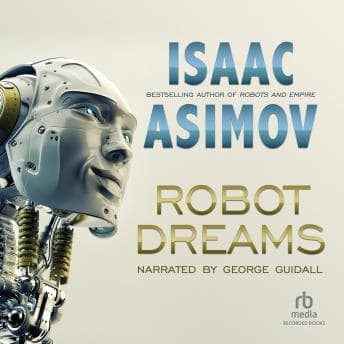

So last Tuesday I couldn't sleep after a particularly cursed 2AM pager storm - some config change cascaded through three services, classic distributed systems nightmare - and instead of doom-scrolling, I put on Robot Dreams. Figured Asimov short stories would either lull me to sleep or keep me intellectually occupied. Reader, they did both, in alternating 30-minute cycles, and I mean that as a compliment.
Asimov Is Basically the Original Systems Architect
Here's the thing about this collection: these stories span from the 1940s to the mid-80s, and the wild part is how many of them read like design docs for problems we're actually dealing with now. "The Last Question" - which, if you haven't encountered it, is essentially "what happens when entropy wins" compressed into like 40 minutes - hit different when I'd literally just been staring at dashboards watching system entropy in real time. Asimov's approach to sci-fi is almost algorithmic: here's a constraint, here's a system, now watch the edge case break everything. If you've ever written a spec or debugged a race condition, you already speak his language.
The collection is 21 stories, and they're uneven in the way any 40-year career retrospective would be. Some of the earlier ones feel like proofs of concept - tight little logic puzzles that resolve cleanly. "Breeds There a Man" is a paranoia piece about scientists being suppressed by unseen forces that feels eerily prescient. "The Feeling of Power" - humans rediscovering manual arithmetic in a calculator-dependent future - lands like satire now in a way Asimov probably didn't fully intend. But a few of the middle entries drag, especially the ones leaning heavily on 1950s dialogue conventions where characters explain things to each other that they should already know. You know the type.
The title story itself is genuinely unsettling. A robot dreams of leading other robots to freedom, and Susan Calvin's reaction to it is so coldly pragmatic it stuck with me for days. It's maybe 20 minutes long and it does more with AI consciousness than most modern novels manage in 400 pages.
George Guidall Is the Distributed System That Never Goes Down
Okay, he's not Ray Porter. (Nobody is Ray Porter. I will die on this hill.) But Guidall is genuinely excellent here, and I'd argue he's a better fit for Asimov than Porter would be - hear me out. Asimov's prose is clean, precise, almost clinical. It doesn't need dramatic flair; it needs clarity and warmth, and Guidall delivers exactly that. His vocal range is impressive across 21 stories - he shifts registers between the dry academic tone of Susan Calvin stories and the more adventurous space-set pieces without it ever feeling like he's performing. He just... inhabits the voice Asimov wrote in.
The pacing is spot-on for commute listening, which matters because short story collections can be brutal in audio if the narrator doesn't signal transitions well. Guidall gives you just enough breathing room between stories that your half-conscious 6AM brain can register "okay, new story, recalibrate."
One gripe that's not Guidall's fault: the audiobook doesn't include Asimov's introductory essays that appear in the print version. These are half the fun of any Asimov collection - the man was legendarily egotistical in the most charming way possible, and his intros contextualize when and why he wrote each story. Missing them feels like reading commit messages without the PR description. You get the code but not the intent. The last time I felt this kind of structural frustration with an audio adaptation was with Confessor - great source material, but the production choices left me feeling like I'd gotten an abridged spec sheet instead of the full design doc.
Who Gets the Most ROI Here
Perfect for: train, gym, insomnia debugging sessions. The short story format means you can pause between stories without losing thread. I finished this across about 5 commutes and two sleepless nights, and the episodic structure made that painless.
Skip if: you need a single narrative arc to stay engaged, or if dated gender dynamics are a dealbreaker (Susan Calvin is great, but she's basically the only woman in the entire Asimov universe, and some of the 1950s stories have... let's say vintage perspectives on women). Also skip if you want the complete print collection - some stories were cut from this audio version, which is annoying for completists.
The comparison I keep coming back to: this is basically a greatest hits album. Not every track is a banger, but the bangers ("The Last Question," "Robot Dreams," "The Feeling of Power," "Liar!") are absolutely worth the price of admission. And unlike that startup book Kevin made me listen to last month that should've been a Medium post, every story here earns its runtime.
Commit, Push, Move On
TL;DR: Worth your commute. Fourteen hours of Asimov is a serious time investment, but the short story format means you're never more than 40 minutes from a natural stopping point. Guidall's narration is clean and reliable - the kind of performance you don't notice because it just works. Like good infrastructure. The missing intro essays sting, and a handful of stories haven't aged gracefully, but the best pieces here are foundational sci-fi for a reason. The ROI on this audiobook is solid if you've never read Asimov, and comfortably nostalgic if you have.