
I was up way too late reorganizing my board game shelf — alphabetizing Gloomhaven expansions, because apparently that's what I do at 1 AM instead of working on my thesis — when the final chapter of Riptide hit me with something I genuinely didn't see coming. And I sat there holding a copy of Betrayal at House on the Hill thinking, "Huh. That's basically what just happened in this book."
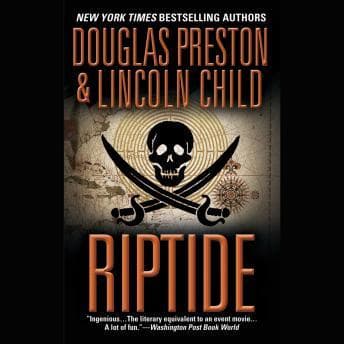
Riptide is Preston & Child doing what they do best: taking a real-world mystery (in this case, Oak Island — they don't say it outright, but come on, it's Oak Island) and cranking every dial to eleven. A pirate treasure buried in 1695, a labyrinth of booby-trapped tunnels on an island off the Maine coast, and three centuries of failed attempts to crack it open. Then a modern team shows up with millions of dollars in tech and the hubris to think they'll be the ones to finally pull it off. You know how this goes. The island disagrees.
The Dungeon Master Built This One to Kill the Party
Here's the thing — this book reads like someone designed a megadungeon with a TPK in mind. The Water Pit (that's the central shaft leading down to the treasure) is described with the kind of obsessive engineering detail that made me want to sketch it out on graph paper. Pressure-activated flood tunnels, mercury traps, layers of oak platforms and clay seals — Preston & Child clearly did their homework on the actual Oak Island mystery and then said "what if it was way worse?" The world-building here isn't fantasy world-building, but it scratches the same itch. You get the history of the pirate (Red Ned Ockham, great name), the geological surveys, the engineering breakdowns. If you don't like info-dumps, this isn't for you (but you're wrong).
Where it stumbles is pacing. And I say this as someone who regularly defends 40-hour Sanderson books. At 15 and a half hours, Riptide shouldn't feel long, but there are stretches in the middle — long strategy meetings, conversations about funding, interpersonal drama that doesn't quite land — where the momentum just dies. The setup takes its sweet time before anyone actually gets on the island, and once they do, the tension builds in fits and starts rather than a steady climb. My D&D group would love the concept, but even we'd be checking our phones during some of those boardroom scenes. The pacing reminded me why I appreciated how lean Great Train Robbery stays — Crichton never lets a single scene breathe longer than it has to, and Riptide could have learned something from that.
Scott Brick: Reliable Cleric, Not a Paladin
Scott Brick is a polarizing narrator and I get why. He's got a strong voice — clear, authoritative, good presence. He draws you in. But compared to someone like Steven Pacey (Steven Pacey walked so other narrators could run), Brick's character differentiation is... functional. Subtle tone shifts rather than distinct voices. You can tell who's talking, mostly, but you're relying on context as much as vocal performance. For a book with this many characters — the treasure hunter Malin Hatch, the corporate guy Neidelman, the various crew members — I wanted more range.
That said, Brick handles the technical exposition well. When the book is explaining how the Water Pit works or what mercury poisoning does to a human body, his steady, almost documentary-style delivery actually helps. He's not the problem here. He's just not the thing that elevates it either.
Preston & Child vs. Preston & Child
If you've read The Ice Limit or Thunderhead, you know exactly what you're getting. Isolated location. High-tech team. Ancient mystery. Things go catastrophically wrong. Riptide follows the same blueprint, and honestly, I think it's the weakest of that particular trio. The Ice Limit has a better antagonist (that meteorite is genuinely creepy), and Thunderhead has tighter pacing. Riptide's strength is its treasure — the actual puzzle of the pit is fascinating — but its characters are thinner. Hatch is fine as a protagonist, but he's more of a vehicle for the mystery than a person I cared about. Neidelman's arc is predictable if you've spent any time with this kind of story.
But the last few hours? When the island starts actually fighting back, when the tech fails and people start dying in ways that feel earned by all that engineering setup? That's the payoff. The progression is satisfying — it just takes too long to get there.
Who's Rolling Initiative on This One
If you're a Preston & Child completist, obviously yes. If you're into treasure hunt stories, engineering puzzles, or anything adjacent to the Oak Island rabbit hole, this is a solid listen. Bump it to 1.25x during the middle act and you'll have a much better time. If you need strong character work or a narrator who gives you wildly distinct voices, this probably isn't your dungeon.
I read this instead of writing my thesis. Was it worth it? Mostly. The Water Pit alone is worth the price of admission. The 45-minute funding conversations are not. But when that final trap springs, when three hundred years of engineering genius meets modern arrogance — yeah, that hit different at 2 AM with a half-sorted board game shelf behind me.