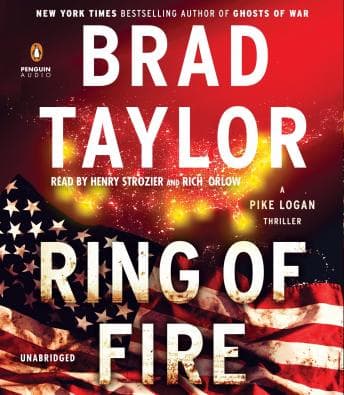

Okay, look. I have enough stress.
I just spent twelve hours trying to keep a guy with a motorcycle injury from pulling out his IVs while simultaneously explaining to a resident why we don't just "give him more meds" without checking vitals. My drive home is sacred. It is the forty-five minutes where I pretend I don't smell like antiseptic and cafeteria coffee.
So, why—seriously, why—did they decide to mess with the narration formula here?
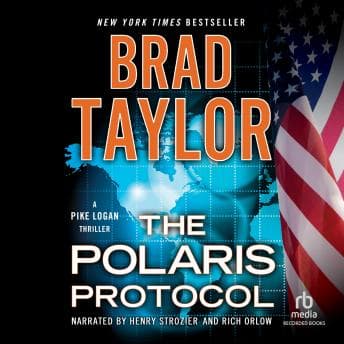
I turned this on expecting Rich Orlow's voice. You know, the voice that sounds like gravel and competence. The voice that is Pike Logan. Instead, I got... confusion. It's like when administration changes the charting software overnight without telling anyone.
The Jarring Shift Change
Here's the deal. Rich Orlow is fantastic. He handles the first-person perspective of Pike Logan like a pro. When he's talking, I'm in the zone. I'm driving down the I-10, but mentally I'm disarming a bomb or tracking a terrorist cell funded by the Panama Papers. (Remember when that was the biggest news story? Simpler times.)
But then.
Then we switch to the third-person perspective, and Henry Strozier tags in. And honestly? It took me right out of it. Felt like a bad imitation. You know when a med student tries to sound like an attending but just sounds... tired? That.
I actually checked my phone at a red light to see if the app had skipped to a different book. It's not that Strozier is objectively terrible—he's fine for a history book maybe—but compared to Orlow? It's a mismatch. Oil and water. Or lidocaine and... something that isn't lidocaine. (I'm tired, okay? The metaphor stands.)
When the Adrenaline Actually Hits
Despite the narration whiplash, Brad Taylor knows how to write an operation. As someone who spots medical inaccuracies in thrillers from a mile away ("That is NOT how you intubate!"), I appreciate that Taylor—being former Delta Force—doesn't fluff the tactical stuff.
The plot is terrifyingly plausible. We're talking about a "Ring of Fire" attack coinciding with the 15th anniversary of 9/11. It's heavy. It's dark. It's exactly the kind of high-stakes chaos that makes my own chaotic shift seem manageable.
There's a specific sequence involving the leak of the Panama Papers that had me gripping the steering wheel so hard my knuckles turned white. Taylor weaves the bureaucracy of money laundering with the immediate threat of terrorism in a way that actually makes sense. It's fast. It moves.
(And yes, I may have sat in my driveway for an extra ten minutes to finish a chapter. Carlos knocked on the window and scared the life out of me. I told him it was just a really intense podcast.)
Worth the Blood Pressure Spike?
If you can get past the narration split, yes.
The story itself is top-tier Pike Logan. It's got the grit, the pacing, and the scary realism that keeps me coming back to this series even when I should be sleeping. End Game had that same relentless momentum without the narrator whiplash. But I'm not gonna lie—I was tempted to fast-forward the Strozier parts.
If you're new to the series, don't start here. You need to already love Pike and Jennifer to forgive the audio production choices. Established fans who can tolerate dual narrators? You'll listen. You'll complain to your dashboard. But you'll finish it. Skip this one if narrator consistency matters more to you than plot—because the story delivers, even if the audio doesn't.
Clocking Out
Now, I need to go wash the hospital off me and make breakfast. If I hear one more voice change, I might scream.