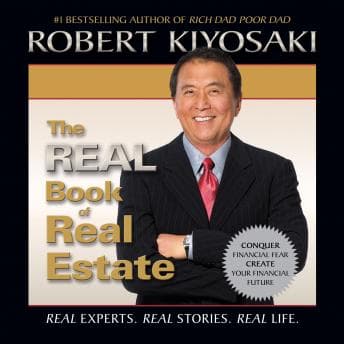

Let's be real for a second. 18 hours and 25 minutes. That is a commitment. That's basically listening to the entire Lord of the Rings trilogy, but instead of Orcs, you're fighting capital gains tax.
I picked this up because my boyfriend Kevin keeps talking about "diversifying our portfolio" (which I'm pretty sure just means he wants to buy a duplex in Sacramento), and I needed something dense to drown out the guy talking loudly on his phone in the Quiet Car.
So, is it worth the commute time? Let's debug this.
The Distributed System of Advice
Here's the thing about this book—it's not really a "book" in the traditional sense. It's a platform. Kiyosaki brought in 20 distinct experts to write different chapters. Think of it like a massive open-source project where everyone committed their own module.
The upside? You get deep, specific domain knowledge. We're talking tax strategies, leasing, finding hidden value—the granular stuff that actually matters when you're signing papers. The science holds up here. It's not just "mindset" fluff; there are actual mechanics involved.
The downside? Merge conflicts.
Because there are so many authors, there's zero deduplication. You'll hear the same core concepts explained three different ways by three different people. At 1.0x speed, this would drive me insane. But at 1.75x (which is mandatory for this book, trust me), it actually works as spaced repetition. You will learn the concepts, mostly because they beat you over the head with them.
The Boardroom Voices
We've got a trio here: Joyce Bean, Mel Foster, and Mikael Naramore.
I read some reviews before diving in, and wow, people were harsh. "Terrible," "Monotonous," etc. Honestly? I think those people expected Ray Porter doing a one-man show.
This is a textbook, folks. The narrators are... fine. They're professional, clear, and articulate. Do they have the emotional range of a sci-fi drama? No. But do you want emotional range when discussing 1031 exchanges?
(Okay, maybe a little emotion would help keep me awake on the 6 AM train, but I digress.)
They rotate based on the chapter author, which helps break up the monotony. It's distinct enough that you know the perspective has shifted. Feels like sitting in a very long, very expensive seminar. You aren't there to be entertained; you're there to download data.
The ROI on 18 Hours
If you're casually interested in real estate, skip this. Go read Rich Dad Poor Dad again or listen to a podcast. Though honestly, even Rich Dad Poor Dad felt a bit surface-level to me—I gave it a 3/5 for a reason. This is too much overhead for a casual user.
But if you're actually, actively trying to buy property—like, you have Zillow alerts set up and a down payment ready—the ROI here is high. There are nuggets in chapters 12 through 15 that could literally save you thousands of dollars. If you want the foundational mindset stuff without the 18-hour commitment, Cashflow Quadrant is more digestible—though I only gave that one a 2.5, so maybe just skim both.
My advice? Treat it like a reference library. Don't feel bad about zoning out during the chapters that don't apply to you. I skipped the commercial real estate sections because, frankly, I'm just trying to buy a house, not a strip mall.
Who Should Listen (And Who Should Skip)
Listen if you're actively shopping for property and want the tactical, tax-saving details. Skip if you're just real estate-curious—this is way too much overhead for casual browsing.
Bottom Line: It's a slog, but a profitable one. Crank the speed, take notes, and don't expect to be entertained.