
I was shelving returns in the back stacks last Tuesday — the ones near the basement stairs that our regulars swear are haunted — when I hit that final hour of Faefever. And I just... stopped. Stood there with a copy of Where the Wild Things Are in one hand, earbuds in, jaw actually hanging open. The fluorescent light above me flickered (it does that, it's old wiring, not ghosts, probably) and I nearly threw the book across the room.
That ending. That ending.
Dublin Goes Dark and Stays There
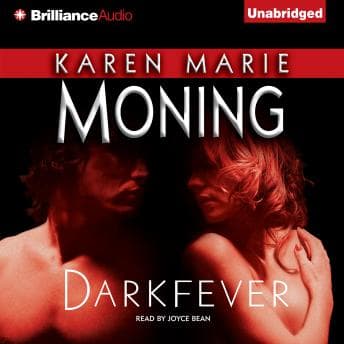
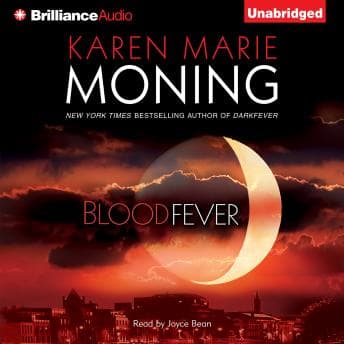
Okay. So if you've been following Mac's arc from Darkfever through Bloodfever, you know the trajectory — Georgia girl stumbles into Fae-infested Dublin, gets progressively less naive, gets progressively more dangerous. Faefever is where Moning stops holding your hand. The tone shifts from urban fantasy procedural into something that genuinely understands dread. And I don't throw that word around lightly.
The streets of Dublin in this book aren't just a setting — they're deteriorating. Shape-shifting. The walls between the Fae realm and the human world are thinning as Halloween approaches, and Moning writes that decay with real menace. There's a scene where Mac is walking through Temple Bar and the glamour drops on something she's been passing every day, and the reveal is so casually horrifying that I actually paused the audio to process it. This understands that horror isn't about gore — it's about dread. The knowledge that the world around you has been wrong this whole time, and you just didn't have the eyes to see it.
And then there's the Sinsar Dubh itself. A book so evil it corrupts anyone who touches it. As a librarian, I find this concept both deeply offensive and deeply compelling. (We have a no-food-near-the-books policy. Imagine a no-souls-near-the-books policy.) Moning plays the Dark Book as almost Lovecraftian — it's not just dangerous, it's wrong in a way that the prose communicates physically. Mac's reactions to its proximity feel visceral, not performative.
Joyce Bean Knows What She's Doing
The narrator commits. That's rare. Joyce Bean has been with this series from the start, and by book three she's fully inhabiting Mac's voice — the Southern drawl that's gotten sharper, harder, more Dublin-weathered since Darkfever. What I appreciate is that Mac doesn't sound like the same person she was two books ago. Bean lets the accent drift, lets certain Irish cadences creep into Mac's speech patterns, and it feels earned rather than inconsistent.
Her Barrons is a low rumble with an edge of something barely contained. That kind of vocal restraint — where the menace lives in what the narrator doesn't do — reminds me of the performance work in This Side of the Grave, another series where the narrator has to balance supernatural danger with romantic tension and somehow makes both land. Her V'lane is all silk and danger — she pitches him just slightly wrong, just slightly too beautiful-sounding, which is exactly right for a Fae prince whose sexuality is literally weaponized. The contrast between those two male voices creates this constant tension whenever Mac is caught between them, and Bean plays that triangle like she understands the power dynamics at work.
Now — fair warning. The accent switching between Mac's Georgia roots and the Irish characters can be jarring if you're coming in cold. If you haven't listened to the first two books, you might need twenty minutes to calibrate. But if you've been here since Darkfever, Bean's voice IS this series. Some listeners apparently wish she'd narrated the later books too, and honestly? I get it.
The Cliffhanger That Made Me Miss My Lunch Break
I need to talk about the ending without spoiling the ending, which is like trying to describe a car crash without mentioning the car. What I can say: the final two scenes escalate so fast and so brutally that I genuinely forgot where I was. The last line — the actual last line of the audiobook — is the kind of thing that would make me throw a physical book across the room. Since I was listening, I just stood there in the stacks, blinking, while the Audible app cheerfully asked if I wanted to start the next book.
Yes. Obviously yes.
Moning pulls a move here that I've seen maybe three or four authors attempt successfully. She takes everything Mac has built — her confidence, her alliances, her understanding of the rules — and demolishes it. Not gradually. Not with foreshadowing that lets you prepare. Just gone. And the comic relief moments scattered through the middle of the book suddenly feel strategic in retrospect, like Moning was deliberately lulling you into thinking this would follow the same arc as the previous installments.
Shirley Jackson walked so Karen Marie Moning could sprint into oncoming traffic with this ending.
Who Gets the Recommendation and Who Gets the Warning
If you scare easily, skip. If you don't, you need this — but you need it in order. Do not start here. Books one and two are required reading; the character work won't land without them. If you're a romance reader who wandered into urban fantasy, know that the "romance" in this installment has teeth and not the fun kind. Content warnings for violence and sexual content that sits right on the line between erotic and threatening, which is — I think — entirely the point.
My podcast listeners are going to love this. I'm already planning the episode.
Shirley (my cat) was unimpressed by my emotional state when I got home. I was still shaken. She knocked a pen off the counter and stared at me. Typical.
The Card's Already in the Catalog
Finally, horror-adjacent fantasy that respects the genre. Faefever is the book where the Fever series stops being fun and starts being something you survive. That cliffhanger is going to cost you another credit immediately — budget accordingly. I listened in the dark when I got home to re-hear that ending. Mistake? Maybe. Worth it? Absolutely.