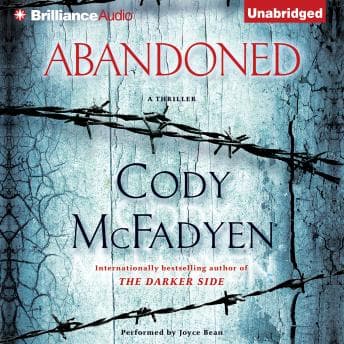

So here's the thing about serial killer thrillers - most of them think they're darker than they actually are. They throw in some gore, maybe a creepy basement, call it a day. Abandoned? This one actually earns its darkness. And I mean that as the highest compliment I can give.
I listened to this during a week of closing shifts at the library, walking home through empty Oregon streets at 11 PM. Mistake? Absolutely. Worth it? Every paranoid glance over my shoulder.
The Darkness That Actually Works
Cody McFadyen gets something that a lot of thriller writers don't - the scariest monsters aren't the ones who enjoy what they do. They're the ones who approach horror like a job. This killer keeps women in absolute darkness for years. Not for pleasure. Not for power. Just... because that's what he does. It's methodical. Clinical. And that's what made my skin crawl.
The opening scene - a woman stumbling down a church aisle during a wedding, emaciated, head shaved, wearing a white nightgown - that's the kind of image that sticks. McFadyen doesn't waste time getting to the gut-punch. Eight years this woman was held captive. Eight years in the dark. That same methodical approach to psychological horror shows up in House of a Thousand Candles, though it trades the clinical darkness for atmospheric dread. And she's not even the only one.
Look, I've consumed enough horror to be pretty desensitized. My podcast listeners know I don't scare easy. But there's something about the way McFadyen writes psychological captivity that hits different. He understands that horror isn't about gore - it's about dread. The sustained, suffocating kind.
Joyce Bean Commits (Mostly)
Here's where I have to be honest - Joyce Bean's narration is a mixed bag, but it tips toward the good. Her dramatic range? Solid. Her pacing through the suspenseful sections? She nails it. When she's voicing Smoky Barrett, the scarred FBI agent at the center of this series, you believe every word. The weariness, the determination, the barely-contained trauma - Bean gets it.
But. (And this is a notable but.)
Her male voices made me cringe a few times. There's a character named Barry, and every time he showed up, I could feel the performance straining. It's not a dealbreaker - the story's strong enough to carry through - but if you're someone who gets pulled out by inconsistent character voices, fair warning.
The production itself is clean. No weird audio glitches, no distracting background noise. Just you and nearly fifteen hours of psychological darkness. Fun times.
Where It Gets Preachy (And Where It Doesn't)
I'm going to level with you - there are moments where McFadyen gets a little heavy-handed about gender dynamics and the breakdown of relationships. Some reviewers found it preachy. I get that. But honestly? In a genre that often treats violence against women as set dressing, having an author who actually thinks about what he's depicting? I'll take the occasional sermon.
What works better is the procedural stuff. Smoky's team feels real. The investigation unfolds with enough twists to keep you guessing but not so many that it feels like the author's just showing off. And when the trap finally closes - because of course there's a trap, the description literally tells you - it lands.
This is book four in the Smoky Barrett series, and I'll admit I jumped in without reading the others. Did I miss some character backstory? Probably. Did it matter enough to derail my experience? Not really. McFadyen gives you enough context to understand Smoky's scars, literal and otherwise.
Who This Is For (And Who Should Run)
If you're a fan of psychological thrillers that don't pull punches, this is your jam. If you like your darkness served cold and methodical rather than splashy and gratuitous - get this on your phone immediately. Commuters, this is perfect for long drives where you want to be completely absorbed. But if you're sensitive to violence, captivity scenarios, or psychological abuse? Skip this one. I mean it. This isn't casual listening. There's content here that's genuinely disturbing, and McFadyen doesn't soften it for comfort.
Shirley (my cat) was unimpressed by my need to leave the lights on afterward. I was too busy processing what I'd just listened to to care about her judgment.
The Librarian's Late-Night Verdict
Finally, horror that respects the genre. The narrator commits - mostly - and the story delivers the kind of dread that stays with you after the final chapter. My podcast listeners are going to love this recommendation.